Succulent
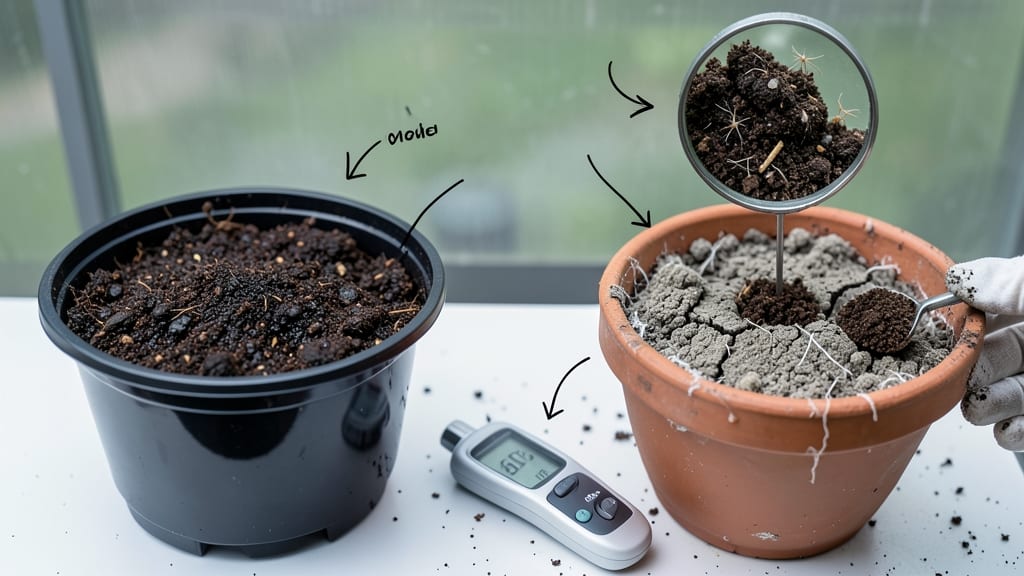
You can tell if potting soil is bad when it smells like a damp basement instead of fresh earth. 🌱 That musty odor, combined with fuzzy green mold or clumps that won't break apart, means it's time for a serious upgrade—your plants deserve better than this.
I've salvaged enough struggling succulents to know that degraded soil drains poorly, holds too much moisture, and starves roots of oxygen, leading to rot before your plants even get a chance to thrive.
The worst part? You might not notice until your seedlings wilt or your mature plants develop yellowing leaves despite regular watering. That's because bad soil can't hold nutrients properly, and its compacted structure blocks root growth.
The good news? Most problems solve with simple fixes—like mixing in perlite or coconut coir to improve aeration, or replacing the top 2-3 inches with fresh potting mix to revive struggling plants.
Start by squeezing a handful—if it stays rock-hard or crumbles to dust, it's lost its structure. A quick pH test (available at garden centers) can reveal if it's too acidic or alkaline, which also stunts growth.
The goal is soil that feels light like a sponge, smells earthy, and drains well within 10-15 minutes after watering.
For severe cases, don't waste money on "revival" products—just replace the soil entirely. Your plants will reward you with stronger roots, vibrant foliage, and that satisfying crunch of healthy soil when you repot. Trust me, your next batch of cuttings will thank you.
The Real Culprits Behind Bad Soil
Potting soil doesn’t spoil like food, but it can degrade into a less-than-ideal growing medium—sometimes even becoming harmful to your plants. Understanding the root causes (pun intended) helps you prevent future issues. Here’s why your potting soil might be turning sour, moldy, or downright toxic.
Soil isn’t just dirt—it’s a thriving ecosystem of bacteria, fungi, and other microbes. When conditions shift, these tiny organisms can spiral out of control, turning your potting mix into a science experiment gone wrong.
- Too Much Moisture 💦
Most potting soils contain organic matter (like peat moss or compost), which breaks down over time. If kept too wet, microbial activity explodes, consuming oxygen and producing anaerobic conditions. This leads to:
- A musty, rotten-egg smell (hydrogen sulfide gas from sulfur-loving bacteria).
- Gummy, slimy texture as microbes excrete sticky byproducts.
- Root rot in plants, as beneficial microbes are outcompeted by pathogens like Pythium or Phytophthora.
- Poor Drainage 🚫💧
Compacted or heavy soils trap water, creating the perfect Petri dish for fungal blooms. Fungi like Rhizoctonia or Fusarium thrive in stagnant water, producing:
- Visible white, gray, or black mold on the soil surface.
- Stunted plant growth as roots suffocate.
- A sour, vinegary odor from organic acids released during decomposition.
- Old, Depleted Soil ⏳
Over time, organic matter in potting soil decomposes into humus, but if left unused for months, it can become:
- Alkaline or acidic (pH shifts beyond 6.0–7.0), locking out nutrients.
- Dusty or crumbly as microbial activity exhausts available food sources.
- Infested with weeds or insect larvae (like fungus gnats or shore flies).
💡 Pro Tip: Most microbial issues stem from overwatering. If your soil smells like a swamp after a few days, it’s a red flag. Let the top inch dry between waterings!
Extreme heat or cold can accelerate—or halt—soil degradation, creating conditions where bad bacteria and fungi dominate.
- Excessive Heat ☀️🔥
Leaving potting soil in a hot car, greenhouse, or under direct sunlight can:
- Kill beneficial microbes (like mycorrhizal fungi), leaving room for pathogens.
- Cause organic matter to dry out and harden, reducing aeration.
- Trigger ammonia buildup (from decomposing nitrogen), which burns plant roots.
- Freezing Temperatures ❄️
Frost can rupture soil aggregates, creating compacted, waterlogged pockets that:
- Slow drainage, leading to anaerobic pockets where harmful bacteria thrive.
- Disrupt soil structure, making it clump together like concrete.
- Poor Storage Conditions 🏠🚫
Storing soil in plastic bags (especially sealed) or near chemical fumes (like fertilizers or pesticides) introduces:
- Toxic residue from off-gassing plastics (e.g., phthalates).
- Altered pH levels from exposure to household pollutants.
✨ Actionable Fix: Store potting soil in a cool, dry place (like a garage or shed) in breathable bags or bins. Avoid extreme temps—ideal storage is 50–70°F (10–21°C).
Potting soil is a delicate balance of nutrients, pH, and salinity. Throw that balance off, and your plants (and soil) suffer.
- Salt Buildup 🧂
Over-fertilizing or using tap water high in minerals leads to:
- Crusty, white deposits on the soil surface (salt crystals).
- Hyper-saline conditions that dehydrate plant roots.
- A metallic or chemical tang to the smell.
- pH Extremes 📉📈
Soil pH affects nutrient availability. If it drifts:
- Too acidic (pH < 5.5): Aluminum and manganese become toxic, causing yellowing leaves.
- Too alkaline (pH > 8.0): Iron and phosphorus lock out, leading to chlorotic (yellow) new growth.
- Heavy Metal Contamination 🏭
Cheap or contaminated soil (e.g., from construction sites or old gardens) may contain:
- Lead, arsenic, or cadmium (from past pesticides or industrial runoff).
- Visible dark streaks or unnatural colors in the soil.
🔥 Quick Test: Use a pH meter or test kit to check your soil’s balance. For salt buildup, flush the soil with distilled water to leach out excess minerals.
Now that you know why potting soil goes bad, the next step is spotting the signs early. Check out our guide on visual and olfactory red flags to keep your succulents (and soil) thriving!
Revive or Replace Your Soil
Now that you’ve identified the issues plaguing your potting soil—whether it’s a musty smell, mold growth, compacted texture, or nutrient depletion—it’s time to take action. Some problems can be fixed with simple adjustments, while others may require a full reset.
Below, we’ll break down practical solutions based on the root cause, plus prevention tips to keep your soil fresh and healthy for your succulents.
---
A foul odor usually means excess moisture, poor drainage, or organic decay. Here’s how to tackle it:
#### 🍳 Air It Out and Sterilize 1. Remove the plant gently from the pot and loosen the soil with your fingers or a fork. Discard any visibly rotten chunks or slimy bits.
2. Spread the soil on a clean tarp or baking sheet in direct sunlight for 24–48 hours. UV rays help kill mold spores and bacteria. 3. Sift through it afterward, removing debris.
If the smell lingers, sterilize the soil by microwaving it (in 30-second bursts) or baking it at 200°F (93°C) for 30 minutes to eliminate pathogens.
#### 👨🍳 Boost Drainage and Aeration - Mix in perlite or pumice (10–20%) to improve airflow and prevent future sogginess. - Add a handful of coarse sand (like horticultural sand) if the soil feels too dense. - Repot with fresh soil if the smell persists—some contaminants are too stubborn to salvage.
#### 💡 Prevention Tip: ✨ Use a pot with drainage holes (even for succulents!) and avoid overwatering. Let the top 1–2 inches dry out before watering again.
---
Mold thrives in damp, nutrient-rich soil with poor airflow. Here’s how to clean it up and stop it from returning:
#### 🔪 Scrub and Disinfect 1. Wash the pot with hot, soapy water (or a 1:10 bleach-water solution for stubborn mold). Rinse thoroughly. 2. Repot your succulent into sterilized soil (either store-bought or homemade—see below).
3. Spray the new soil lightly with a hydrogen peroxide solution (1 part 3% H₂O₂ to 4 parts water) to prevent reinfection.
#### 🌱 Homemade Mold-Resistant Soil Mix If you’re rebuilding your soil from scratch, try this succulent-friendly blend: - 60% cactus/succulent mix (store-bought) - 20% perlite or pumice - 10% coarse sand - 10% worm castings or coconut coir (for nutrients without compacting)
#### 🎯 Prevention Tip: 🌡️ Store soil in a dry, well-ventilated area (like a sealed bin with a lid, not airtight). Avoid leaving bags open where moisture can seep in.
---
If your soil feels hard as a brick or stays soggy for days, it’s time to fluff it up and improve its structure.
#### 🍳 Loosen and Amend 1. Break up clumps with your hands or a fork, then add amendments to improve texture: - Perlite or vermiculite (for moisture control) - Orchid bark or charcoal (to absorb excess moisture) - A sprinkle of biochar (if available, for long-term drainage) 2. Repot your succulent into a larger or more porous container if the roots are circling or rotting.
#### ⏰ Watering Adjustments - Water only when the soil is bone-dry (stick your finger in—if it’s damp past 1 inch, wait). - Use the “bottom-watering” method: Place the pot in a tray of water for 10–15 minutes, then drain completely. This prevents over-saturation.
#### 💡 Prevention Tip: 🔥 Avoid heavy, peat-based soils—succulents prefer fast-draining mixes. If repotting, opt for mineral-heavy blends with added grit.
---
Even “good” soil loses its nitrogen, phosphorus, and potassium over time. Here’s how to revitalize it naturally:
#### 🍳 Feed It Lightly - Worm castings (1–2 tbsp per pot) – A gentle, slow-release fertilizer. - Fish emulsion or seaweed extract (diluted to half-strength) – Apply every 4–6 weeks. - Crushed eggshells (for calcium) – Sprinkle on top and lightly mix in.
#### 🌱 Rotate Crops (If Repotting Often) If you’re growing multiple succulents in the same pot, rotate them annually to prevent nutrient exhaustion.
#### 💡 Prevention Tip: ✨ Top-dress with fresh soil every 6–12 months to replenish nutrients without a full repot. Just scoop out the top 1–2 inches and replace it!
--- Some soils are beyond saving—especially if they’re: - Heavily contaminated with mold or bacteria (visible black/green fuzz, slimy texture). - Infested with pests (fungus gnats, mealybugs, or mites). - So compacted it won’t drain at all (water pools on top after 30+ minutes).
Solution: Dispose of the soil (don’t compost it—it may spread pathogens) and start with a clean mix. Your succulents will thank you!
Frequently asked questions
How long can potting soil last before it goes bad?
Unopened potting soil typically lasts 1-2 years if stored properly, but once opened, it should be used within 6-12 months. After that, organic matter breaks down, losing nutrients and becoming more prone to mold. For succulents, fresher soil is always better—older mixes compact and drain poorly, causing root rot.
Can I still use potting soil that smells bad but has no visible mold?
No—even without visible mold, a foul smell means harmful bacteria or anaerobic conditions are present. These can stunt plant growth or cause root rot. Air the soil out in sunlight for 24 hours and mix in 10% perlite to improve aeration, but if the smell persists, replace it entirely.
What’s the quickest way to test if potting soil is still good?
Do the squeeze test: Grab a handful and press firmly. Good soil holds its shape but crumbles easily when released. Bad soil stays rock-hard (compacted) or crumbles to dust (depleted). Also check moisture retention—healthy soil should feel damp but not soggy after 10-15 minutes of watering.
Is it safe to reuse old potting soil for new plants?
Only if it’s completely free of mold, pests, and foul odors. For new plants (especially succulents), it’s safer to use fresh soil or sterilize old soil by baking at 200°F (93°C) for 30 minutes. Reused soil may harbor dormant pathogens that could harm delicate seedlings or cuttings.
Why does my potting soil turn hard after watering?
This happens when organic matter breaks down into humus or when soil lacks proper amendments. To fix it, mix in 20% perlite or vermiculite and avoid heavy watering. For succulents, use a mineral-heavy mix with coarse sand to prevent compaction and improve drainage.