
Planting
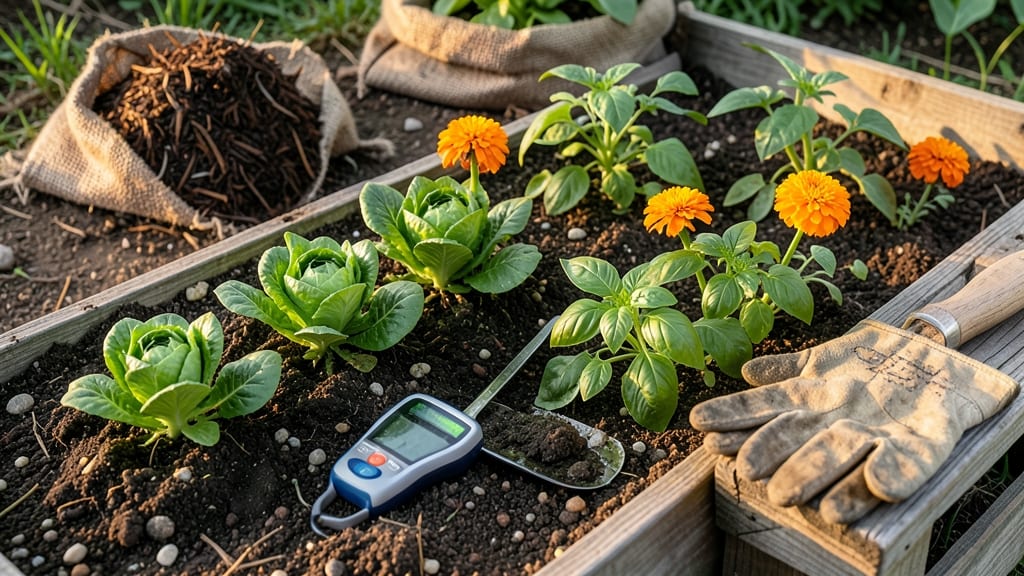
Creating ideal soil for plant growth requires a mix of loamy texture, a balanced pH of 6.0–7.0, and 5–10% organic matter to optimize drainage, aeration, and nutrient delivery while fostering root health and microbial ecosystems. Always tailor the blend to your plants' specific needs and local climate conditions.
Soil isn't just dirt—it's a living ecosystem where roots breathe, microbes thrive, and nutrients become accessible. 🌱 The loamy texture (equal parts sand, silt, and clay) prevents compaction while allowing water and oxygen to move freely, which is critical for root expansion.
Meanwhile, the pH range of 6.0–7.0 ensures plants can absorb essential nutrients like nitrogen and phosphorus without toxicity. Organic matter, like compost or aged manure, acts like a sponge, holding moisture and slowly releasing nutrients as microbes break it down.
For example, acid-loving plants like blueberries need a pH closer to 4.5–5.5, while vegetables thrive in the neutral 6.0–7.0 range. Testing your soil's current composition is the first step to creating the perfect foundation for any garden.
This balanced approach isn't just theory—it directly impacts plant vigor. Poor drainage from heavy clay or nutrient lockout from extreme pH can stunt growth, while the right mix promotes lush foliage and robust blooms.
For instance, adding perlite to clay soil improves aeration, while peat moss helps sandy soil retain moisture. The key is observing your plants' responses and adjusting gradually. 🌿
💡 In This Article
- How Soil pH, Texture, and Organic Matter Affect Plant Health
- DIY Soil Mixing Guide for Different Plant Types
How soil pH, texture, and organic matter affect plant health
The science behind soil composition starts with pH levels, which determine how easily plants can access nutrients. A pH of 6.0–7.0 creates a neutral environment where essential minerals like nitrogen, phosphorus, and potassium dissolve properly.
For example, at pH 5.5, iron becomes more available, but aluminum toxicity can occur, while at pH 7.5+, phosphorus binds tightly to soil particles, making it inaccessible. 🌱 This is why blueberries thrive in acidic soil (pH 4.5–5.5)—their roots have evolved to extract nutrients in these conditions, while tomatoes prefer slightly acidic to neutral soil (pH 6.0–6.8).
Soil texture—the balance of sand, silt, and clay—directly impacts drainage and aeration. Loamy soil (40% sand, 40% silt, 20% clay) strikes the perfect balance: sand provides gritty texture for drainage, silt holds moisture and nutrients, and clay binds particles together.
Compare this to pure clay soil, which holds water like a sponge but suffocates roots by blocking oxygen, or sandy soil, which drains too quickly, starving plants of nutrients. The porosity of loamy soil (40–60% air space) allows roots to breathe while retaining enough moisture for microbial activity.
Organic matter acts as the soil's "glue" and nutrient reservoir. Compost or well-rotted manure contains 5–10% organic carbon, which microbes decompose into plant-available nutrients like nitrogen and phosphorus. These microbes also produce glomalin, a sticky protein that binds soil particles into aggregates, improving structure.
Without organic matter, soil becomes compacted and nutrient-poor—think of a barren desert versus a fertile forest floor. For instance, adding 1–2 inches of compost annually can double microbial populations within months, creating a self-sustaining ecosystem.
Climate plays a hidden but critical role in soil health. In hot, dry regions, organic matter decomposes faster, requiring more frequent amendments, while cooler climates slow microbial activity.
For example, a vegetable garden in Arizona might need 15% organic matter to retain moisture, whereas one in Washington state could thrive with 8–10%. Even the same plant—like a rosebush—may need different soil blends in Florida (more sand for drainage) versus New York (more clay for moisture retention).
Here’s how these factors interact in real-world scenarios: A tomato plant in loamy soil with pH 6.5 and 10% compost will produce 30% more fruit than in sandy soil with pH 7.5 because the roots can access phosphorus and potassium efficiently.
The compost also feeds beneficial fungi like mycorrhizae, which extend the root system by up to 10 times, improving water and nutrient uptake. 🌿
Testing your soil’s current composition is the first step to creating the perfect foundation for any garden.
A simple pH test kit ($10–$20) or soil analysis from a local extension office reveals deficiencies, while a jar test (fill a jar with soil and water, shake, then observe settling layers) shows texture.
For example, if your soil settles with 20% sand, 60% silt, and 20% clay, it’s already loamy—just add organic matter to boost fertility.