
Tools
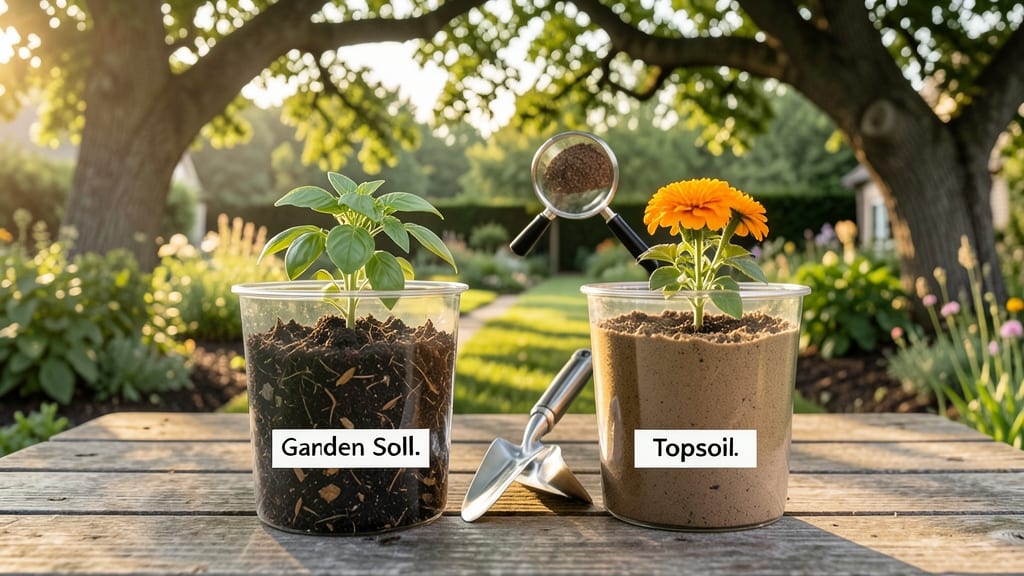
Garden soil and topsoil are not the same: topsoil is the nutrient-rich uppermost layer of soil, while garden soil blends topsoil with compost, sand, or other amendments for improved plant growth and drainage.
While topsoil is nature's own nutrient-rich layer, garden soil is a custom mix designed to meet specific planting needs. 🌱 Topsoil forms naturally over centuries through decomposition, but garden soil gets its boost from added organic matter like compost or perlite to improve texture and fertility.
This makes garden soil ideal for containers or raised beds where you need precise control over drainage and nutrients.
Think of topsoil as the foundation—great for leveling lawns or filling large planting areas—but garden soil is the upgrade for delicate plants or high-yield gardens. The key difference? Garden soil often contains 20-30% organic matter compared to topsoil's 5-10%, giving it better moisture retention and aeration for root development.
💡 In This Article
- What Makes Topsoil Different From Regular Soil
- When to Use Topsoil vs Garden Soil in Your Yard
What makes topsoil different from regular soil
Topsoil is nature's own nutrient powerhouse, forming over centuries through the slow decomposition of organic materials like leaves, plants, and animal matter. This process creates a layer typically 2-12 inches deep that contains 5-10% organic matter by volume, along with essential minerals from weathered rock.
The texture is usually loamy—meaning it balances sand, silt, and clay—giving it excellent water retention and aeration for plant roots.
What sets topsoil apart is its natural fertility from decomposed materials, though it often lacks the precise nutrient balance gardeners need. For example, natural topsoil might contain 0.5-1% nitrogen, 0.1-0.2% phosphorus, and 0.1-0.5% potassium—sufficient for wild plants but often insufficient for cultivated vegetables.
The structure also varies: clay-heavy topsoil can become compacted, while sandy topsoil drains too quickly for moisture-sensitive plants like tomatoes.
Garden soil, however, is a human-engineered upgrade. By blending topsoil with 20-30% compost or aged manure, gardeners boost organic matter content dramatically. This creates a soil that holds 3-5 times more moisture than natural topsoil while maintaining loose, crumbly texture.
The addition of perlite or vermiculite further improves aeration, making it ideal for container gardening where roots need both oxygen and nutrients. 🌱
Consider this comparison: Natural topsoil might have a pH of 6.0-7.5 (slightly acidic to neutral), but garden soil blends can be adjusted to 6.0-7.0—the ideal range for most vegetables. The key difference lies in consistency: while topsoil's composition varies by location, garden soil provides predictable performance through controlled mixing.
This predictability is why gardeners often choose it for high-value crops.
Another critical distinction is microbial activity. Natural topsoil contains 100 million to 1 billion beneficial microbes per gram, but garden soil's enhanced organic matter supports even higher populations—up to 10 billion microbes per gram—which break down nutrients faster and suppress plant diseases.
This biological boost explains why garden soil often produces healthier plants with fewer supplements.
The visual difference is striking too. Topsoil appears darker brown with visible rock fragments, while garden soil has a uniform, rich brown or black color from added compost.
When you squeeze a handful of each, topsoil may crumble unevenly, while garden soil holds its shape briefly before breaking apart—indicating better moisture control. 💫