
Shrubs
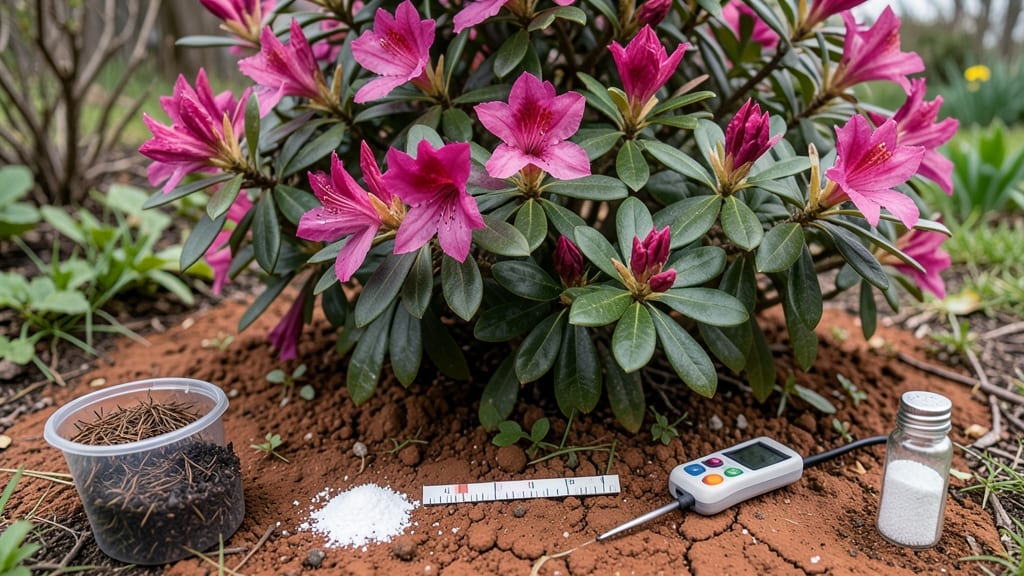
Red clay soil is acidic, typically falling within a pH range of 5.0 to 6.5 due to its iron oxide content and natural mineral composition. While many plants thrive in this range, some may need soil amendments to optimize growth.
Red clay soil gets its acidic nature from the iron oxides and organic decomposition that happen naturally over time. 🌱 The dense structure also affects how water drains, which can either lock in acidity or help balance it out.
Unlike sandy soil that drains too quickly or loamy soil that's more neutral, red clay holds onto its acidity longer—meaning you'll need to test it regularly if you're growing sensitive plants.
This acidity level works perfectly for acid-loving plants like azaleas, blueberries, and pines, but others like tomatoes or peppers might need a boost of lime to raise the pH. Soil testing is your best friend here—it tells you exactly what adjustments to make before planting.
I always recommend starting with organic amendments like compost or pine needles before turning to chemical fixes.
💡 In This Article
- Red Clay Soil pH Science and Natural Factors
- Best Plants for Acidic Red Clay Soil and Adjustment Tips
Red clay soil pH science and natural factors
The acidity in red clay soil stems primarily from its high iron oxide content, which reacts with water and organic matter to form weak acids over time.
These iron-rich minerals (like hematite and goethite) give the soil its signature reddish hue while also contributing to its naturally low pH. The decomposition of organic materials in this dense, slow-draining soil further releases acidic compounds like humic and fulvic acids, pushing the pH downward.
Unlike sandy soils that drain rapidly and maintain near-neutral pH, red clay holds moisture tightly, creating anaerobic conditions that slow microbial activity. This means organic matter decomposes more slowly, releasing fewer alkaline byproducts that would normally balance acidity.
In contrast, loamy soils with better drainage typically sit around 6.0-7.0 pH, while red clay often stays in the 5.0-6.5 range unless amended. The clay particles also carry negative charges that attract hydrogen ions (H+), further lowering the pH.
Regional mineral deposits play a huge role too. Areas with volcanic activity or iron-rich bedrock (like the southeastern U.S.) produce red clay with even higher acidity. For example, Georgia's red clay often tests around 5.2-5.8 pH naturally, while Texas varieties might be slightly less acidic due to different geological formations.
The key factor is how these minerals interact with rainfall—heavy rains leach alkaline minerals away, leaving behind more acidic compounds.
Drainage becomes critical here. Poor drainage in clay soil traps water, which accelerates the breakdown of minerals and organic matter into acidic forms. This is why red clay gardens often need raised beds or amendments to improve aeration.
The dense structure also means any added lime or sulfur takes longer to distribute evenly, requiring more frequent testing. Think of it like mixing powder into thick batter—it takes patience to get uniform results.
What most people don't realize is how temperature affects this process. Warmer climates speed up mineral reactions, intensifying acidity, while cooler regions might see more stable pH levels. For instance, red clay in Florida's heat may test 5.0-5.5 pH, while similar soil in North Carolina could be 5.5-6.0.
This regional variation explains why some gardeners swear by their local red clay while others struggle with it—context matters more than generalizations.
To visualize this, imagine red clay as a sponge soaked in weak vinegar—it holds onto that acidity tightly until you actively work to neutralize it. The dense particles create tiny pockets where hydrogen ions accumulate, making pH adjustments a gradual process.
This is why organic amendments like composted pine needles (which add natural acidity) or crushed eggshells (for alkalinity) work better than quick chemical fixes in the long run.