
How To
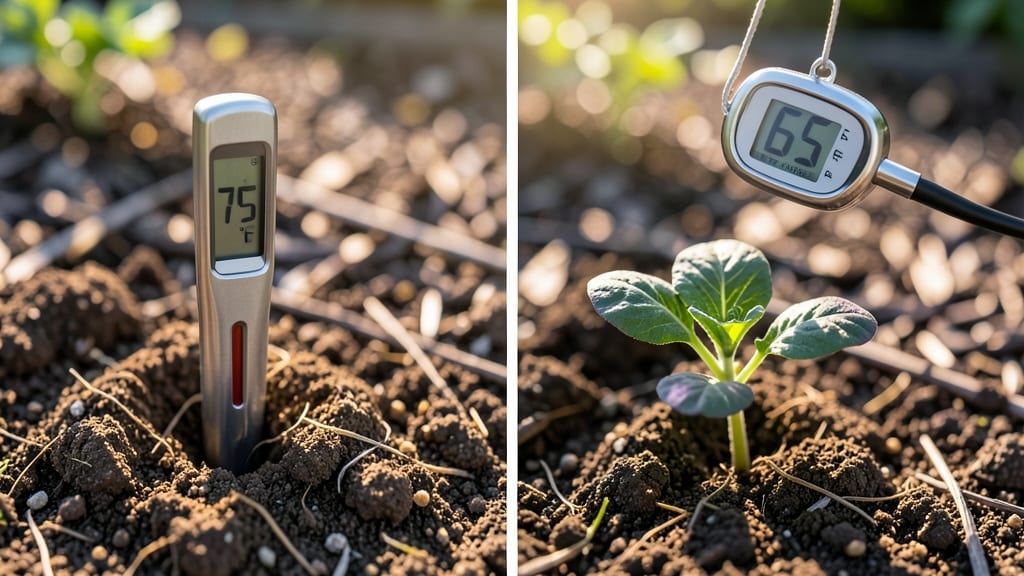
Soil temperature is warmer than air because dark soil absorbs and retains heat more effectively than air, which circulates freely and loses warmth quickly. This creates a stable root zone for plants, especially during early spring and late fall when air temperatures drop faster.
This heat difference happens because soil acts like a natural insulator. 🌱 The dark surface absorbs sunlight directly, while air cools rapidly after sunset.
For gardeners, this means roots stay warmer longer, which is crucial for germination—many seeds need soil temps around 60-75°F to sprout, even when morning air feels chilly. The deeper you go, the more stable the temperature stays, protecting delicate root systems from sudden cold snaps.
You can measure soil warmth with a simple soil thermometer—just push it 2 inches deep for accurate readings. If your soil runs cold, consider adding organic mulch like straw or wood chips to trap heat.
This trick works especially well for cool-season crops like lettuce or peas, which thrive when soil stays 50-60°F while air temperatures hover near freezing.
💡 In This Article
- Why Soil Retains Heat Better Than Air
- Optimal Soil Temperatures for Germination and Growth
Why soil retains heat better than air
Soil acts like a giant heat sink because of its thermal mass—the ability to absorb and store heat energy. Unlike air, which moves freely and loses warmth through convection, soil particles (minerals, organic matter) hold onto heat like a sponge.
Dark-colored soil, especially rich in organic material, absorbs up to 90% of sunlight that hits it, converting it into infrared energy that warms the soil gradually. This is why a sunny garden patch can feel toasty even when morning air is crisp at 45°F.
The moisture in soil plays a critical role too. Water has a high specific heat capacity, meaning it resists temperature changes. A damp soil profile stays warmer longer than dry soil because the water molecules act as tiny heat buffers.
For example, sandy soil (with low moisture) might drop from 75°F to 60°F overnight, while clay soil (higher moisture) could only lose 5°F in the same time. This stability is why roots—especially shallow ones—thrive in moist, well-drained soils during cool seasons.
At the microscopic level, soil's porous structure traps heat near plant roots. Air pockets between soil particles create insulation, similar to how a down jacket works. This trapped warmth is vital for microbial activity—the tiny organisms breaking down organic matter need consistent 60-80°F temperatures to function optimally.
When air cools rapidly after sunset, these microbes slow down, but soil's retained heat keeps them active longer, accelerating nutrient cycling for your plants.
One surprising factor is albedo—how much light a surface reflects. Freshly tilled soil reflects only 5-10% of sunlight, while compacted or light-colored soil reflects 20-30%**. That lost energy means cooler soil and slower germination.
This is why gardeners often darken soil with compost or mulch: it maximizes heat absorption. Even a 1-inch layer of straw mulch can raise soil temperatures by 2-4°F during daytime hours.
Consider this real-world example: In early spring, air temperatures might hover around 50°F at dawn, but 2 inches below the surface, soil can still be 58°F.
This 8°F difference is enough to trigger germination in cool-season crops like spinach (which needs 40-50°F soil) while warm-season tomatoes (requiring 70°F+) remain dormant. This thermal buffer zone is why gardeners often plant early crops before the last frost—roots access warmth that air measurements miss.
For gardeners working with containers, this principle applies too. Black plastic pots absorb heat 30% faster than terracotta, creating a microclimate where roots stay warmer. Even a simple black plastic mulch sheet laid over garden beds can raise soil temperatures by 5-10°F during spring planting.
The key takeaway? Soil's heat-retaining superpowers create a stable environment where plants can focus on growth rather than surviving temperature swings.