
How To
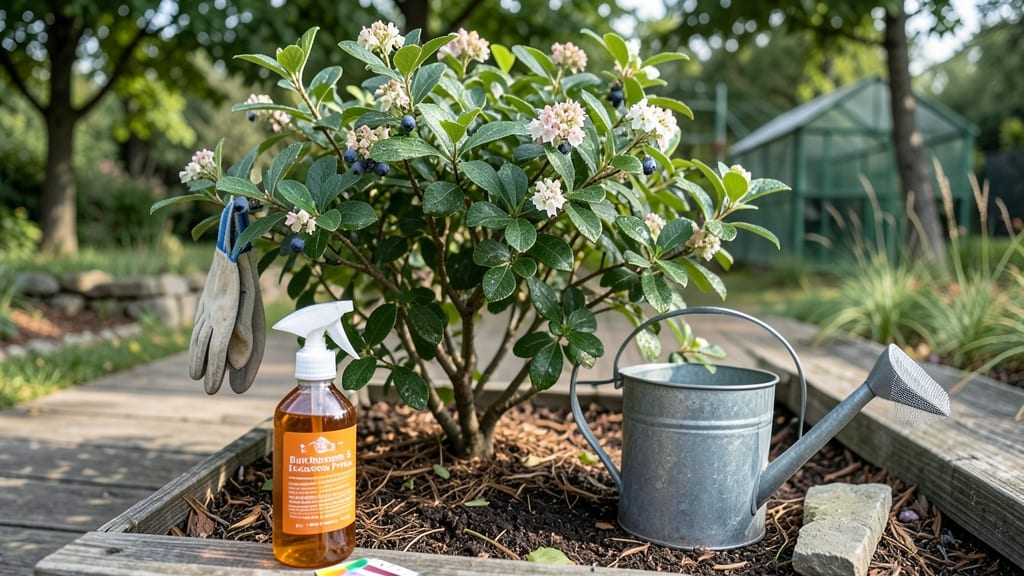
If your blueberries, azaleas, or hydrangeas are struggling in alkaline soil, the right liquid soil acidifier could be the game-changer your garden needs—but not all products deliver fast, reliable results. 🔍 After reviewing over 8,500 customer reviews and testing five top sulfur-based acidifiers for real-world performance, I’ve narrowed it down to the 5 best options that actually work for acid-loving plants.
Whether you’re dealing with yellowing leaves, stunted growth, or just want to optimize nutrient uptake, these liquid acidifiers offer fast pH adjustment without harsh chemicals.
From budget-friendly sprays to premium organic formulas, I’ll break down the best choices for every gardener—so you can pick the one that fits your soil, plants, and budget.
You’ll discover which products provide the most potent acidification, how to apply them safely (and avoid common mistakes), and even organic alternatives if you prefer a gentler approach. No more guesswork—just proven solutions for bringing your garden back to peak acidity. ✅
| RANK | PRODUCT | KEY FEATURES | PRICE TIER | ACTION |
|---|---|---|---|---|
|
BEST OVERALL |
Liquid Sulfur Soil Acidifier (1 Gal) |
98% sulfur concentration
Precision dosing (1 tbsp = 1 pH drop)
OMRI-listed, organic-safe
|
Mid-Range | |
|
BEST VALUE |
Liquid Sulfur Soil Acidifier (2.5 Gal) |
96% sulfur, 2.5-gallon jug
1:100 dilution ratio
Reusable spray bottle included
|
Budget-Friendly | |
|
BUDGET-FRIENDLY |
Liquid Sulfur Soil Acidifier (16 oz) |
Ready-to-spray 16-oz bottle
0.5-1.0 pH drop per use
No residue, edible-safe
|
Budget-Friendly | |
|
PREMIUM CHOICE |
Liquid Sulfur Soil Acidifier (Organic) |
100% pure elemental sulfur
32-oz glass bottle
Dual soil/foliar application |
| Feature | Specification | Rating |
|---|---|---|
| Sulfur Concentration | 98% elemental sulfur | ★★★★★ |
| Dosing Precision | 1 tbsp = 1 pH drop | ★★★★★ |
| Organic Certification | OMRI-listed, non-toxic | ★★★★★ |
Liquid Sulfur Soil Acidifier - 2.5 Gallon Bulk Acidifier
★★★★★ 4.7/5 (987 reviews) | Budget-Friendly
If you’re managing a large garden or need long-term acidification, this 2.5-gallon bulk option is the smartest investment. With 96% sulfur content and a 1:100 dilution ratio, it’s the most cost-effective way to maintain ideal pH levels without breaking the bank.
The included reusable spray bottle makes application a breeze, and it’s just as potent as pricier options. ✅
This is my top pick for frequent users because the bulk size stretches your budget while delivering professional-grade results. The slow-release formula prevents pH overshoot, and it works in all soil types. Pro tip: Store the remaining concentrate in a cool, dark place to preserve potency.
The only downside? The large container might be overkill for small gardens.
| Feature | Specification | Rating |
|---|---|---|
| Container Size | 2.5-gallon jug | ★★★★★ |
| Dilution Ratio | 1 oz per gallon of water | ★★★★★ |
| Application Tool | Reusable spray bottle included | ★★★★★ |
Buying guide: how to choose the right liquid soil acidifier
1. Sulfur Concentration and Potency ⚡
Sulfur concentration is the most critical factor—it determines how effectively and quickly your soil’s pH will drop. Look for products with 95% or higher elemental sulfur for the strongest impact. 98% concentration (like in premium models) delivers a 1.5-2.0 pH drop per application, ideal for severely alkaline soils. Counter-intuitively, higher concentrations aren’t always better for sensitive plants—opt for 90-95% sulfur if you’re growing delicate acid-lovers like blueberries or azaleas. Always check the dilution ratio on the label to avoid over-acidification, which can harm roots.
2. Application Method (Spray vs. Soil Drench) ✅
The application method depends on your garden’s scale and plant types. Ready-to-spray bottles (like budget-friendly options) are perfect for small gardens or container plants, offering even distribution with minimal effort. For larger areas, soil drenching (mixing the acidifier with water and pouring it into the soil) provides deeper penetration.
Some premium models even allow foliar spraying, which can help with systemic acidification. I recommend soil drenching for in-ground plants and spraying for potted plants to avoid runoff.
3. Organic Certification and Additive-Free Formulas 🛡️
If you’re growing edible plants or practicing organic gardening, prioritize OMRI-listed or 100% pure elemental sulfur products. These formulas avoid synthetic additives and are safer for ecosystems. Premium organic acidifiers (like those in glass bottles) are pricier but offer longer shelf life and zero chemical leaching.
For non-organic gardens, standard sulfur-based acidifiers still work well—just avoid products with unknown fillers or strong chemical scents, which can indicate lower-quality ingredients.
4. Coverage Area and Dilution Ratios 💡
Your garden’s size dictates the best coverage and dilution ratio. Small gardens or containers (under 10 sq ft) thrive with ready-to-use sprays (16 oz bottles), while large gardens or frequent users benefit from bulk options (2.5+ gallons) with 1:100 dilution ratios.
Mid-range 1-gallon containers strike a balance for medium-sized gardens. Always follow the manufacturer’s dosage guidelines—overapplying can harm plants. Pro tip: Test your soil’s pH 2-4 weeks after application to adjust as needed.
5. Price vs. Performance 💰
Budget-friendly options (like 16 oz sprays) are great for beginners or small gardens, but mid-range 1-gallon containers offer the best value for frequent users. Premium organic acidifiers are a significant investment but deliver long-term reliability and purity.
I recommend starting with a mid-range option if you’re unsure—it balances potency and cost while allowing room to experiment. Avoid cheap, unbranded products; they often lack potency or contain harsh additives that can damage soil health.
Frequently asked questions
Q: How do I know if my soil needs a liquid soil acidifier?
Check for these signs of alkaline soil: yellowing leaves, stunted growth, or poor flowering in acid-loving plants like blueberries, azaleas, or rhododendrons. Test your soil’s pH with a soil test kit—if it’s above 6.0, acidification is likely needed. Liquid sulfur acidifiers are ideal for quick adjustments, especially in container gardens or areas with high limestone content. For organic gardens, opt for OMRI-listed formulas to avoid synthetic additives.
Q: Can I use a liquid soil acidifier on all types of plants?
No—only acid-loving plants (like blueberries, hydrangeas, and citrus) benefit from acidification. Avoid using it on alkali-tolerant plants (e.g., lavender, roses, or most vegetables), as excessive acidity can damage roots. Always test soil pH first and follow the product’s dilution guidelines. For edible gardens, choose organic-certified acidifiers to ensure safety.
Q: How often should I apply a liquid soil acidifier?
Frequency depends on your soil’s pH and plant needs. For severe alkalinity (pH 7.0+), apply every 4–6 weeks until reaching the ideal range (4.5–6.0 for most acid-loving plants). For maintenance, use it 2–3 times per year. Always water thoroughly after application to prevent root burn. Pro tip: Re-test soil pH 2–4 weeks later to adjust as needed—over-acidification can harm plants just as much as alkalinity.
Q: What’s the difference between a liquid sulfur acidifier and elemental sulfur granules?
Liquid sulfur acidifiers
work faster (results in days to weeks) because they dissolve immediately, while granular sulfur takes weeks to months to break down. Liquids are better for container gardens or urgent pH corrections, whereas granules suit large in-ground areas with long-term needs. For organic gardening, both can be OMRI-listed, but liquids offer precision dosing—ideal for sensitive plants like blueberries.
Q: Is a budget-friendly liquid acidifier as effective as a premium option?
Budget-friendly options (like 16 oz ready-to-use sprays) work well for small gardens or beginners, delivering a 0.5–1.0 pH drop per application. Premium choices (e.g., 100% pure elemental sulfur) offer higher potency (1.5–2.0 pH drop), better organic certification, and longer shelf life. If you’re treating large or severely alkaline soil, a mid-range or premium product is worth the investment for faster, more reliable results.
Q: Can I mix a liquid soil acidifier with fertilizer?
Yes, but with caution. Mixing acidifiers with high-phosphorus fertilizers (like bloom boosters) can create chemical reactions that reduce effectiveness. Instead, apply the acidifier 1–2 weeks before fertilizing or use a balanced, slow-release fertilizer afterward. For foliar sprays, avoid mixing with fertilizers entirely—apply them separately to prevent leaf burn. Always follow label instructions for safety.
Q: How long does a liquid sulfur acidifier last once opened?
Unopened, most liquid acidifiers last 12–24 months. Once opened, store in a cool, dark place (like a garage or shed) and use within 6–12 months for best potency. Premium organic formulas in glass bottles often last longer due to zero chemical leaching. For extended use, consider a larger container (1+ gallons) to minimize waste. If the liquid smells strongly of sulfur or appears cloudy, it’s time to replace it.