
Shrubs
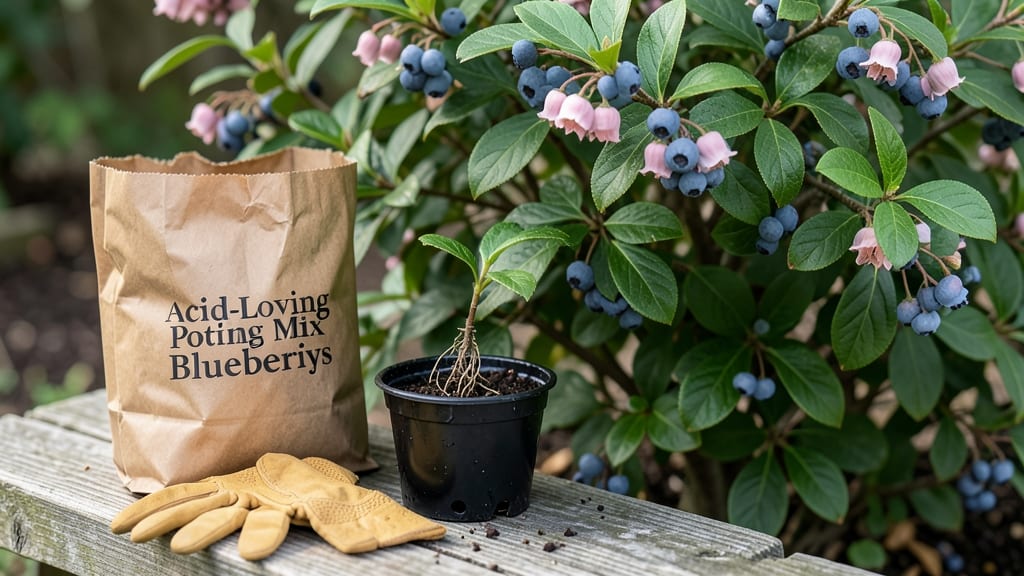
Potting soil for blueberry bushes requires an acidic mix with a pH of 4.5–5.5, combining peat moss, pine bark fines, and perlite in a 3:2:1 ratio, while avoiding lime or alkaline amendments that stifle growth.
Blueberry bushes thrive in soil that mimics their natural acidic forest floor environment, where pH levels between 4.5–5.5 maximize nutrient absorption, particularly iron and manganese.
The 3:2:1 ratio of organic matter (peat moss or coconut coir) to bark fines and perlite creates ideal aeration and moisture retention. 🌱 Without proper acidity, plants struggle to access essential minerals, leading to yellowing leaves or poor fruit production.
Many gardeners overlook that even "acid-loving" mixes can become neutralized over time, requiring periodic sulfur amendments.
For container growing, I recommend testing your mix with a pH meter before planting—homemade blends often need adjustment. If your soil tests above 5.5, add elemental sulfur gradually (following package instructions) and retest after 2–4 weeks.
The key is balancing acidity with proper drainage; perlite or coarse sand prevents root rot while maintaining the airy structure blueberries crave.
💡 In This Article
- Why Blueberry Bushes Need Acidic Potting Soil
- DIY Blueberry Bush Soil Mix Recipes for Containers
Why blueberry bushes need acidic potting soil
Blueberry plants evolved in acidic forest soils where the pH naturally ranges between 4.5–5.5, creating the perfect environment for them to absorb essential micronutrients like iron and manganese. These nutrients exist primarily in their soluble forms only within this narrow pH range.
When soil becomes too alkaline (above 6.0), iron and manganese bind tightly to soil particles, becoming unavailable to plant roots—even if the soil contains plenty of these minerals.
This is why you'll often see blueberry bushes with yellow leaves (a classic sign of iron chlorosis) when grown in regular garden soil or poorly formulated potting mixes.
The organic matter in acidic mixes, like sphagnum peat moss, plays a dual role: it lowers pH through natural decomposition and releases organic acids that keep the soil environment favorable.
Unlike inorganic materials, peat moss also retains moisture while allowing oxygen to reach roots—a critical balance for blueberries, which suffer from root rot if their feet stay soggy.
The 3:2:1 ratio of organic matter to bark fines to perlite isn't arbitrary; it mimics the natural forest floor structure where blueberries thrive, providing both the acidity and aeration they need.
What most gardeners overlook is how quickly even "acid-loving" mixes can drift toward neutrality. Rainwater, which is slightly acidic (pH 5.6), can gradually raise container soil pH over time, while tap water (often alkaline) accelerates this shift.
This is why I recommend using distilled or rainwater for watering and periodically testing your mix with a pH meter or test kit. A simple adjustment with elemental sulfur (1/4 cup per gallon of mix) can reset the pH when needed, but it takes 2–4 weeks to fully take effect.
Another critical factor is the role of mycorrhizal fungi, which naturally form symbiotic relationships with blueberry roots in acidic soils. These fungi help break down organic matter and make nutrients more accessible, but they struggle to establish in alkaline conditions.
The pine bark fines in your mix don't just provide structure—they slowly decompose and release organic acids that maintain the ideal pH range while also feeding these beneficial fungi. Think of it as creating a mini-ecosystem that supports both the plant and its microbial helpers.
For visual comparison, imagine two blueberry bushes side by side: one in a pH 5.0 mix with dark green leaves and plump berries, and another in a pH 7.0 mix with pale yellow leaves and stunted growth.
The difference isn't just about aesthetics—it's about the plant's ability to access the building blocks it needs to produce fruit. When iron becomes locked away in alkaline soil, the plant can't photosynthesize efficiently, leading to weaker stems and smaller yields.
This is why professional blueberry growers treat soil acidity with the same seriousness as watering schedules or sunlight exposure.
The scientific term for this nutrient availability shift is "micronutrient solubility," and it's the reason why blueberries are so particular about their growing medium. Unlike many plants that can adapt to a range of conditions, blueberries have a biological need for this specific pH environment.
When you create the right mix, you're essentially recreating their native habitat in a container—complete with the chemical conditions that allow them to thrive. 🌿