
Propagation
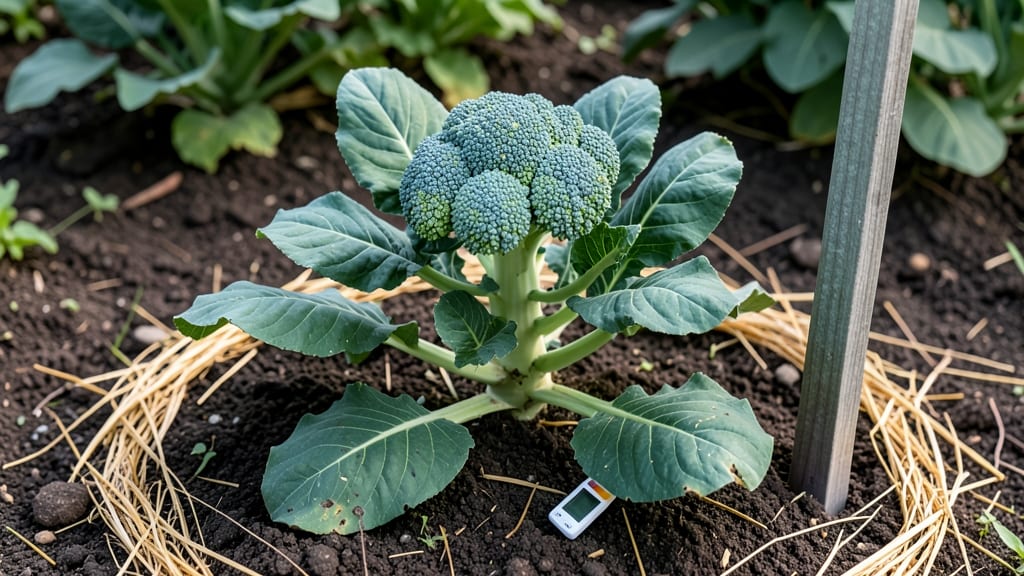
For broccoli to thrive, you need soil that drains well, stays nutrient-rich, and maintains a slightly acidic to neutral pH (6.0–7.0). A loamy texture with plenty of organic matter like compost encourages strong root growth and helps form those perfect heads. Avoid compacted clay or overly sandy soil, which can stunt growth or wash away nutrients.
Broccoli plants are picky about their growing conditions, and soil isn't just the foundation—it's the lifeline for those nutrient-packed heads. 🌱 The ideal mix balances moisture retention with aeration, which is why loamy soil works best.
Think of it like a sponge that holds water but doesn't drown the roots. Organic matter like compost doesn't just feed the plants—it also improves soil structure over time, making it easier for roots to access nutrients.
If your soil leans toward clay, amending with perlite or aged manure can lighten it up, while sandy soil benefits from peat moss or coconut coir to boost water retention.
Here's a pro tip: broccoli loves consistency. Sudden pH swings or waterlogged soil can stress the plant, leading to bitter-tasting heads or poor growth. Test your soil before planting—most garden centers sell simple pH test kits.
If your soil's too acidic, a sprinkle of lime can adjust it, while sulfur lowers pH if needed. And remember, broccoli's heavy feeders—regular light applications of balanced fertilizer (like 10-10-10) keep them happy without overloading the soil.
💡 In This Article
- Broccoli Soil Requirements: pH, Texture, and Drainage Explained
- How to Prepare and Amend Soil for Broccoli Plants
Broccoli soil requirements: pH, texture, and drainage explained
Broccoli plants thrive in soil with a pH range of 6.0–7.0 because this balance optimizes nutrient availability, particularly for nitrogen, phosphorus, and potassium—the trio essential for head formation.
At this pH, the soil's microbial activity peaks, breaking down organic matter into forms broccoli roots can absorb efficiently. 🌱 For example, nitrogen uptake drops sharply below pH 5.5, leading to stunted growth, while above pH 7.5, phosphorus becomes locked away, causing poor root development.
Think of pH as the soil's "taste"—too acidic or alkaline, and the plant can't "taste" its nutrients.
The ideal soil texture for broccoli is loamy, a balanced mix of sand (40%), silt (40%), and clay (20%). This composition holds moisture without suffocating roots while providing the structural support needed for deep taproots to anchor the plant.
Clay-heavy soils compact easily, restricting oxygen flow and causing root rot, while sandy soils drain too quickly, forcing roots to work harder to find nutrients. A simple test: squeeze a handful of moist soil—if it holds shape but crumbles easily, it's loamy.
For heavy clay, mix in 2-3 inches of compost or perlite to improve aeration.
Drainage is non-negotiable for broccoli because its roots are sensitive to waterlogging. Poor drainage leads to sulfur deficiency, causing yellowing leaves (chlorosis), while excess moisture promotes fungal diseases like black rot. The solution?
Amend clay soils with organic matter like compost or aged manure and sandy soils with peat moss or coconut coir to improve water retention. For container gardening, ensure pots have drainage holes and use a mix of 50% potting soil, 30% compost, and 20% perlite.
This combination mimics ideal garden soil while preventing soggy roots.
Organic matter isn't just food for plants—it's the soil's "glue" that binds particles together, creating pores for air and water movement. Broccoli benefits from 3-5% organic matter in the soil, which improves water-holding capacity by 20-30% while adding essential micronutrients like boron and zinc.
Without it, soil becomes a nutrient desert, even if fertilized. For example, adding 1-2 inches of compost before planting boosts microbial activity, which in turn enhances nutrient cycling. The result? Broccoli heads grow denser and more flavorful, with fewer pests targeting stressed plants.
Seasonal adjustments matter too. In cooler climates, broccoli grows best in spring or fall when soil temperatures stay between 60-70°F. Warmer soils (>75°F) speed up germination but can lead to bolting (premature flowering), ruining the harvest.
To cool soil in summer, mulch with straw or shredded leaves, keeping the surface 2-3 inches thick. This also conserves moisture, reducing the need for frequent watering, which can disrupt root zones and invite disease.
Here's a pro move: test your soil before planting. Most garden centers sell $10 digital pH meters that give instant readings.
If your soil tests below 6.0, work in lime (calcium carbonate) at 5 lbs per 100 sq ft; for above 7.0, use elemental sulfur at 1 lb per 100 sq ft. Re-test in 2-3 months—pH changes take time, and broccoli won't tolerate sudden shifts. The payoff?
Healthier plants with 20-30% larger heads and sweeter florets.
Remember, broccoli's soil needs aren't just about chemistry—they're about creating the right environment for its roots to explore. A well-amended, properly drained loam acts like a five-star hotel for broccoli plants, ensuring they focus on growing heads instead of fighting for survival. 🌿