
How To
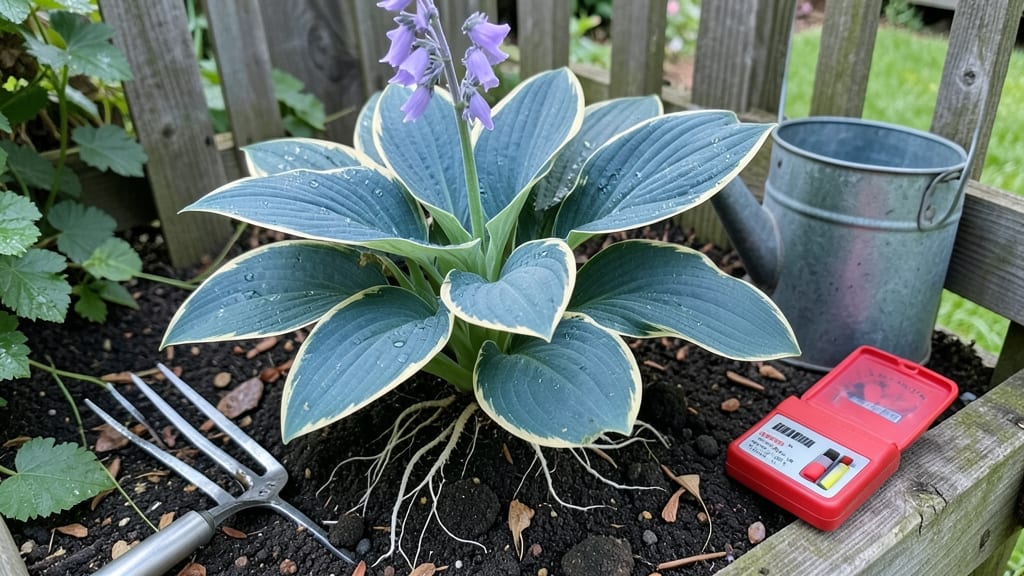
The best soil for hostas combines well-draining, nutrient-rich properties with a slightly acidic to neutral pH between 6.5 and 7.5. Mixing organic compost with existing soil improves fertility, while adding sand or perlite prevents waterlogging that causes root rot.
Hostas are particular about their growing conditions, and their soil needs reflect that.
The ideal pH range of 6.5-7.5 isn't just arbitrary—it ensures your plants can absorb essential nutrients like calcium and magnesium efficiently. 🌱 Without proper soil chemistry, you might notice yellowing leaves (a sign of iron deficiency) even when other growing conditions seem perfect.
I always recommend testing your soil before planting, as local conditions can vary dramatically. For example, clay-heavy soils common in many regions need significant amendment to achieve the right balance of drainage and moisture retention.
When creating your own mix, think of it as a recipe where each ingredient plays a critical role. A blend of 50% topsoil, 30% compost, and 20% perlite or coarse sand works exceptionally well for most gardeners.
This combination prevents compaction while providing the organic matter hostas crave for steady growth. For container gardening, you'll want to increase the perlite proportion to about 30% to enhance drainage—containers dry out faster than in-ground beds.
💡 In This Article
- Hostas Soil pH and Nutrient Needs Explained
- DIY Hostas Soil Mix Recipe for Optimal Growth
Hostas soil pH and nutrient needs explained
The ideal 6.5–7.5 pH range for hostas isn't random—it's directly tied to how plants absorb critical nutrients. At this pH, hostas can efficiently uptake calcium and magnesium, which strengthen cell walls and support enzyme function.
Too acidic (<6.0), and iron becomes unavailable, causing iron chlorosis (yellow leaves with green veins). Too alkaline (>7.5), and phosphorus binds tightly to soil particles, starving roots of this essential nutrient for energy transfer. 🌱
Organic matter plays an equally vital role. Hostas thrive in soil with at least 5% organic content, which improves moisture retention while preventing compaction. Compost breaks down into humus, creating tiny air pockets that enhance root respiration.
Without this, roots suffocate in dense soil, leading to stunted growth. For example, a soil test revealing 2% organic matter would need 3–4 inches of compost per square foot to reach optimal levels.
Micronutrient deficiencies often reveal soil chemistry issues. Yellowing between leaf veins signals iron deficiency, while purple tinges indicate phosphorus shortages. These problems aren't just cosmetic—they reduce photosynthesis efficiency by 30–50%, directly impacting plant vigor.
Regular soil testing every 2–3 years helps catch these issues early, especially in areas with naturally heavy clay or sandy soils.
Climate also influences nutrient needs. In cooler northern regions, hostas benefit from slightly more acidic soil (6.5–7.0 pH) to prevent fungal diseases like leaf spot. Meanwhile, in hotter southern climates, a 7.0–7.5 pH helps conserve moisture by reducing microbial activity that breaks down organic matter too quickly.
Adjusting pH with lime (to raise) or sulfur (to lower) can fine-tune these conditions.
One often-overlooked factor is soil biology. Healthy hosta roots rely on mycorrhizal fungi, which thrive in well-balanced soil. These fungi extend root systems by 10–20 times, improving nutrient and water uptake.
When soil pH strays too far from ideal, these beneficial relationships break down, leaving plants vulnerable to stress. 🌿
For gardeners dealing with existing soil problems, a two-step approach works best: first amend the soil, then monitor plant responses. For instance, if your soil tests at 5.8 pH, adding 1–2 pounds of dolomitic lime per 100 square feet can raise it to 6.5 over a growing season.
Pair this with a 2-inch compost top dressing to rebuild organic matter and support microbial life.