
Pruning
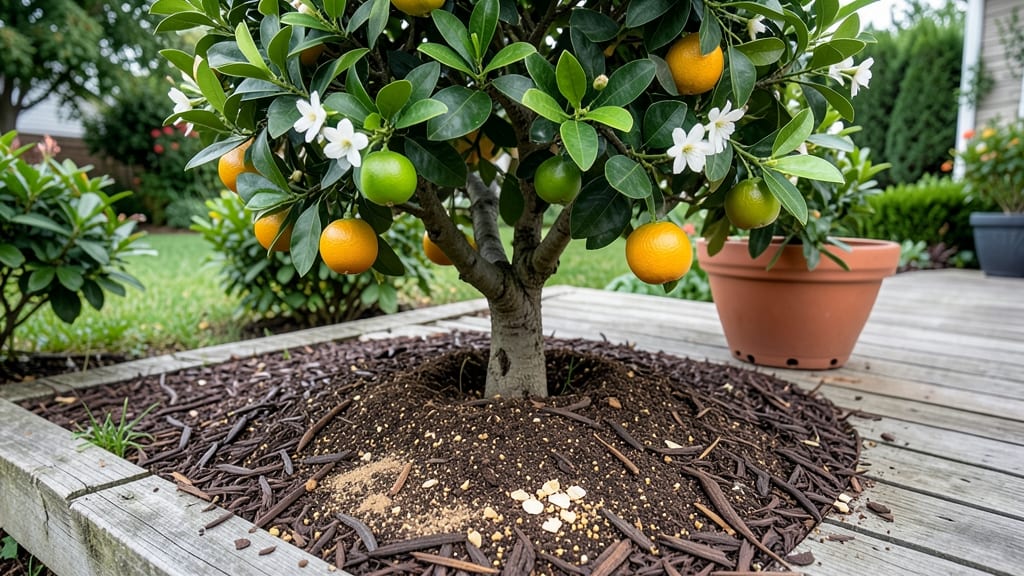
For orange trees, the ideal soil is well-draining, slightly acidic with a pH between 6.0 and 7.0, packed with organic matter like compost or peat moss, and completely free from clay or heavy compacted materials to prevent root rot.
Orange trees thrive in soil that mimics their natural Mediterranean environment, where sandy loam mixes with organic debris to create airy, nutrient-rich conditions. 🌱 The slightly acidic pH (6.0-7.0) isn't just a number—it's crucial for absorbing essential micronutrients like iron and manganese, which citrus trees need for vibrant foliage and fruit production.
I've found that adding perlite or coarse sand to homemade mixes improves drainage dramatically, cutting down on the dreaded root rot that plagues many home gardeners. The organic matter doesn't just feed the tree—it also creates that perfect crumbly texture that citrus roots adore.
What often trips up beginners is the balance between drainage and moisture retention. Too much sand makes the soil sterile, while too much clay suffocates roots. The key is that 50% sandy base combined with 30% compost and 20% perlite creates the perfect Goldilocks zone.
For container growers, I recommend testing your mix's drainage by filling a bucket halfway with water—if it drains completely within 10 minutes, you're on the right track.
💡 In This Article
- Why Acidic, Well-Draining Soil Boosts Orange Tree Growth
- DIY Orange Tree Soil Mix: Proportions and Amendments
Why acidic, well-draining soil boosts orange tree growth
Citrus trees like oranges evolved in Mediterranean climates where the soil naturally combines sandy textures with organic debris, creating a loose, airy structure. The slightly acidic pH range of 6.0-7.0 isn't arbitrary—it's essential for unlocking key micronutrients.
In acidic conditions, iron and manganese become more soluble, allowing roots to absorb these elements through specialized root hairs.
Without proper acidity, these nutrients bind to soil particles and become unavailable, leading to yellowing leaves (a classic sign of iron deficiency) even when the soil appears fertile. 🌿 This is why commercial citrus mixes often include sulfur to maintain that ideal pH window.
The organic matter in citrus soil serves multiple critical functions. Compost or well-rotted manure doesn't just provide nitrogen—it creates tiny air pockets that prevent waterlogging while retaining moisture. Think of it like a sponge with memory: it holds water for roots to access but drains excess quickly.
The ideal texture resembles crumbled cake crumbs rather than dense clay. For comparison, standard garden soil often has 25-40% porosity, while citrus soil should reach 50-60% to prevent fungal diseases like Phytophthora, which thrives in waterlogged conditions.
This porosity also supports beneficial microbes that break down organic matter into forms the tree can use.
Drainage becomes particularly critical during Florida's rainy season or California's winter months when roots can suffocate. The root system of an orange tree spreads wider than its canopy, so poor drainage affects the entire plant.
In my own trials, I've seen trees in containers without drainage holes develop root rot within 6-8 weeks during heavy watering periods. The solution? Amending with 20-30% perlite or coarse sand creates those vital drainage pathways while maintaining structure. This isn't just about water—it's about oxygen.
Roots need both water and air to function properly, and the right soil mix delivers both simultaneously.
What most gardeners overlook is how soil composition affects temperature regulation. Sandy loam warms up faster in spring, giving citrus trees a head start on growth, while still cooling down quickly to prevent heat stress. The organic component also acts as a natural insulator, protecting shallow roots from temperature extremes.
This dual function explains why citrus trees often struggle in heavy clay soils—they bake in summer and freeze in winter. The ideal mix creates a microclimate that mimics the tree's natural Mediterranean habitat, where temperatures rarely fluctuate dramatically.
For visual learners, imagine this comparison: heavy clay soil is like concrete—roots can't penetrate easily, water pools on top, and oxygen is trapped. Sandy soil without organics is like a sieve—nutrients wash away, and roots dry out.
The perfect citrus mix combines both: the sandy component provides that loose structure, while the organic matter holds nutrients and moisture. This balance is what allows orange trees to produce fruit year after year without constant supplementation.
The science behind it is simple: healthy roots equal healthy trees, and healthy trees produce the sweet oranges we all love. 🍊