
Shrubs
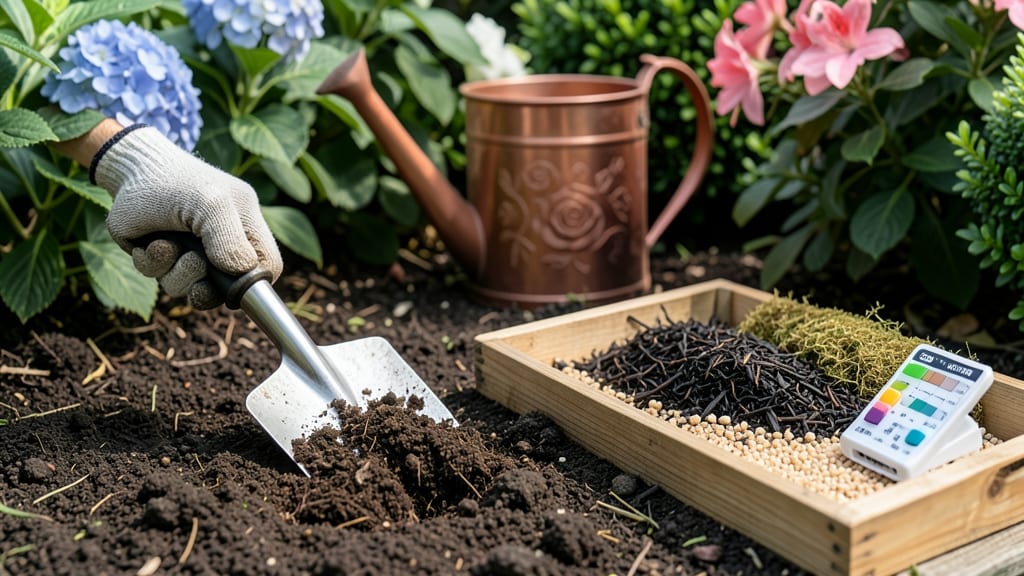
For shrubs to thrive, you need well-draining loam soil with a balanced mix of sand, silt, and clay—typically 60-70% loam, 20-30% compost, and 10-20% coarse sand or perlite. This combination prevents root rot while holding enough moisture, and most shrubs prefer a pH between 6.0 and 7.5.
Shrubs aren't picky about soil, but they do need a good balance of nutrients and airflow. 🌿 The right mix keeps roots healthy by preventing waterlogging while still providing essential minerals. I’ve found that adding organic matter like compost improves fertility, while perlite or sand helps break up compacted soil.
Test your soil first—many garden centers offer simple kits to check texture and pH before planting.
Different shrubs have unique needs. Acid-loving varieties like azaleas need lower pH, while drought-resistant plants like lavender prefer sandy, fast-draining soil. If your yard is heavy with clay, mix in generous amounts of organic material to loosen it up. For sandy soils, adding compost helps retain moisture without suffocating roots.
💡 In This Article
- Perfect Shrub Loam Composition: Mixing Ratios Explained
- Shrub-Specific Soil Adjustments for Drainage and pH
Perfect shrub loam composition: mixing ratios explained
The ideal shrub soil is a carefully balanced loam that mimics nature's perfect recipe: roughly 40% sand, 40% silt, and 20% clay. This ratio creates a crumbly texture that holds moisture like a sponge while allowing excess water to drain away.
Sand particles (0.05-2mm) act as the soil's drainage channels, while silt (0.002-0.05mm) holds nutrients and water near roots. The clay (less than 0.002mm) provides essential minerals but can compact if overused—this is why most gardeners aim for just 20% clay in shrub mixes. 🌱
When mixing your own soil blend, start with 60-70% garden loam as your base, then add 20-30% compost for organic matter that feeds microbes and improves structure. The remaining 10-20% should be coarse sand or perlite—these amendments prevent compaction and create air pockets for roots to breathe.
For example, I've found that boxwoods thrive in a 60% loam, 30% compost, and 10% perlite mix, while hydrangeas benefit from slightly more clay (25%) to hold moisture for their larger root systems.
The magic happens in how these components work together. Sand creates the drainage pathways, while compost adds beneficial fungi and bacteria that break down organic matter into plant-accessible nutrients.
Perlite's porous structure prevents soil from becoming waterlogged—a critical factor since shrubs like boxwoods and camellias are particularly susceptible to root rot. You can test your soil's texture by squeezing a moist handful: ideal loam should hold its shape but crumble easily when dry.
If it forms a tight ball, you need more sand; if it falls apart completely, add compost. ✨
Don't overlook the importance of soil structure at the particle level. The tiny spaces between sand, silt, and clay particles create what scientists call "macropores" and "micropores"—these determine how well water and air move through the soil. A well-structured shrub mix should have about 10-30% pore space by volume.
Too little pore space (common in clay-heavy soils) leads to poor aeration, while too much (found in sandy soils) causes rapid drying. The 0.2-2mm particle size range in loam creates the perfect balance for most shrubs.
For practical application, consider these common soil amendments and their specific roles:
- Compost: Adds organic matter that improves water retention and microbial activity (aim for 2-3 inches mixed into the top 6-12 inches of soil)
- Perlite: Provides lightweight drainage (use 1 part perlite to 3 parts soil)
- Coarse sand: Improves drainage in heavy soils (use 1 part sand to 2 parts soil)
- Pine bark fines: Enhances aeration in container mixes (use 20-30% of total volume)
The key to successful shrub planting is understanding how each component interacts with your local climate. In hot, dry regions, you might increase the sand content to 30% to prevent moisture loss, while cooler, wetter climates benefit from slightly more clay (25%) to retain water.
Always test your final mix by filling a container with water—ideal soil should drain completely in 1-2 hours but still hold moisture when squeezed. 💫