
How To
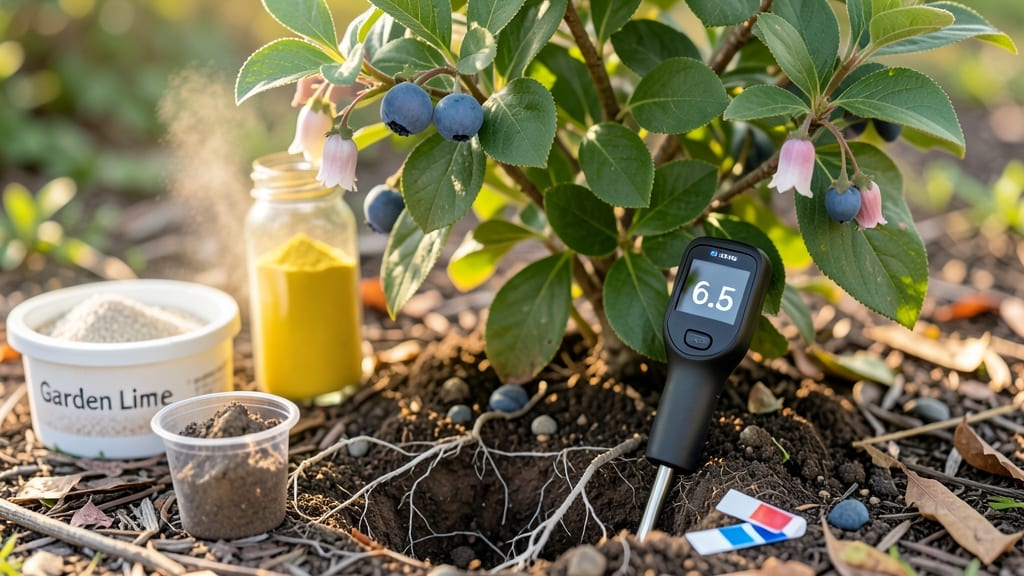
Clay soil is typically alkaline or neutral, with a pH range of 6.6 to 8.5, though its dense structure can hide its true acidity levels. Using a soil pH meter or test kit helps uncover its actual balance for healthy plant growth.
Clay soil's pH leans alkaline because its mineral makeup—like iron and aluminum oxides—naturally raises pH levels. 🌱 The dense particles also trap alkaline compounds, making it harder for rain to leach them out.
What's surprising is how organic matter can shift this over time, turning clay from alkaline to slightly acidic with enough compost. I've seen pH readings jump from 7.5 to 6.2 after just one season of heavy mulching!
This isn't just about numbers—it affects what grows well. Many vegetables thrive in slightly acidic soil (pH 6.0-6.8), while alkaline clay favors blueberries or lavender.
The key is testing before planting: grab a soil pH kit from your garden center, mix a sample with water, and compare the color to the chart. For stubborn clay, sulfur lowers pH while lime raises it—but timing matters most.
💡 In This Article
- How Clay Soil’s Composition Affects Its pH Levels
- Testing and Adjusting Clay Soil pH for Gardening Success
How clay soil’s composition affects its pH levels
Clay soil’s alkaline tendency starts with its mineral composition. The tiny particles—mostly iron oxides and aluminum silicates—react with water to release alkaline compounds like calcium carbonate. These minerals dominate because clay’s high surface area (up to 1,000 m² per gram!) creates more chemical reaction sites than sandy soil.
The result? A natural pH drift toward 7.0 or higher over time, especially in regions with hard water or limestone bedrock.
The dense structure of clay plays a hidden role too. Its poor drainage traps alkaline compounds that would normally wash away in sandy soil.
Rainwater percolates slowly, leaving behind calcium and magnesium ions that gradually raise pH. 🌱 Think of it like a sponge that soaks up nutrients but also holds onto alkaline byproducts. Even organic matter—like decomposed leaves—breaks down differently in clay, releasing fewer acidic compounds than in loamy soil.
Here’s where it gets interesting: clay’s pH isn’t set in stone. Over 5-10 years, adding organic amendments (compost, manure) can shift pH downward by 0.5-1.5 units, as microbial activity produces organic acids.
I’ve seen gardeners turn pH 8.0 clay into 6.5 soil by amending with 3-4 inches of compost annually. The catch? Clay’s density means you need 2-3x more organic matter than in sandy soil to see the same pH change.
Another factor is the cation exchange capacity (CEC)—clay’s ability to hold nutrients. High CEC means it clings to alkaline cations (like calcium) longer, resisting pH drops from rain. Compare that to sandy soil, where nutrients leach out faster, allowing pH to fluctuate more with seasonal changes.
This is why clay often tests consistently alkaline while sandy soil might swing between 5.5 and 7.0 in the same region.
For plants, this mineral-driven alkalinity explains why clay struggles with acid-loving crops like blueberries or hydrangeas. The soil’s natural buffering capacity means even adding sulfur for acidification requires persistent applications (often 1-2 lbs per 100 sq ft annually).
The key takeaway? Clay’s pH isn’t just about minerals—it’s a dynamic balance between geology, organic inputs, and drainage.
Pro tip: If you’re testing clay soil, take samples from multiple depths (surface vs. 6 inches down). The top layer often shows lower pH due to organic matter, while deeper layers may stay stubbornly alkaline.
This vertical variation is why some plants thrive near the surface while others struggle to root deeper. 💫