
Vegetables
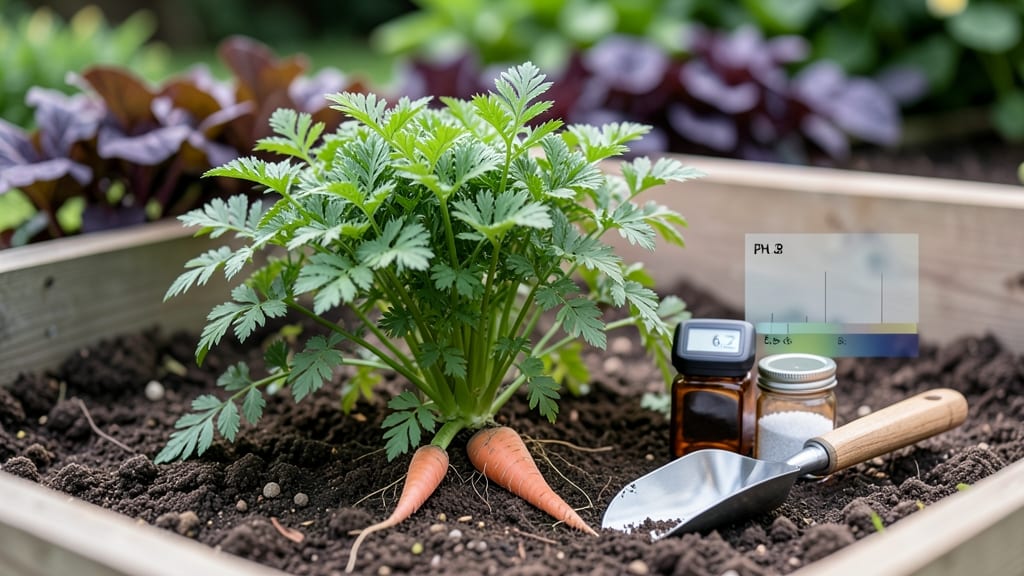
Growing sweet, crisp carrots 🥕 depends on one often-overlooked factor: the soil pH for carrots must be just right.
If your soil is too acidic or alkaline, you’ll end up with bitter, forked roots instead of the perfect harvest you’re dreaming of. The good news? Testing and adjusting pH is easier than you think—and it’s the secret to unlocking those sweet, straight roots you’ve been hoping for.
Carrots thrive when soil pH falls between 5.5 and 6.8, a range that ensures they absorb nutrients efficiently and grow the way they should. Too high or too low, and you’re asking for trouble, like stunted growth or poor flavor.
But don’t worry—whether your soil is too sour or too sweet, there are simple fixes to get it back in balance.
In this guide, I’ll walk you through how to test your soil, what to do if the pH is off, and the best organic amendments to keep your carrots happy from seed to harvest. Let’s get your soil ready for a bumper crop!
Optimal soil pH range for carrot growth and sweetness
Carrots are finicky about their growing conditions, and soil pH is one of the most critical factors for producing sweet, straight roots. Unlike many vegetables, carrots thrive in a slightly acidic to neutral range, where their roots can develop properly without bitterness or deformities.
The ideal soil pH for carrots falls between 5.5 and 6.8, a range that maximizes nutrient uptake and root expansion. Outside this window, you’ll likely face problems like forked roots, stunted growth, or even bitter flavors—no one wants that!
Why does pH matter so much for carrots? The answer lies in how nutrient availability changes with pH. At the right level, essential minerals like phosphorus, nitrogen, and potassium become readily accessible, fueling both leafy top growth and root development.
But when pH strays too high or low, these nutrients lock up or become toxic, leading to poor harvests. For example, alkaline soil (pH 7.0+) can cause forked or hairy roots, while acidic soil (pH 5.0-) may stunt growth or make roots woody and bitter.
Getting it right ensures your carrots grow crunchy, sweet, and uniform.
Another key reason to monitor pH is its impact on root sweetness. Carrots store sugars in their roots, and the right pH environment encourages this process. When soil is too alkaline, for instance, calcium builds up, which can interfere with sugar production and lead to less flavorful roots.
Conversely, slightly acidic soil (around 6.0) helps carrots develop their signature sweetness. This is why gardeners in regions with naturally alkaline soil often struggle—their carrots might grow fine but lack that juicy, sweet crunch we all love.
Before diving into adjustments, let’s clarify what the numbers mean. A pH of 7.0 is neutral, while anything below is acidic and above is alkaline. Carrots prefer the lower end of neutral (6.0–6.8), but they can tolerate a slight dip into acidity (down to 5.5) without major issues.
The challenge? Many garden soils lean toward alkalinity, especially in dry, western regions or areas with limestone bedrock. If your soil tests higher than 6.8, you’ll need to take steps to lower the pH before planting.
If your soil tests outside the 5.5–6.8 range, don’t panic—adjustments are straightforward. For alkaline soil (pH 7.0+), add organic matter like peat moss or pine needles to lower pH gradually. You can also use elemental sulfur, which reacts with soil moisture to create a mild acid.
For acidic soil (pH 5.0-), incorporate lime or wood ash to raise pH slowly. The key is patience: sudden pH shifts can stress plants, so aim to adjust soil 3–6 months before planting carrots.
Regional differences also play a role. Gardeners in the Pacific Northwest or Midwest often deal with alkaline soils due to limestone, while those in the Southeast may face naturally acidic conditions.
Before planting, grab a soil test kit (available at garden centers for ~$10) or send a sample to your local cooperative extension office for precise readings. This small step saves you from wasted effort—and bitter carrots!
Once you’ve achieved the right pH, maintain it by adding compost annually. Compost improves soil structure and buffers p
How to test and adjust soil pH for carrots
Testing your soil pH before planting carrots is like checking the oil in your car—it prevents major problems down the road. Carrots thrive in a slightly acidic to neutral range of 5.5–6.8, but most home gardeners don’t know their soil’s exact pH until they’ve already planted.
I’ll show you how to test it accurately and adjust it safely, whether you’re using organic methods or synthetic amendments.
First, decide whether to use a DIY soil test kit (budget-friendly) or send a sample to a lab (most precise). I’ve tried both—kits give quick results, but labs detect micronutrient imbalances that kits miss.
For carrots, even a slight pH shift can cause bitter roots or poor growth, so accuracy matters. Grab a small trowel, a clean jar, and let’s get started!
Soil pH Testing Methods
DIY Soil Test Kits
- ✅ Pros: Fast (10–30 mins), affordable ($10–$20), easy to use
- ✅ Best for: Quick checks before planting
- ⚠️ Cons: Less precise (±0.5 pH units), no micronutrient analysis
Lab Soil Tests
- ✅ Pros: Highly accurate (±0.1 pH), tests for 13+ nutrients, detects hidden issues
- ✅ Best for: Serious gardeners, large plots, or repeated problems
- ⚠️ Cons: Costs $20–$50, takes 1–2 weeks for results
To test your soil at home, collect samples from 6–8 spots in your garden (avoid fresh manure or compost piles). Mix them in a clean bucket, then fill a jar halfway with soil and add distilled water until it’s moist but not soggy.
For test kits, follow the instructions—most involve adding a few drops of reagent and comparing the color to a chart. If your pH is below 5.5, your carrots will struggle to absorb phosphorus and calcium, leading to weak roots.
Adjusting pH takes patience. To raise pH (make soil less acidic), sprinkle pelletized lime (organic) or hydrated lime (faster-acting) over the soil and water it in. For lowering pH, use elemental sulfur (organic) or vinegar (quick but temporary).
I recommend applying amendments 2–3 months before planting—sudden changes shock plant roots. Always retest after adjusting!
Long-term soil health is key. After harvesting, add compost or well-rotted manure to improve soil structure and buffer pH naturally. Mulch with straw or grass clippings to retain moisture and prevent extreme pH swings.
I’ve found that cover cropping with clover in winter also helps maintain a stable pH for next season’s carrots.
Remember, carrots are sensitive to soil compaction, so loose, crumbly soil with the right pH is your secret weapon for straight, sweet roots. Start testing today—your next harvest will thank you! 🥕