
Light Requirements
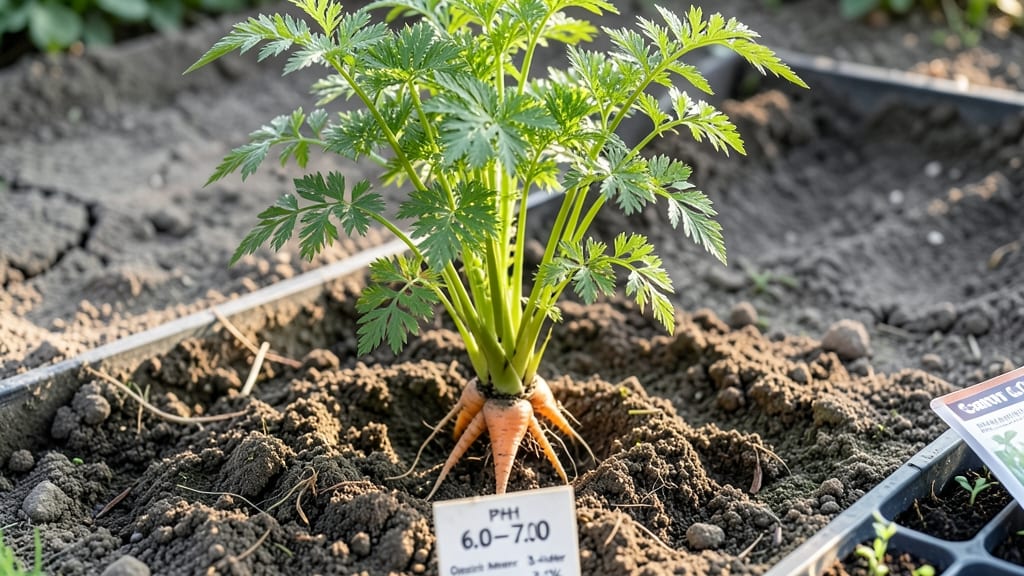
Growing straight, sweet 🥕 carrots starts with the right soil requirements for carrots — loose, deep, and free of rocks or compaction.
Twisted, forked, or stunted carrots? The problem likely starts in the soil—not the seed. Discover the exact soil conditions carrots demand for perfect, pencil-straight harvests every time.
Carrots need 8-12 inches of loose, well-draining soil to grow their full length without bending. Sandy loam is ideal, but even heavy clay can work if you amend it properly with compost or sand.
In this guide, you’ll learn how to test your soil’s pH, the best organic amendments for sweetness, and how to troubleshoot common issues like forking or shallow roots before they happen.
Ideal soil texture and depth for growing perfect carrots
If you’ve ever pulled a carrot from the ground only to find it twisted, forked, or stunted, the issue likely starts with your soil texture and depth. Carrots need a specific type of soil to grow straight and sweet—one that’s loose, well-draining, and free from obstructions.
Without it, roots will struggle to develop properly, leading to those frustrating deformities. The good news? With the right preparation, you can create the perfect growing environment for perfectly straight carrots every time.
Carrots thrive in sandy loam soil, which strikes the ideal balance between drainage and moisture retention. This texture allows roots to grow long and unobstructed while preventing waterlogging, which can cause rot.
Clay-heavy soils, on the other hand, are a common culprit for forking—when roots split or bend due to resistance. The key is to amend your soil ahead of planting to mimic the loose, crumbly texture carrots crave. Let’s break down exactly what that means and how to achieve it.
🌱 PRO TIP: Before planting, remove all rocks, pebbles, and debris from your soil. Even small stones can cause roots to fork or grow in odd shapes. A simple sifting or hand-picking session can save you from a harvest of misshapen carrots.
Here’s a quick reference for the ideal soil conditions for carrots, including texture, depth, and how to test your soil before planting:
| Soil Requirement | Specification | How to Achieve |
|---|---|---|
| Texture | Sandy loam (40% sand, 40% silt, 20% clay) | Mix in compost or aged manure to improve drainage and structure. |
| Depth | Minimum 8–12 inches of loose soil | Double-dig or till the soil to break up compaction. |
| Drainage | Well-draining (no standing water) | Add perlite or coarse sand to heavy clay soils. |
| pH Level | Slightly acidic to neutral (5.8–6.5) | Test with a soil pH kit; amend with lime (to raise) or sulfur (to lower). |
| Obstructions | Rock-free zone | Sift soil or hand-pick rocks before planting. |
To test your soil’s readiness for carrots, perform a simple squeeze test. Grab a handful of moist soil and gently squeeze it. If it crumbles easily, it’s ideal. If it stays in a tight ball, it’s too clay-heavy.
For clay soils, mix in 2–3 inches of compost or sand per square foot to improve texture. For sandy soils, add organic matter like peat moss or well-rotted manure to retain moisture without becoming waterlogged.
Depth is just as critical as texture. Carrots need at least 8–12 inches of loose soil to grow straight and reach their full potential. If your soil is shallow or compacted, consider planting in raised beds or deep containers filled with a mix of topsoil, compost, and perlite.
This ensures roots have plenty of room to grow without hitting obstacles. For in-ground planting, double-dig the soil by loosening the top 12 inches and mixing in amendments.
If you’ve already planted carrots and notice forking or stunted growth, don’t panic. The issue might be fixable with mid-season adjustments. Loosen the soil around the plants gently with a fork, being careful not to damage the roots.
Add a layer of mulch (like straw or shredded leaves) to keep the soil loose and moisture-retentive. Avoid fertilizing heavily, as excess nitrogen can encourage leafy growth at the expense of root development.
For container growers, choose pots that are at least 12 inches deep and fill them with a lightweight potting mix blended with perlite or vermiculite. This ensures proper drainage while providing the loose texture carrots need. Avoid garden soil, which can compact in containers and restrict root growth.
Instead, opt for a mix designed for root vegetables or create your own by combining 50% potting soil, 30% compost, and 20% perlite.
One final tip: Rotate your carrot crops every year to prevent soil depletion and disease buildup. Avoid planting carrots in the same spot consecutively, as this can lead to poor soil structure and increased pest pressure.
Instead, follow them with deep-rooted plants like peas or beans, which help aerate the soil naturally.
With the right soil texture and depth, your carrots will grow long, straight, and sweet—no more frustrating forks or stunted roots! Start with these adjustments, and you’ll be on your way to a bumper crop of perfect harvests. Happy gardening! 🥕
pH levels and nutrient secrets for maximum carrot yield
Carrots are picky about their soil pH—too acidic or alkaline, and you’ll end up with bitter, stunted roots instead of sweet, crisp harvests. The ideal pH range for carrots is 5.8 to 6.5, which is slightly acidic to neutral.
This range ensures your plants absorb nitrogen, phosphorus, and potassium efficiently, the trio that fuels lush foliage, strong roots, and vibrant color.
When soil pH strays outside this window, carrots struggle to access essential nutrients, leading to yellowing leaves, poor root development, or even forking. For example, if your soil tests below 5.8, your carrots may develop a bitter taste due to aluminum toxicity.
Meanwhile, pH above 6.5 locks out phosphorus, causing purple or red discoloration in the leaves and weak growth.
Soil Requirements for Carrots: pH and Nutrient Balance
Use a digital pH meter or soil test kit to confirm your soil’s acidity level before planting. Most garden centers sell affordable kits.
Add lime (calcium carbonate) to raise pH. For every 100 sq ft, apply 5 lbs of lime and mix into the top 6 inches of soil 2-3 months before planting.
Work in compost or well-rotted manure to improve nutrient availability. Aim for 2-3 inches of compost mixed into the top 12 inches of soil.
Too much nitrogen leads to leafy tops but small, woody roots. Stick to a balanced 5-10-10 fertilizer and apply sparingly—1 tbsp per 10 sq ft every 4-6 weeks.
Clay holds moisture and compacts easily, causing forked or misshapen carrots. Amend with sand or peat moss to improve drainage and root penetration.
Yellow leaves? Likely nitrogen deficiency. Purple stems? Probably phosphorus shortage. Address issues promptly with targeted amendments.
To sweeten your carrots and prevent nutrient deficiencies, focus on these three key nutrients. Nitrogen (N) promotes leafy growth, while phosphorus (P) encourages root development and flavor. Potassium (K) strengthens the plant’s resistance to disease and improves sugar content.
A balanced 5-10-10 fertilizer applied at planting and again when seedlings are 4 inches tall ensures your carrots get everything they need.
Organic amendments like composted manure or worm castings are my go-to for boosting soil fertility naturally. These add micronutrients like boron and calcium, which carrots need for crisp texture and vibrant color.
For example, boron deficiency causes hollow or cracked roots, while calcium deficiency leads to blossom-end rot in the foliage. A handful of egg shells (crushed) or wood ash can remedy calcium issues quickly.
Monitor your carrots for early warning signs of nutrient imbalances. For instance, yellowing between leaf veins signals nitrogen deficiency, while dark green or purple leaves often mean phosphorus is lacking.
If you spot these issues, side-dress with compost tea or a diluted fish emulsion to give your plants a quick nutrient boost without overwhelming the soil.
Remember, the secret to sweet, straight carrots lies in consistent soil health. Regularly test your soil’s pH and nutrient levels, especially if you’ve had issues in past seasons.
With the right balance, your carrots will reward you with crisp, flavorful roots that rival store-bought—and you’ll never have to worry about forking again! 🥕