
How To
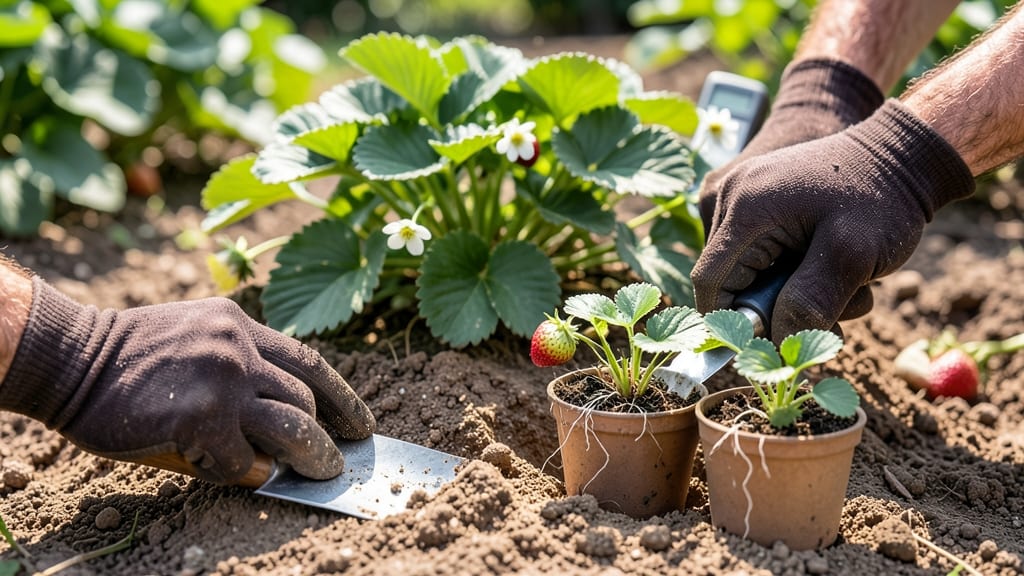
Sandy loam soil is perfect for strawberries because it combines excellent drainage with just enough moisture retention to support strong root development and high yields, while avoiding the risks of waterlogging or soil compaction. Maintain a pH between 5.8–6.5 and add organic matter to keep the soil fertile.
This soil type stands out because its balanced texture—about 40% sand, 40% silt, and 20% clay—creates tiny air pockets that roots thrive in. 🌱 Strawberries particularly benefit from this structure, as it prevents root rot while still holding enough water to nourish plants during dry spells.
Many gardeners swear by mixing in composted leaves or well-rotted manure to further enhance nutrient availability, especially for heavy-bearing varieties.
For best results, test your soil before planting—most garden centers offer affordable pH kits. If your soil leans too sandy, add a bit of peat moss or coconut coir to improve moisture retention, while clay-heavy soils can be lightened with perlite or coarse sand.
The goal is to mimic nature’s ideal growing conditions, where strawberries flourish without struggling.
💡 In This Article
- Why Sandy Loam Soil Boosts Strawberry Growth
- How to Prepare Sandy Loam Soil for Strawberry Beds
Why sandy loam soil boosts strawberry growth
The magic of sandy loam soil for strawberries lies in its perfect particle balance—about 40% sand, 40% silt, and 20% clay.
This ratio creates tiny air pockets that roots love, allowing oxygen to reach them while still holding 20-30% moisture—ideal for strawberries, which hate soggy roots but need consistent hydration. 🌱 Unlike pure sand (which drains too fast) or clay (which suffocates roots), loam mimics the natural forest floor where wild strawberries thrive.
Strawberry roots grow best in soil with good aeration because they’re shallow and fibrous, spreading just 6-12 inches deep. Sandy loam’s structure prevents compaction, which would crush these delicate roots and restrict growth.
The silt fraction also holds onto nutrients like potassium and phosphorus—critical for fruit development—while the sand fraction ensures excess water drains away, preventing root rot. This is why strawberries in pure clay soils often struggle with stunted growth or fungal diseases.
Another key factor is microbiological activity. Sandy loam’s balanced texture supports beneficial microbes that break down organic matter into plant-available nutrients. Strawberries, being heavy feeders, rely on this microbial network to access nitrogen for leaf growth and calcium for strong cell walls.
Without this microbial boost, plants become weak and produce smaller, less flavorful berries. 💫 The ideal pH of 5.8-6.5 further unlocks these nutrients, as most soil microbes thrive in this slightly acidic range.
Let’s compare sandy loam to other soil types: Pure sand drains water too quickly, forcing strawberries to expend energy seeking moisture, while clay soils hold too much water, leading to oxygen deprivation.
Sandy loam strikes the perfect balance—think of it as the "Goldilocks" soil for strawberries. Even small adjustments (like adding 1-2 inches of compost) can transform marginal soil into strawberry heaven.
For visual learners, imagine holding a handful of ideal strawberry soil: It should crumble easily when dry but still form a loose clump when moist—like damp potting mix. If it feels gritty (too sandy) or sticky (too clay-heavy), you’ll need to amend it.
The goal is to create an environment where strawberry roots can spread freely while accessing water and nutrients without stress. 🌿
What most gardeners overlook is how texture affects flavor. Strawberries grown in well-aerated loam develop sweeter, firmer fruit because their energy isn’t wasted fighting poor soil conditions.
The difference between a 4% sugar berry (from compacted soil) and a 7% sugar berry (from ideal loam) is night and day—both in taste and market value.