
Planting
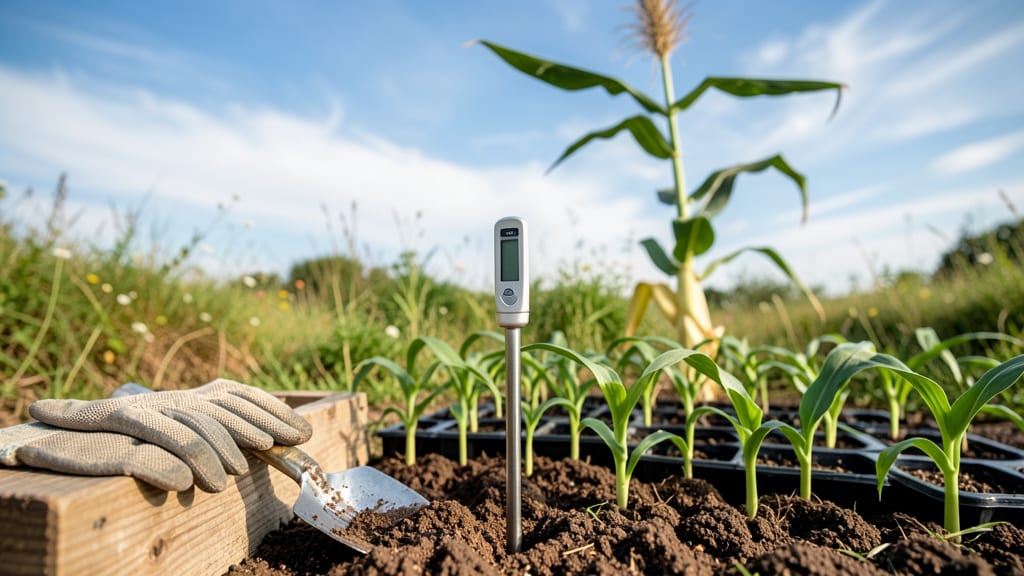
Corn thrives when the soil temperature hits 50°F or warmer—below that, seeds rot in the ground and seedlings struggle to emerge.
Picture this: you’ve waited all winter for planting season, only to dig in the dirt and find your seeds refusing to sprout. That’s the cost of ignoring soil warmth, and it’s a mistake even experienced gardeners make when rushing to get corn in the ground too early.
Getting the temperature right isn’t just about waiting for spring—it’s about understanding how each growth stage (from germination to tasseling) demands a different level of warmth. Too cold? Your seeds may never break through. Too hot? You risk shallow roots and weak stalks.
Here’s what you need to know: the ideal ranges, how to check your soil, and smart adjustments if Mother Nature isn’t cooperating. Let’s get your 🌽 off to the right start.
Ideal soil temperature ranges for corn germination and early growth
Corn seeds are picky about soil temperatures—too cold, and they rot; too hot, and they dry out before sprouting. The critical window for germination starts at 50°F (10°C), but optimal conditions begin when soil reaches 55-60°F (13-16°C).
This range ensures consistent, healthy emergence rather than sporadic sprouting. I’ve learned this the hard way after planting corn too early in chilly spring soils, only to watch seeds fail to break through.
Once seeds sprout, the stakes get even higher. Seedlings need 60-70°F (16-21°C) soil to develop strong roots and sturdy stalks. Below this range, growth slows dramatically, leaving young plants vulnerable to disease and competition from weeds.
In my USDA Zone 6a garden, I’ve found that waiting until late May—when soil consistently hits 65°F (18°C)—gives my corn the best start.
For root development and tasseling, corn thrives in 70-85°F (21-29°C) soil. This is when roots expand aggressively, and the plant shifts energy from growth to reproduction. Heat-loving varieties like Golden Bantam or Silver Queen perform best in this range, while shorter-season types may tolerate slightly cooler soils.
I’ve noticed my early-maturing varieties struggle if soil drops below 68°F (20°C) during this phase.
The maximum safe soil temperature for corn is 90°F (32°C), beyond which seeds may dry out before germination. In hot climates, I’ve used shade cloth or planted in late afternoon shade to prevent soil from overheating.
Even established plants can suffer if soil temperatures exceed 85°F (29°C) for prolonged periods, leading to stunted growth or poor kernel development.
Regional differences play a huge role in timing. In Northern climates (Zones 3-5), I’ve found that planting corn in late May or early June ensures soil temperatures stay above 60°F (16°C) for seedling growth.
Meanwhile, in Southern climates (Zones 7-10), early April plantings often work because soil warms faster. My Zone 6a garden sits in the middle—perfect for short-season varieties like Early Sunglow if planted in early May.
For gardeners in cooler microclimates, like high-altitude areas or shaded spots, I recommend using black plastic mulch to warm soil by 5-10°F (3-6°C). This trick has saved my corn crops in years when spring arrived late.
Conversely, in hot, dry regions, I’ve had success with straw mulch to prevent soil from overheating and drying out.
Timing isn’t just about temperature—it’s also about consistency. Soil temps can fluctuate daily, especially in spring. I check temperatures with a soil thermometer at 4-inch depth (where corn seeds are planted) for 3-5 days to confirm stability.
If temps dip below 55°F (13°C) at night, I delay planting until conditions stabilize.
How to monitor and adjust soil temperature for corn success
Corn seeds are picky about soil temperature—too cold, and they won’t germinate; too hot, and they may rot before sprouting. Monitoring soil temps is the key to giving your corn the best start.
I’ve learned that even a 5°F difference can delay germination by a week or more, so precision matters. Start by checking your soil’s consistent temperature at the planting depth (usually 1-2 inches deep) for at least 3 days before planting.
For most corn varieties, the ideal soil temperature range for planting is between 50°F and 60°F (10-15°C). This ensures seeds germinate within 7-10 days. If your soil is cooler than 50°F (10°C), germination slows dramatically, and seeds may rot.
On the other hand, temps above 85°F (29°C) can stress young seedlings, leading to stunted growth or even death. Knowing how to adjust soil temperature is just as important as knowing the right range.
⚠️ callout-warning
To monitor soil temperature accurately, invest in a soil thermometer, which gives real-time readings at planting depth. Digital probes are my go-to because they’re precise and easy to use—just insert them into moist soil and wait 30 seconds for a reading.
Alternatively, planting depth charts (available from seed suppliers) can help estimate soil warmth based on air temperature and location. For example, in USDA Zone 5, soil temps lag behind air temps by about 10-15°F, so check both!
If your soil is too cold, try these warming techniques:
- Black plastic mulch: Lays directly on soil 1-2 weeks before planting to absorb sunlight and raise temps by 5-10°F. Cut slits for seeds later.
- Row covers: Lightweight fabric traps heat during the day and retains warmth overnight. Remove during pollination to allow cross-pollination.
- Planting timing: Wait until soil naturally warms—check local frost-free dates and adjust. In cooler climates, opt for early-maturing corn varieties (60-70 days to harvest).
For overly warm soil (above 85°F/29°C), shade cloth (30-50%) can lower temps by 10-15°F while still allowing sunlight. Watering deeply in the morning also cools soil temporarily. Avoid planting in midday heat—stick to early morning or late afternoon when soil is cooler. If you’re in a hot climate, consider drip irrigation to keep soil evenly moist without overheating.
Pro tip: Keep a garden journal to track soil temps, planting dates, and germination success. Over time, you’ll spot patterns—like how your soil warms up each spring—and fine-tune your approach.
For example, I noticed my raised beds warm up 3-4 days faster** than in-ground soil, so I plant corn there first. Small adjustments like this can mean the difference between healthy stalks and stunted seedlings.
Remember, corn is a fast-growing crop, and every day counts. By mastering soil temperature monitoring and adjustments, you’ll give your corn the perfect start—leading to bigger ears and better yields. Happy planting! 🌽