
Advice
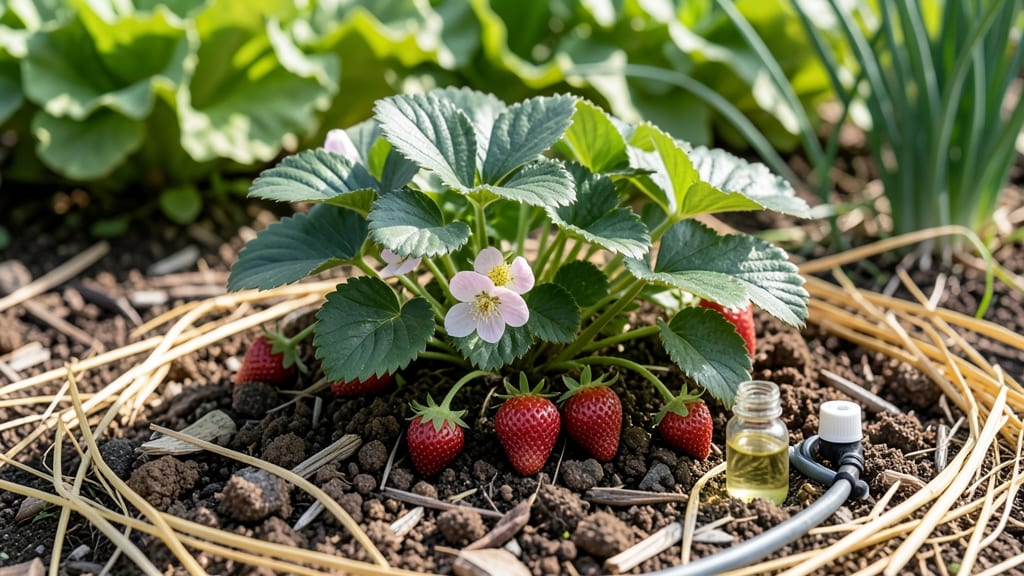
The perfect strawberry soil type is loose, crumbly, and packed with organic matter—just like the texture of a well-aged compost pile. 🌱 I learned the hard way that heavy clay or compacted soil smothers roots, leaving you with small berries and frustrated plants.
Strawberries thrive when their roots can spread freely, and the secret is in the mix: equal parts organic matter, sand, and existing soil. Most gardeners overlook drainage, but strawberries hate soggy feet.
Amend your soil with 1-2 inches of compost and a handful of perlite or coarse sand to create that ideal airy texture. A pH between 5.5 and 6.8 keeps nutrients accessible—too acidic, and your plants struggle; too alkaline, and they starve. Test your soil before planting to avoid costly mistakes.
You’ll notice the difference immediately: roots grow deep and white, not brown and waterlogged, and your plants produce larger, sweeter berries within the first season. The key is consistency—strawberries reward patience with years of harvests, but only if the soil stays loose and fertile.
For cooler climates, add extra organic matter to retain moisture; in hot regions, focus on drainage to prevent rot. Whether you’re planting in beds or containers, the same principles apply—just scale the amendments to your space.
📚 In This Guide
- What you need
- Instructions
- Tips and common mistakes
- Wrapping up and next steps
What you need
- ● Potting soil or garden soil – 50% of the mix (use high-quality, well-draining soil like Miracle-Gro Potting Mix or FoxFarm Ocean Forest).
- ● Peat moss or coconut coir – 20% (improves water retention and aeration).
- ● Perlite or vermiculite – 20% (ensures loose, airy soil for root growth).
- ● Compost or worm castings – 10% (adds nutrients and organic matter).
- ● Slow-release fertilizer – 1 tbsp per gallon of mix (e.g., Osmocote Smart-Release Plant Food).
- ● Strawberries (bare-root or potted) – Choose disease-resistant varieties like Albion, Seascape, or Chandler.
- ○ Containers (optional but recommended) – 10-12" deep pots with drainage holes (or a raised bed).
- ● Garden trowel or small shovel – For mixing and planting.
- ● Gloves – To keep hands clean while handling soil.
- ● Watering can or hose with gentle spray – Avoid over-saturating the soil.
- ○ pH testing kit (optional but helpful) – Strawberries thrive in slightly acidic soil (pH 5.5–6.8).
- ● Mulch (straw or pine needles) – Helps retain moisture and suppress weeds.
How to create the ideal soil mix for strawberries
Strawberries thrive when their roots breathe easily—here's how to craft the perfect loose, aerated blend.
🌱 Step 1: Start with a Loose Base Soil
Strawberries despise heavy, compacted soil that suffocates roots. Begin with a well-draining base like sandy loam or light garden soil—think of it as the foundation for your aerated mix. I like to test my base soil by squeezing a handful: if it holds its shape like clay, it's too dense. If it crumbles instantly, it's perfect. For heavier soils, blend in 2-3 inches of coarse sand or perlite to break up compaction.
Work the amendments into the top 6-8 inches of soil where roots will spread. This depth ensures strawberry runners (those long stems that produce new plants) have room to establish without hitting hardpan. Avoid tilling deeply—strawberries have shallow roots and prefer loose surface soil. A simple fork or broadfork loosens the top layer without disrupting the soil structure.
🌿 Step 2: Add Organic Matter for Nutrients and Aeration
Strawberries are hungry feeders, so compost becomes your secret weapon. Mix in 2-3 inches of well-aged compost (think leaf mold or worm castings) into your base soil. This boosts organic matter to 5-10%—the sweet spot for strawberries. You'll know it's working when the soil smells earthy (not rotten) and feels like a damp sponge. Avoid fresh manure; it burns tender strawberry roots.
For extra aeration, stir in 1 inch of peat moss or coconut coir—these hold moisture while keeping roots from sitting in soggy soil. I like to layer it like a lasagna: start with compost, then a sprinkle of peat, then more compost. This creates pockets of air where roots can expand freely. If your soil drains too fast (like sand), add a bit of sphagnum moss to help retain moisture without compacting.
💧 Step 3: Adjust pH for Optimal Growth
Strawberries prefer a slightly acidic soil, ideally between 5.5 and 6.5 pH. Test your mix with a soil pH kit—if it's below 5.5, sprinkle ground limestone (about 1 pound per 100 square feet) and mix it in. For soils above 6.5, add elemental sulfur (follow package rates) and water thoroughly. Wait 2-4 weeks before planting; pH adjustments take time to stabilize.
Here's the thing—strawberries are sensitive to pH swings. I like to retest the soil after amending and adjust again if needed. A pH meter or test kit from your local garden center makes this easy. If your soil is already in the right range, skip this step—over-correcting can harm plants faster than poor soil ever could.
☀️ Step 4: Build Raised Beds or Mounds for Drainage
Strawberries hate "wet feet," so elevate them if your soil drains poorly. Create 6-inch-high mounds or raised beds (12 inches deep) using your amended soil mix. This keeps roots above the water table during heavy rains. For containers, use a well-draining potting mix with 50% perlite or vermiculite—strawberries in pots dry out faster, so add a moisture-retentive additive like hydrogel crystals if your climate is hot.
Space mounds or beds 18-24 inches apart to allow airflow and easy harvesting. I like to shape them into low pyramids—this prevents water pooling in the center. Mulch the surface with straw or pine needles (the namesake of strawberries!) to keep soil cool and suppress weeds. Just avoid thick layers; roots need to breathe, not smother.
✂️ Step 5: Maintain Soil Health Year-Round
Strawberries reward consistent care. Every spring and fall, top-dress beds with 1 inch of compost to replenish nutrients. In summer, side-dress with aged manure or worm castings—this feeds roots without burning them. I also add a light layer of pine fines (finely shredded pine bark) to improve drainage and deter weeds naturally.
Watch for soil compaction from foot traffic or rain. If the surface feels hard, aerate with a hand fork or broadfork in early spring. Strawberries in containers need repotting every 2-3 years—their roots outgrow small spaces, leading to poor yields. When repotting, refresh half the soil mix to avoid nutrient depletion. This keeps your soil loose, aerated, and full of life for years of bountiful harvests.
Tips & tricks for perfect strawberry soil mix
Here's what nobody tells you about creating that ideal strawberry haven—these are the details that separate good soil from great soil.
Soil Texture Test: The squeeze test in Step 1 is your best friend. If your base soil holds its shape like wet clay, you're dealing with compaction. For these stubborn soils, I like to add 1 part perlite to 3 parts soil—this creates those tiny air pockets roots crave. Think of it like adding fluff to a mattress; roots need to breathe, not suffocate.
Layering Like a Pro: When adding organic matter in Step 2, don't just dump it all in. That 1 inch of peat moss or coconut coir should be sprinkled between layers of compost—imagine a lasagna where each layer has a purpose. The compost feeds, the peat aerates, and together they create that perfect sponge-like texture. This layered approach prevents clumping and keeps moisture balanced.
pH Precision: The 2-4 week waiting period after pH adjustments in Step 3 is non-negotiable. I've learned this the hard way—planting too soon can shock roots. Use a pH meter for accuracy; those test kits can be finicky. And here's a pro move: if your soil is borderline (say, 6.3 instead of 6.5), I add half the recommended sulfur and monitor closely. Strawberries are sensitive to sudden pH shifts.
Container Strategy: For container growing in Step 4, I always use 50% perlite or vermiculite mixed with potting soil—but here's the secret: add 10% hydrogel crystals if you're in a hot climate. These little beads absorb water like sponges and release it slowly, preventing that dreaded "dry pot" scenario. Just don't overdo it; too much can make the mix too dense.
Pro Tips for Strawberry Soil Type
- Here's what nobody tells you about creating that ideal strawberry haven—these are the details that separate good soil from great soil.
- Soil Texture Test: The squeeze test in Step 1 is your best friend.
- Layering Like a Pro: When adding organic matter in Step 2, don't just dump it all in.
Frequently asked questions
Got questions about the perfect strawberry soil type? You’re in the right place! Here are answers to the most common concerns—from soil prep to troubleshooting—so you can grow juicy, plump berries with ease.
What’s the best soil mix for strawberries?
Strawberries thrive in a loose, well-draining mix with a pH between 5.8 and 6.2. Combine 50% garden soil, 30% compost, and 20% perlite or coarse sand for aeration. Avoid heavy clay—it suffocates roots and causes rot. Test your soil first to adjust nutrients!
When is the ideal time to amend my soil for strawberries?
Amend your soil 4–6 weeks before planting (spring or fall, depending on your climate). This gives microbes time to break down compost and improve structure. For container-grown strawberries, refresh the mix annually. Pro tip: Mix in bone meal (for phosphorus) just before planting to boost early root growth!
What if my soil is too sandy or too clay-heavy?
| Problem Soil | Fix It With |
|---|---|
| Sandy soil (drains too fast) | 2–3 inches of compost + peat moss to retain moisture. Add worm castings for nutrients. |
| Clay soil (compacted, poor drainage) | Garden fork or tiller to loosen + 50% perlite/sand + aged manure. Plant on raised beds if needed. |
Can I grow strawberries in regular potting soil?
Regular potting soil works short-term, but it lacks the organic matter and drainage strawberries crave. Mix it 50/50 with compost and perlite for better results. For containers, use a lightweight blend (e.g., coconut coir + worm castings) to prevent waterlogging.
Why are my strawberries small or rotten, even with the right soil?
Check these common culprits:
- Overwatering: Strawberries hate soggy roots. Water at the base deeply but infrequently (1–1.5 inches per week).
- Nutrient imbalance: Yellow leaves? Add Epsom salt (magnesium) or a balanced fertilizer (10-10-10).
- Crowded plants: Thin seedlings to 12–18 inches apart for airflow and sunlight.
Pro tip: Mulch with straw to regulate soil temp and deter weeds—just keep it 2–3 inches away from stems to avoid rot!
Wrapping up and next steps
Choosing the right strawberry soil type—light, well-draining, and rich in organic matter—is the secret to thriving plants and sweet, abundant harvests. 🌱 Whether you’re amending existing soil or creating a custom mix, the key is balance: loose texture, proper nutrients, and a pH between 5.5 and 6.8.
With the right foundation, your strawberries will reward you with vibrant growth and juicy fruit!
Ready to dig in? Test your soil one last time, then roll up your sleeves and plant those berries! For extra success, consider adding a slow-release fertilizer or mulch to keep your soil happy all season long.