
How To
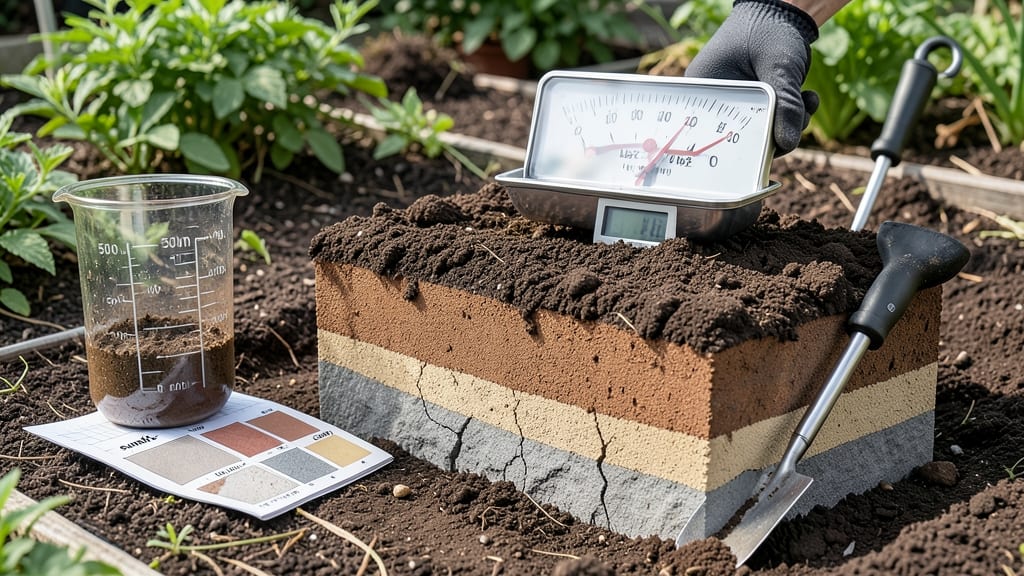
Understanding top soil unit weight helps you plan projects accurately, as it ranges from 70 to 110 pounds per cubic foot depending on composition—sandy soils sit at the lighter end (70-80 lbs), while dense clay soils can exceed 100 lbs. Moisture plays a huge role, adding 10-20 lbs per cubic foot when fully saturated compared to dry conditions.
When you're working with soil, its weight isn't just about volume—it's about the mix of minerals, organic matter, and water content. 🌱 Sandy soils feel lighter because their coarse particles don't pack tightly, while clay soils hold more moisture and compact more densely, which explains why they're heavier.
For landscaping, this means a 1-cubic-yard bag of clay soil could weigh nearly 2,000 lbs, while sandy soil might only tip the scales at 1,500 lbs—double-check before hauling!
The moisture factor is especially critical: saturated soil can be up to 20% heavier than when dry, so always account for seasonal conditions in your calculations.
For practical applications, this weight variation directly impacts everything from truckload capacity to foundation stability. A heavy clay soil might require stronger supports for raised beds, while lighter sandy soil spreads more easily but drains faster.
Always test your soil's moisture level before estimating—this simple step can save you from overloading equipment or under-preparing your project site.
💡 In This Article
- How Soil Composition Affects Unit Weight
- Calculating Top Soil Weight for Landscaping Projects
How soil composition affects unit weight
The weight of topsoil isn't random—it's determined by the balance of mineral particles, organic material, and pore space. Sandy soils have large, loosely packed grains with high air voids (30-40% air space), which is why they weigh only 70-80 lbs per cubic foot.
In contrast, clay soils contain tiny, plate-like particles that stack tightly, reducing air space to just 10-20% and increasing weight to 100-120 lbs per cubic foot. This difference is visible when you squeeze a handful: sand feels gritty and falls apart, while clay forms a dense, sticky clump.
Organic matter adds another layer of complexity.
A soil with 5-10% organic content (like compost-amended topsoil) can weigh 10-15 lbs more per cubic foot than mineral-only soil because organic particles absorb and retain water. 🌱 The real weight game-changer is moisture—water fills those air voids, and each 1% increase in moisture content adds roughly 1-2 lbs per cubic foot.
A sandy soil at 10% moisture might weigh 85 lbs/cu ft, while the same soil saturated to 30% moisture jumps to 100 lbs/cu ft—a 17% weight increase from just water absorption.
Compaction plays a hidden role too. When machinery or foot traffic compresses soil, particles shift closer together, reducing air space by 20-30% and increasing weight. For example, a loose garden soil might weigh 80 lbs/cu ft, but after compaction, it could reach 95 lbs/cu ft.
This is why construction sites often specify "uncompacted" soil weights—builders need to account for both natural settling and potential moisture changes over time.
Here's how these factors combine in real-world scenarios:
- Sandy loam: 75-85 lbs/cu ft (moderate particle size, 20% air space, low organic matter)
- Clay loam: 100-115 lbs/cu ft (fine particles, 15% air space, high moisture retention)
- Peat-based: 60-70 lbs/cu ft (high organic matter, 50% air space when dry)
- Silt loam: 90-100 lbs/cu ft (medium particles, 25% air space, moderate moisture)
The key takeaway is that soil weight isn't static—it's a dynamic property influenced by particle size, moisture content, and compaction level. For accurate planning, always test your specific soil type and moisture conditions rather than relying on general averages. 💡