
Vegetables
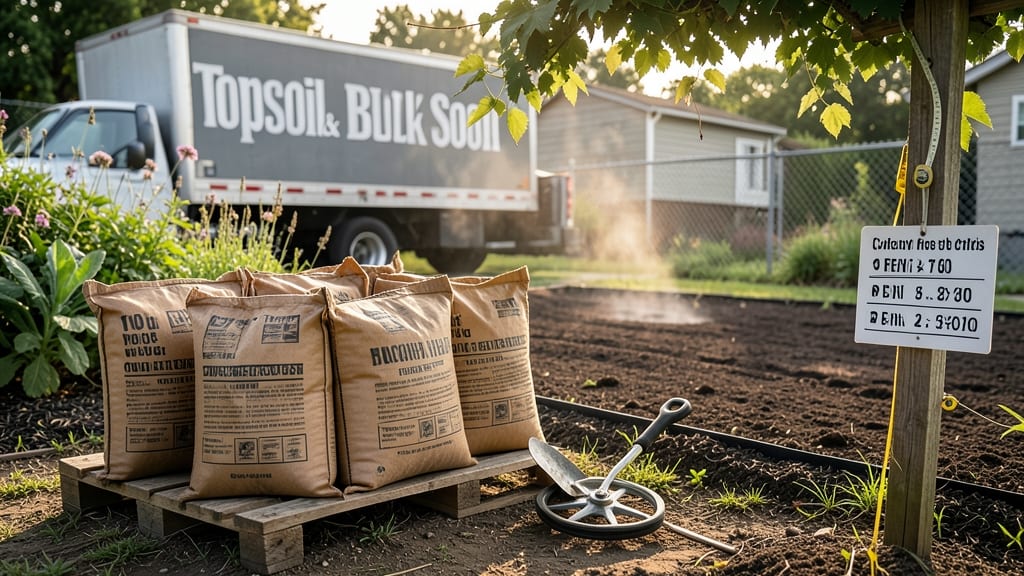
The cost of topsoil delivery typically ranges from $30 to $60 per cubic yard for local deliveries, with pricing influenced by truckload size, regional demand, and seasonal fluctuations. Bulk orders often secure discounted rates per yard, while urban areas and peak planting seasons may see higher rates.
Understanding how topsoil delivery pricing works helps you budget effectively. 💫 Most suppliers charge per cubic yard, but the final cost depends heavily on how far you are from their yard—distance directly impacts fuel costs and labor time.
For example, a half-yard delivery might cost $20-$30 extra in shipping fees compared to a full truckload. Seasonal demand also plays a role: spring and fall see higher rates due to increased gardening activity, while off-season orders often come with discounts.
Another key factor is the type of topsoil you need. Screened topsoil, which is free of rocks and debris, costs more to process than bulk topsoil, so pricing can vary by $5-$10 per yard between the two.
If you're working on a large project, like landscaping or farm prep, splitting orders with neighbors or ordering in bulk can cut costs significantly—sometimes by 15-20% per cubic yard. Always ask suppliers about delivery windows and potential surcharges before committing to a purchase.
💡 In This Article
- Factors That Influence Topsoil Delivery Pricing
- How to Save Money on Bulk Topsoil Delivery
Factors that influence topsoil delivery pricing
The primary driver of topsoil delivery pricing is distance. Suppliers calculate fuel costs based on miles traveled, and each trip typically burns 1-2 gallons of diesel per mile for a standard dump truck.
A 10-mile delivery might add $25-$40 to your bill, while deliveries beyond 50 miles can push costs up by $100 or more. Urban areas often face additional congestion fees, which can tack on $15-$30 per load due to slower travel times and potential traffic delays.
Truckload capacity plays a critical role in per-yard pricing. A full 10-yard truckload delivers soil at $25-$35 per cubic yard, while smaller orders (like 1-2 yards) may cost $50-$70 per yard due to fixed delivery fees. The reason?
Suppliers spread their $150-$250 delivery charge across more cubic yards in bulk orders. For example, ordering 5 yards instead of 2 yards could save you $20-$40 total. Soil type also matters—screened topsoil (processed to remove rocks) costs $5-$10 more per yard than bulk topsoil because of additional processing.
Seasonal demand creates significant price swings. During spring planting (March-May) and fall landscaping (September-November), suppliers may charge 20-30% more per yard due to high volume. In contrast, winter orders often include 10-20% discounts as demand drops.
Regional supply also affects pricing—areas with limited local quarries (like coastal regions) may see higher costs because soil must be transported from inland sources, adding $10-$20 per yard in transportation fees. Even weather plays a part: heavy rain can delay deliveries, leading to rush fees of $50-$100 for urgent orders.
Supplier markup variations add another layer of complexity. Independent landscaping companies often charge 15-25% more than direct quarry suppliers because of overhead costs. For instance, a 5-yard order might cost $175 from a local quarry but $220 from a landscaping supplier.
Always compare quotes—some suppliers offer "volume discounts" for orders over 10 yards, potentially cutting costs by $3-$5 per yard. Fuel surcharges (currently 5-10% of delivery fees) can also fluctuate with oil prices, adding unexpected costs during volatile market periods.
Urban vs. rural pricing differences highlight how location impacts costs. In cities, delivery fees may double due to permit requirements, narrow streets, and limited parking.
For example, delivering 2 yards of topsoil in downtown Chicago could cost $120-$180, while the same order in a rural area might be $60-$90.
This disparity stems from labor costs for unloading—urban deliveries often require 2-3 workers—and potential overnight storage fees if the site isn't immediately accessible. What most people overlook is how driveway width affects pricing: narrow driveways may require specialized equipment, adding $30-$50 to the bill.
Consider this real-world example: A homeowner in Phoenix, AZ ordering 3 yards of screened topsoil—30 miles from the supplier—might pay $180 total ($60/yard), including a $45 delivery fee—**5% fuel surcharge—and a $10 processing fee—for the screened soil.
The same order in Portland, OR—where local quarries are scarce—could cost $250—$85/yard—**due to higher transportation costs and urban delivery constraints. Understanding these variables lets you negotiate better rates or choose alternative suppliers.