
Container Gardens
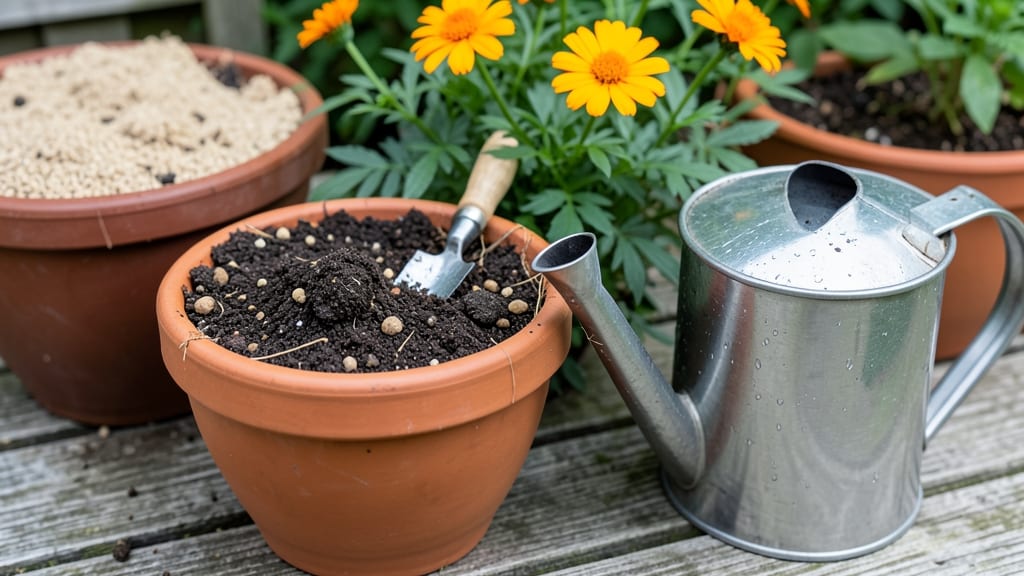
Using garden soil in pots can harm plants due to compaction, poor drainage, and potential pests or diseases. Instead, mix it with perlite or coconut coir and use a lightweight potting mix for better aeration and root health.
Garden soil is heavy and dense, which means it compacts easily in containers, suffocating plant roots by blocking oxygen and water flow. 🌱 This creates an environment where moisture pools at the bottom, inviting fungal growth and root rot.
I've seen firsthand how plants in garden soil alone often struggle to thrive, even with regular watering, because the soil's natural structure isn't designed for the confined space of pots.
For container gardening, you need a soil blend that mimics the airy, well-draining properties of natural forest floors. Mixing garden soil with 20-30% perlite or coconut coir creates the perfect balance of moisture retention and drainage.
This combination prevents compaction while providing the nutrients plants crave. If you're dealing with heavy clay soil, adding coarse sand or vermiculite can further improve aeration.
💡 In This Article
- Why Garden Soil Fails in Container Gardening
- Best Soil Mixes for Potted Plants and How to Prepare Them
Why garden soil fails in container gardening
Garden soil is designed for in-ground planting, where its natural density provides structural support and moisture retention over large volumes. However, in pots, this same density becomes a problem because the confined space accelerates soil compaction.
When you water plants in garden soil, the particles pack tightly together, reducing pore space by up to 40%—this is the primary reason roots suffocate from lack of oxygen.
Healthy roots need 20-30% air space in the soil to function properly, and garden soil simply can't provide that in containers.
The issue goes beyond compaction—garden soil often contains clay particles that form hardpan layers when wet, further restricting water and nutrient movement. This creates a cycle where excess moisture pools at the bottom of pots, creating anaerobic conditions that promote root rot and fungal diseases like Pythium.
I've observed that plants in unamended garden soil often develop yellowing leaves and stunted growth within weeks, even with regular watering, because the soil's structure can't adapt to the container's limited drainage.
Another critical factor is the nutrient imbalance that occurs in garden soil when used in pots. In-ground soil benefits from natural decomposition and microbial activity over large areas, but in containers, nutrients deplete much faster.
Without regular fertilization, plants become nutrient-deficient, showing symptoms like purple stems (phosphorus deficiency) or pale leaves (nitrogen deficiency). The lack of organic matter breakdown in confined spaces also means garden soil fails to support the diverse microbial communities essential for healthy root systems.
Pest and disease risks escalate in garden soil because it often contains larvae, weed seeds, and pathogens from the garden bed. Unlike sterile potting mixes, garden soil can introduce problems like nematodes or fungal spores that thrive in the moist, compacted environment of pots.
I recall a time when using garden soil for a potted tomato plant led to sudden wilting—upon inspection, it was caused by fungal infection spread through the soil. This risk is especially high for herbs and vegetables, which are more vulnerable to soil-borne diseases.
To visualize the difference, think of garden soil as a dense sponge that holds water tightly, while ideal potting mix resembles a fluffy, well-ventilated mattress. The latter allows roots to breathe, water to drain evenly, and beneficial microbes to thrive—all critical factors for container gardening success.
This structural difference explains why even drought-tolerant plants like succulents struggle in garden soil, as they require the rapid drainage that only lightweight mixes provide.
What most gardeners don't realize is that the pH balance of garden soil often shifts dramatically in containers. In-ground soil benefits from natural buffering by surrounding earth, but in pots, moisture and temperature fluctuations can make soil more acidic or alkaline.
This pH shift affects nutrient availability—for example, iron becomes unavailable to plants when soil pH rises above 7.0. The result? Plants may show deficiency symptoms even when the soil appears fertile.