
Fertilization
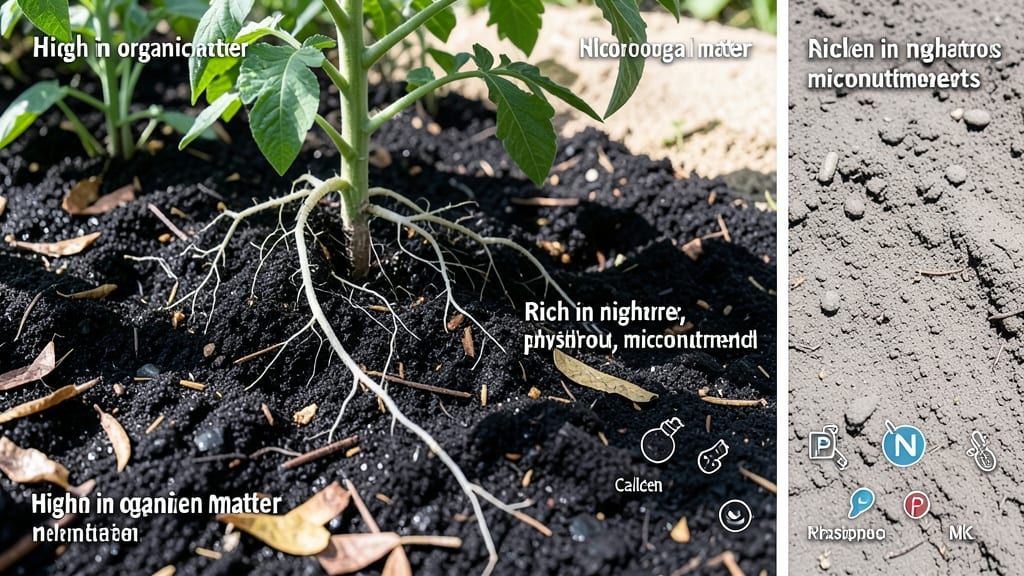
Black soil is rich in organic matter, essential nutrients like nitrogen, phosphorus, and potassium, and beneficial minerals such as calcium, magnesium, and iron, making it ideal for plant growth and soil fertility.
Black soil gets its dark color from a high concentration of decomposed organic material—think humus and broken-down plant matter—that acts like a natural fertilizer. 🌱 This rich composition isn't just about looks; it's packed with primary nutrients that plants crave, like nitrogen for leafy growth and phosphorus for root development.
The minerals in black soil also support cellular functions, helping plants absorb water and nutrients more efficiently. What's fascinating is how this soil type maintains moisture better than lighter soils, creating an ideal environment for both roots and beneficial microbes.
This nutrient density explains why black soil is often called "the gardener's gold." 💛 Unlike sandy soils that drain quickly or clay soils that can become waterlogged, black soil strikes a balance—holding enough moisture for plants while still allowing proper drainage.
The organic matter also improves soil structure over time, making it easier for gardeners to cultivate without constant amendments. For those working with black soil, the key is to preserve its natural richness through practices like composting and avoiding over-tilling, which can break down the delicate organic structure.
💡 In This Article
- Key Nutrients Found in Black Soil
- How to Improve Black Soil Fertility for Gardening
Key nutrients found in black soil
Black soil owes its deep hue to a high concentration of humus, which is essentially decomposed organic matter from plants, animals, and microorganisms. This humus layer can contain up to 5-10% organic carbon by weight, far exceeding lighter soils that often have less than 1%.
The decomposition process releases essential nutrients while creating a crumbly, moisture-retentive structure that plants thrive in. This organic richness acts like a slow-release fertilizer, continuously feeding roots over time. 🌱
The dark color also signals high levels of macronutrients critical for plant growth. Nitrogen, found in amino acids and proteins, fuels leafy growth and chlorophyll production—black soil typically contains 0.5-1.5% nitrogen by weight.
Phosphorus, essential for energy transfer and root development, appears in concentrations of 0.05-0.15%, while potassium supports water regulation and disease resistance at levels around 0.5-1.5%. These nutrients are readily available to plants due to the soil's microbial activity, which breaks down organic matter into plant-accessible forms.
Beyond macronutrients, black soil contains vital micronutrients like calcium (for cell wall strength), magnesium (central to chlorophyll), and iron (critical for photosynthesis). The calcium content often ranges from 0.1-0.5%, while magnesium typically sits at 0.05-0.2%.
What makes this soil particularly effective is how these minerals exist in balanced proportions, avoiding deficiencies that plague other soil types. For example, the iron in black soil helps prevent chlorosis (yellowing leaves) that's common in alkaline soils. 💛
The soil's ability to retain moisture—up to 50% more water than sandy soils—creates an ideal environment for microbial life. These microbes further break down organic matter, creating a self-sustaining nutrient cycle. This biological activity also produces beneficial compounds like glomalin, a glycoprotein that helps form stable soil aggregates.
The result is a soil structure that resists compaction and erosion while maintaining porosity for root penetration and air circulation.
What's often overlooked is how black soil's nutrient profile changes with depth. The top 6-12 inches contain the highest organic matter and nutrient concentrations, while deeper layers may have lower organic content but still provide essential minerals.
This gradient explains why deep-rooted plants like fruit trees thrive in black soil—they can access nutrients across multiple soil horizons. The dark color actually fades with depth, serving as a visual indicator of nutrient availability. ✨
For gardeners, this nutrient richness translates directly to plant performance. Studies show that plants grown in black soil often exhibit 20-30% faster growth rates compared to those in depleted soils, with higher yields and better resistance to pests and diseases.
The combination of organic matter and balanced minerals creates an environment where plants can focus energy on growth rather than struggling to access nutrients. This is why black soil is particularly prized for vegetables, grains, and other high-demand crops. 🌿