
Light Requirements
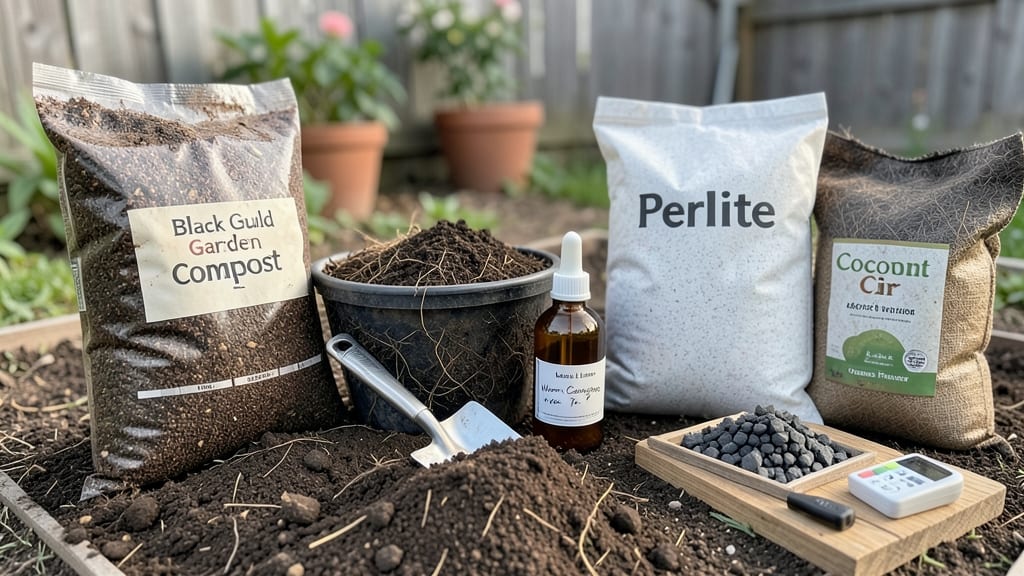
Determining what soil amendments you need starts with your garden's specific conditions: sandy soils require compost and clay to improve water retention, while heavy clay soils benefit from organic matter like peat moss or coarse sand to enhance drainage. Conduct a soil test to identify pH imbalances and select lime or sulfur accordingly for optimal plant growth.
Your garden's health depends on understanding its unique soil composition. 🌱 Sandy soils drain too quickly, often lacking essential nutrients, while clay soils can become compacted, suffocating plant roots.
A simple soil test reveals pH levels—most vegetables thrive in slightly acidic to neutral ranges (6.0-7.0), while blueberries prefer more acidic conditions. For instance, if your test shows a pH of 5.5, adding agricultural lime will gradually raise it closer to neutral.
Organic amendments like compost or well-rotted manure not only improve structure but also introduce beneficial microbes that break down nutrients for plants.
For practical application, mix amendments into the top 6-12 inches of soil before planting. Sandy soils may need 2-3 inches of compost per square foot, while clay soils benefit from 1 inch of organic matter spread evenly.
Always water thoroughly after amending to help materials integrate with existing soil. What works for tomatoes might differ for roses—always match amendments to your specific plants' needs.
💡 In This Article
- How to Diagnose Your Soil’s Specific Needs Before Amending
- Best Soil Amendments for Common Garden Challenges
How to diagnose your soil’s specific needs before amending
Soil testing reveals three critical factors: texture, pH, and nutrient levels. Texture determines how water and air move through soil—sandy soils drain too fast (particles >0.05mm), while clay holds too much water (particles <0.002mm). Loam, the ideal mix, balances all three.
Use the ribbon test: roll moist soil between fingers—clay forms stiff ribbons, sand crumbles instantly. 🔍 For precise analysis, send samples to a lab (costs $20-$50) or use a home test kit ($10-$20) that measures pH with color-changing strips.
The pH scale (0-14) affects nutrient availability—most plants prefer 6.0-7.0. Acid-loving plants like blueberries (pH <5.5) need sulfur, while alkaline soils (pH >7.5) benefit from elemental sulfur or aluminum sulfate. Nutrient tests check for deficiencies like nitrogen (leaf yellowing), phosphorus (stunted roots), or potassium (weak stems).
For example, a soil test showing low magnesium suggests adding dolomitic lime, while high sodium (from irrigation) requires gypsum to flush it out.
Microbial activity is the hidden hero—healthy soil has millions of bacteria and fungi per gram, breaking down organic matter into plant-available nutrients. Add compost or worm castings to boost these populations.
For instance, 1 cup of compost per square foot introduces beneficial microbes that outcompete pathogens. 🌱 The key is balance: too much organic matter can deplete nitrogen, while synthetic fertilizers kill beneficial microbes. Aim for 3-5% organic matter in most soils, measured by loss-on-ignition testing.
Seasonal timing matters—amend in fall for spring planting or early spring for summer crops. Work amendments into the top 6-12 inches of soil (deeper for perennials).
For example, add 2 inches of compost to sandy soil before planting tomatoes, while clay soil benefits from 1 inch of peat moss mixed with coarse sand to improve aeration. Always water thoroughly after amending to activate microbial breakdown of organic materials.
Consider your plants' life stages too. Seedlings need fine, nutrient-rich soil, while mature trees benefit from deep-root amendments like biochar (improves water retention) or wood chips (slow-release carbon). For container gardens, use a 50/50 mix of potting soil and perlite to prevent compaction.
The goal is creating a living ecosystem where roots can access water, air, and nutrients simultaneously.
Don't overlook texture's role in temperature regulation—sandy soils heat up faster in summer (reaching 120°F+ at surface level), while clay stays cooler but waterlogged. Mulch with 2-4 inches of straw or wood chips to moderate temperature swings.
For vegetable gardens, aim for a loamy texture that holds moisture without drowning roots—a perfect compromise between sand and clay's extremes.
Remember: soil is a dynamic system. Re-test every 2-3 years or when problems arise (like yellow leaves or poor growth). The right amendments transform barren soil into a thriving ecosystem—where plants grow strong and microbes do the heavy lifting of nutrient cycling.
Start with a test, then match amendments to your soil's specific deficiencies. 💫