
Light Requirements
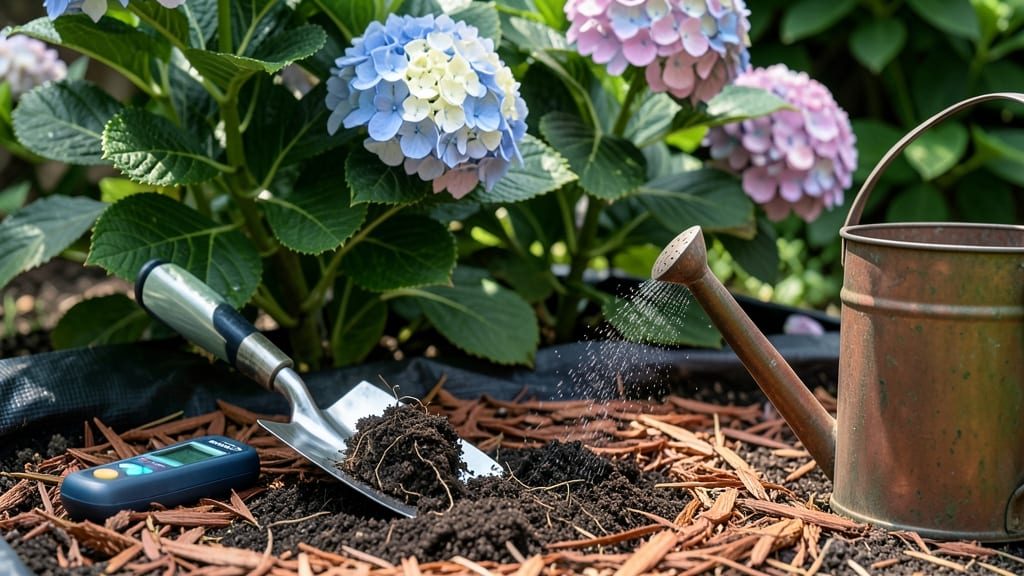
Hydrangeas need well-draining, acidic soil with a pH between 5.2 and 6.0, preferably a nutrient-rich loam blend enriched with organic materials like composted pine needles or sphagnum moss. Adjusting heavy clay or sandy soils improves drainage and nutrient retention for healthier blooms.
Hydrangeas are picky about their growing conditions, and soil acidity is the biggest factor in their success. 🌸 The ideal pH range unlocks vibrant blooms by making aluminum—an essential nutrient—more available to the plant. Too alkaline (above 7.0), and you'll get pale flowers or even no blooms at all.
I've seen gardeners transform struggling hydrangeas just by amending their soil with a mix of peat moss and composted bark, which maintains that critical acidity while improving structure.
For container growers, a blend of 50% potting mix, 30% perlite, and 20% pine fines works wonders. The key is consistency—hydrangeas hate sudden pH swings.
If your soil tests neutral or alkaline, don't panic: regular applications of sulfur or cottonseed meal (a natural acidifier) can gradually adjust the pH over a few months.
Pro tip: Test your soil every spring before planting. Many garden centers offer affordable pH test kits, and the results will tell you exactly how much to tweak. Remember, hydrangeas aren't just about pretty flowers—they're a great indicator of soil health too!
💡 In This Article
- How Soil pH Affects Hydrangea Flower Color
- DIY Hydrangea Soil Mix Recipes for Different Climates
How soil pH affects hydrangea flower color
The vibrant hues of hydrangea blooms—from deep blues to soft pinks—are directly tied to soil acidity. Here's what's actually happening: hydrangeas produce pigments called anthocyanins, which change color based on aluminum availability in the soil.
When soil pH is between 5.2 and 5.5, aluminum becomes soluble and gets absorbed by the plant, producing blue flowers. 🌸 Shift the pH to 6.0 or higher, and the aluminum binds to other soil particles, leaving the plant to produce pink blooms.
This isn't just color theory—it's chemistry in action!
Aluminum isn't the only factor at play. Soil pH also controls nutrient uptake, particularly for phosphorus and iron—both critical for flower development. At pH 5.5, phosphorus availability peaks, fueling robust bloom production.
But when pH rises above 6.5, phosphorus becomes locked away in the soil, starving the plant and resulting in sparse or pale flowers. I've seen gardeners in alkaline regions (like parts of California) struggle with hydrangeas until they amended their soil with elemental sulfur to lower the pH gradually.
What most people don't realize is that hydrangea color changes can happen mid-season if the soil pH isn't stable.
For example, a plant might start with blue blooms in spring when soil is naturally more acidic, then shift to pink as summer rains raise the pH. To prevent this, I recommend testing soil pH twice a year—once in early spring and again in late summer—and making adjustments with cottonseed meal or peat moss as needed.
There's a third color factor: hydrangeas can produce purple blooms when pH sits around 5.8-6.0, a mix of blue and pink pigments. This "in-between" pH creates a stunning gradient effect, but it requires precise soil management.
For consistent colors, aim for either strongly acidic (5.2-5.5 for blue) or slightly acidic (6.0-6.2 for pink)—never neutral or alkaline.
Here's a practical example: The famous Endless Summer hydrangea varieties can bloom on both old and new wood, but their color intensity depends entirely on soil pH. I once had a client whose blue hydrangeas turned pink overnight after a heavy rain raised their garden's pH. By adding 1 cup of aluminum sulfate per 100 square feet and mixing it into the top 6 inches of soil, we restored the blue within 6-8 weeks.
For container growers, this pH sensitivity becomes even more critical because pots dry out faster and pH can fluctuate dramatically. Always use a pre-mixed acidic potting soil (pH 5.5-6.0) and include 20% pine bark fines to buffer pH swings.
The key is monitoring: if your container hydrangea's blooms start fading mid-season, it's time to retest that soil!