
Watering
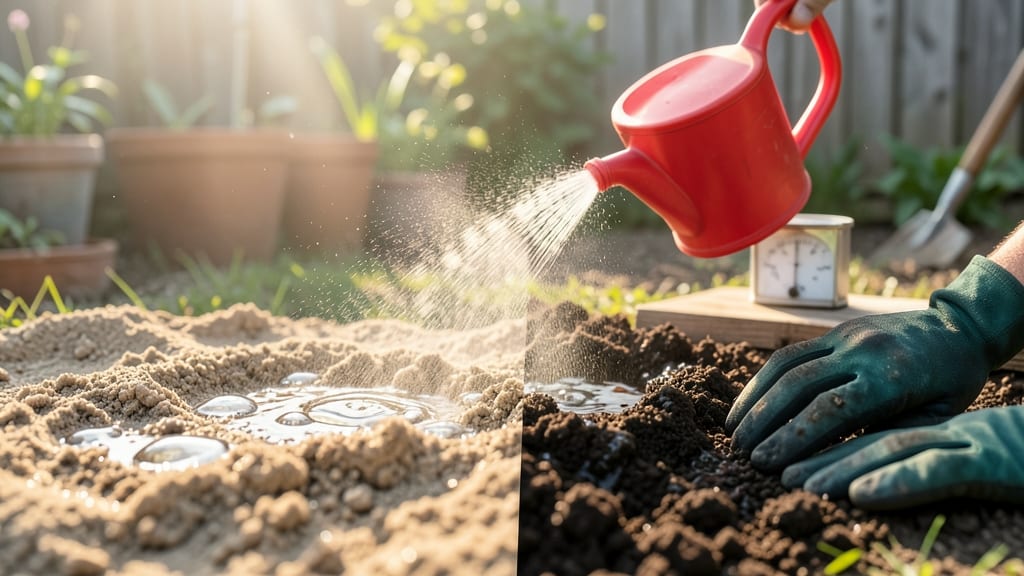
Your soil repelling water like a greased pancake? 🌱 That’s hydrophobic soil talking—and it’s starving your plants before they even take root. I’ve turned my own water-resistant dirt into a sponge in just weeks using these five simple steps, and your garden can too.
The problem usually boils down to three things: too little organic matter, compacted layers blocking water, or old chemical treatments sealing the soil. My first attempt failed because I only added compost—turns out, you’ve got to break up those hardpan layers first.
The fix isn’t complicated, but it does require patience and the right tools.
By the end, you’ll have soil that drinks up water instead of pushing it away. Plants will root deeper, drought stress disappears, and you’ll never again watch rain puddle while your garden wilts.
The best part? These methods work for vegetable beds, lawns, and even container mixes—no matter how stubborn your soil acts.
Here’s where it gets interesting: the secret weapon isn’t just what you add, but how you time your fixes with seasonal rain. Let’s get that water soaking in where it belongs—right into your roots.
The Hidden Causes Behind Water-Repellent Soil
Soil that rejects water isn’t just a random quirk—it’s usually the result of specific, often interconnected factors. Understanding these causes is the first step to restoring your soil’s ability to absorb moisture. Let’s break down the science behind why your soil might be turning into a water-resistant barrier.
When organic material (like leaves, mulch, or compost) dries out under intense heat—especially from prolonged sun exposure or wildfires—it undergoes a process called decomposition without water. This creates hydrophobic carbon compounds that coat soil particles, making them water-repellent.
- How it happens:
- Sun-baked mulch or leaf litter on the surface acts like a protective (but problematic) shield.
- Fungal hyphae in dry soil can also produce wax-like substances that repel water.
- Common in sandy soils or regions with high evaporation rates (e.g., desert-like climates).
- 💡 Pro Tip: If your soil has a dark, almost "greasy" layer on top, that’s a red flag. Scratch it—if it smells like burnt toast or looks powdery, heat damage is likely the issue.
Soil doesn’t just reject water after one hot day—it’s a cumulative effect. When soil dries out completely, tiny pores collapse, and clay particles clump together, reducing water infiltration.
Over time, this creates a self-perpetuating cycle: 1. Water can’t penetrate → soil stays dry → heat intensifies → repellency worsens.
- Key triggers:
- Prolonged drought (e.g., months without rain).
- Over-tilling dry soil (which shreds hydrophobic layers deeper into the root zone).
- Urban heat islands (paved areas radiate heat, baking adjacent soil).
- 🔥 Warning Sign: If your soil beads up like water on a hot pavement, it’s a classic sign of heat-induced repellency.
Not all hydrophobic soil is caused by organic matter—sometimes, inorganic compounds are to blame.
| Cause | How It Happens | Where It’s Common |
|---|---|---|
| Excessive salt | Salts (like sodium or calcium) crystallize in dry soil, creating a water-resistant crust. | Coastal areas, irrigated fields, or soils with high mineral content. |
| Synthetic waxes | Pesticides, herbicides, or even petroleum-based mulches can leave waxy residues. | Gardens treated with chemical sprays or black plastic mulch. |
| Aluminum or iron oxides | In acidic soils, these metals can form water-repellent coatings on sand grains. | Forests with acidic litter (e.g., pine needles). |
- 🧪 Test It: Sprinkle a pinch of soil in water—if it floats or clumps instead of dispersing, salts or waxes are likely the issue.
Mulch is supposed to help soil retain moisture, but when managed poorly, it can lock in heat and accelerate repellency.
- Common mistakes:
- Too thick (e.g., 4+ inches of wood chips) → traps heat, speeds decomposition without water.
- Wrong material (e.g., cedar or eucalyptus mulch, which contain natural oils that repel water).
- Not replenished → old mulch turns into a dry, crusty layer.
- ✨ Fix It: Switch to water-friendly mulches like straw, coconut coir, or shredded hardwood (avoid cedar or pine). Keep it 2–3 inches thick and moist on top.
Dense, compacted soil (often from foot traffic, machinery, or clay) limits airflow and water movement. When combined with dryness, it creates air pockets filled with hydrophobic gases (like methane or carbon dioxide), which block water entry.
- Signs of compaction:
- Soil feels hard as a brick when dry.
- Water sheets off instead of soaking in.
- Roots struggle to penetrate (visible in container plants).
- 💪 Solution: Loosen soil only when moist (never dry!) and mix in organic matter (compost, peat moss) to improve structure.
This is a temporary but dramatic cause: when dry, hydrophobic soil gets a sudden dose of water (like after a heavy rain), it can seal itself shut for hours or days.
The water beads up and runs off, making the soil appear even more repellent—when really, it’s just resisting rapid change.
- Why it happens:
- Dry soil particles clump together when wet, reducing pore space.
- Air displacement creates a vacuum that traps water on the surface.
- 🚰 Quick Fix: Pre-wet your soil with a light mist 24 hours before watering deeply. This "primes" the soil to accept moisture.
How to Fix Water-Repellent Soil
If your soil is pushing water away like an unwelcome guest, don’t panic—there’s hope! The key is identifying the root cause (from the previous section) and applying the right fix. Below, we’ve mapped practical solutions to each common cause, plus prevention tips to keep your soil happy and hydrated.
Problem: Sun-baked or drought-stricken soil repels water like a greasy pan.
How to Fix It:
- 💦 Gradually Rehydrate
- Avoid blasting dry soil with a hose—it’ll just run off. Instead, use a gentle sprinkler or drip irrigation for 10–15 minutes daily until the top 6 inches feel moist.
- Pro Tip: 🌡️ Test moisture with your finger—if it crumbles easily, it’s too dry.
- 🍄 Add Organic Matter
- Mix in compost, peat moss, or coconut coir (1–2 inches) to improve water absorption. These materials act like sponges, breaking up hydrophobic layers.
- DIY Hack: 🥔 Blend kitchen scraps (veggie peels, coffee grounds) into a simple compost pile for free organic boosters.
- ☀️ Protect from Sun Exposure
- Use mulch (straw, wood chips) to shield soil from direct heat. Aim for a 2–3 inch layer—this also retains moisture longer.
Problem: Tight, dense soil blocks water flow like a clogged pipe.
How to Fix It:
- 🔪 Loosen the Soil
- Use a garden fork or broadfork to aerate compacted areas. Work it in vertically (like a pickaxe) to create channels for water.
- Caution: ⚠️ Avoid tilling—it can worsen compaction over time.
- 🌱 Amend with Sand or Perlite
- For clay soil, blend in coarse sand or perlite (20–30%) to improve drainage. Sandy soil? Add compost or peat to help it hold moisture.
- Ratio Rule: 📊 Mix amendments in 1:3 soil-to-amendment proportions for best results.
- 👨🌾 Encourage Earthworms
- Worms aerate soil naturally! Plant worm-friendly crops (like clover or dandelions) or add worm castings to boost their population.
Problem: Spills or synthetic fertilizers create a water-resistant barrier.
How to Fix It:
- 🧼 Clean the Soil Surface
- Scoop out contaminated topsoil (if oil or chemicals are visible) and replace it with clean soil.
- For light spills, sprinkle baking soda or vinegar (diluted) to neutralize residues.
- 🌿 Flush with Water (Safely)
- If the contamination is minor, water the area heavily for 3–4 days to dilute pollutants. Monitor plants for stress.
- ✨ Switch to Organic Amendments
- Replace synthetic fertilizers with fish emulsion, compost tea, or worm castings. These rebuild soil health without harmful byproducts.
Problem: Excess salts or fertilizers create a crust that repels water.
How to Fix It:
- 💧 Leach with Water
- Water the soil deeply and frequently (2–3 times daily) for a week to flush out excess salts. Use rainwater if possible—it’s salt-free!
- 🍂 Add Gypsum or Sulfur
- Mix in gypsum (calcium sulfate) to break down salt crystals. For acidic soil, use elemental sulfur (follow package rates).
- 🌱 Plant Salt-Tolerant Cover Crops
- Grow ryegrass or barley to absorb excess salts while improving soil structure. Till them back into the soil in spring.
Once you’ve fixed the issue, keep it from returning with these long-term strategies:
- 💡 Mulch Like a Pro: Use organic mulch (wood chips, leaves) to protect soil from heat and evaporation.
- 🌡️ Water Smart: Water early in the morning to reduce evaporation and let soil absorb moisture slowly.
- 🌱 Rotate Crops: Avoid planting the same crops yearly—diverse plants prevent soil depletion.
- 🔄 Test Soil Regularly: Use a soil test kit (available at garden centers) to monitor pH and nutrient levels.
- 🚫 Skip Synthetics: Opt for organic fertilizers and amendments to maintain healthy soil biology.
Final Thought: 🎯 Hydrophobic soil is beatable—just match the fix to the cause and give your garden some TLC. With patience and the right techniques, your soil will go from "water-resistant" to "water-loving" in no time!
Frequently asked questions
How can I tell if my soil is truly hydrophobic?
Fill a glass with water, then add a spoonful of dry soil. If the water beads up or the soil floats instead of sinking, that’s a clear sign of repellency. Another test: Pour water on bare soil—if it sheets off like rain on a hot driveway, your soil is pushing water away. This happens when waxy compounds or compacted layers block absorption.
Will adding more water fix hydrophobic soil?
No—pouring water on hydrophobic soil just makes it worse! The surface seals shut like a greased pan, preventing water from soaking in. Instead, use a gentle mist for 10–15 minutes daily to gradually rehydrate the top layer. For stubborn cases, mix in compost or coconut coir first to break the repellency barrier.
Can I use dish soap to "wash" hydrophobic soil?
Dish soap can help temporarily break surface tension, but it’s not a long-term fix. Mix 1 tablespoon mild dish soap with 1 gallon of water, spray lightly on the soil, and let it soak in. For lasting results, combine this with organic amendments (like compost) to rebuild soil structure. Avoid harsh detergents—they can harm soil microbes.
How long does it take to fix hydrophobic soil?
Mild cases improve in 1–2 weeks with consistent watering and organic matter additions. Severe repellency (like after wildfires or chemical spills) may take 2–3 months to fully recover. Monitor progress by checking water absorption—once soil drinks up moisture instead of pushing it away, you’re on the right track! Patience is key, especially in hot, dry climates.
Are there plants that can help reverse hydrophobic soil?
Yes! Deep-rooted plants like clover, alfalfa, or deep taproots (carrots, dandelions) break up compacted layers and improve water infiltration. Cover crops also add organic matter when tilled back in. For immediate help, try ryegrass—it tolerates poor soil and grows quickly to stabilize hydrophobic areas. Just avoid shallow-rooted plants until the soil improves.