
How To
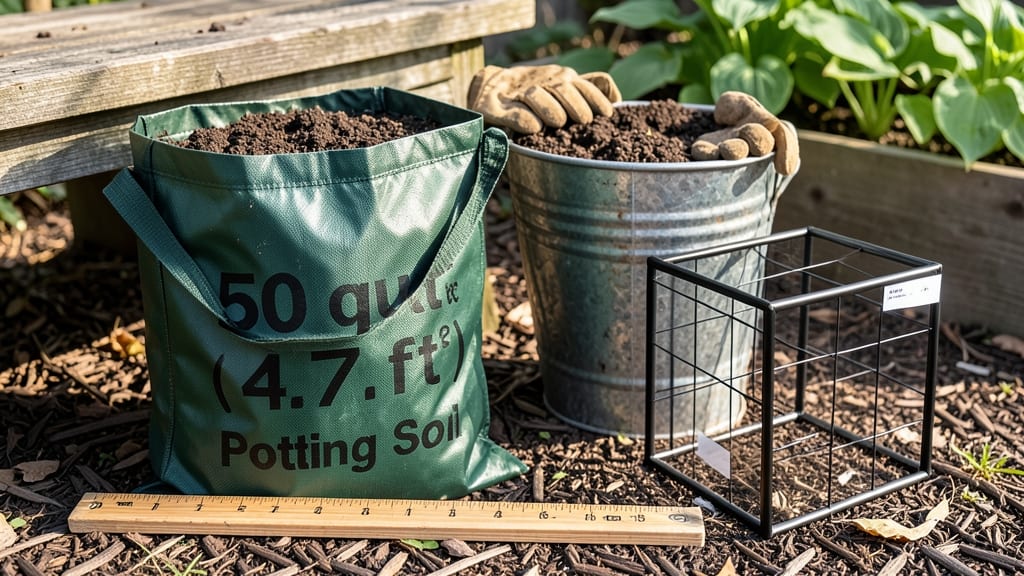
Converting 50 quarts of potting soil equals approximately 1.305 cubic feet. This measurement helps gardeners estimate yardage for container gardening, raised beds, or bulk soil purchases based on project needs.
Understanding this conversion is key for gardeners who work with precise measurements. One cubic foot of potting soil holds about 29.922 quarts, so 50 quarts fits neatly into just over 1.3 cubic feet.
This means a 10-gallon container (which holds roughly 25 quarts) would need about 0.83 cubic feet of soil—useful for comparing pot sizes. The difference between quarts (volume) and cubic feet (space) helps you visualize how much soil fills your gardening space before buying. 🌱
For larger projects, scaling up becomes easier once you know this baseline. For example, a 4'x8' raised bed that's 1 foot deep needs about 3.33 cubic yards (or 90 cubic feet) of soil.
Breaking it down helps avoid overbuying or running short. I always recommend measuring your space first—then converting quarts to cubic feet to match your project's exact needs.
💡 In This Article
- How Quart and Cubic Foot Measurements Compare in Gardening
- Practical Applications for Converting Potting Soil Quantities
How quart and cubic foot measurements compare in gardening
The conversion between quarts and cubic feet stems from the basic relationship between liquid volume and space. One cubic foot equals approximately 29.922 quarts, which means 50 quarts of potting soil occupies about 1.305 cubic feet of space.
This ratio matters because quarts measure liquid capacity (like how much soil fits in a bag), while cubic feet measure the actual space it occupies in your garden. 🌱
Understanding this difference helps when calculating how much soil you need for containers. For instance, a 5-gallon grow bag (which holds about 12.2 quarts) would need roughly 0.41 cubic feet of soil. The key is recognizing that soil density varies—peat-based mixes are lighter, while mineral-heavy blends are heavier.
A cubic foot of peat-heavy soil might weigh 20-30 pounds, while a mineral mix could reach 40-50 pounds due to added perlite or sand.
This conversion also explains why bulk purchases often use cubic yards instead of quarts. One cubic yard equals 27 cubic feet, which is 809.9 quarts—enough to fill a 4'x8' raised bed 1 foot deep.
The math simplifies planning: if your project needs 5 cubic yards, you're looking at 4,049.5 quarts of soil. This clarity prevents overbuying or running short, especially for large-scale gardening. 💫
Density plays a critical role here. Loose, fluffy potting mixes compress when watered, reducing their cubic foot volume by 10-20% as they settle. This is why garden centers often recommend buying 10-15% more than your calculated cubic feet to account for settling and moisture absorption.
For example, if your bed needs 10 cubic feet of soil, buying enough for 11.5 cubic feet ensures you won’t run out mid-project.
Visualizing this helps with spatial planning. A 12-inch diameter pot holds about 0.7 cubic feet (or 21 quarts24-inch pot jumps to 2.5 cubic feet (or 75 quarts
The cubic foot measurement gives you a consistent way to compare container sizes regardless of shape—whether you're using round pots, rectangular planters, or window boxes. For precision, always measure your containers' internal dimensions in feet, then multiply length × width × height to get cubic feet. Divide by 29.922 to convert to quarts if you're working with pre-packaged bags. This method ensures you buy exactly what you need, reducing waste and cost. 🔥