
Neem Oil
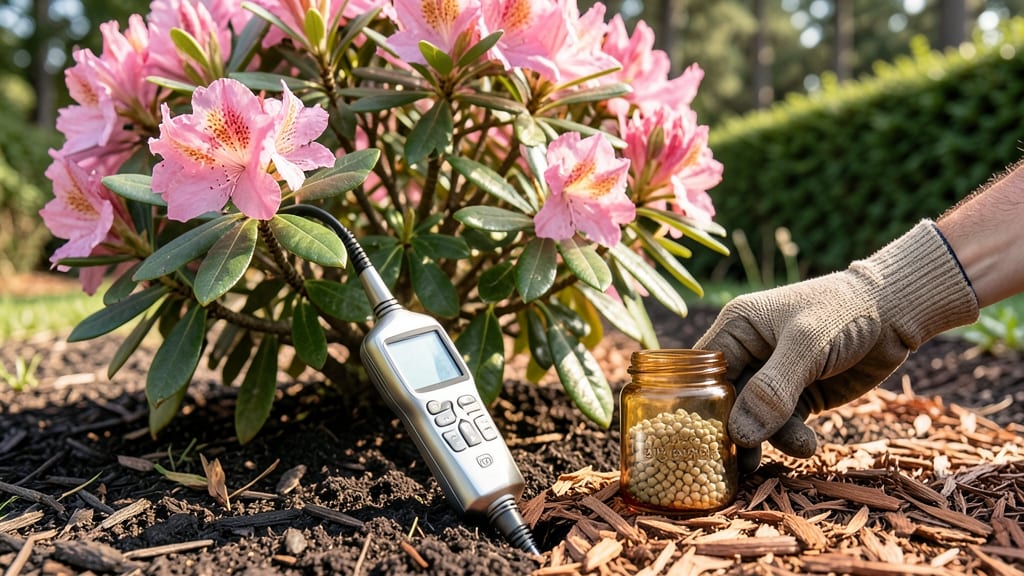
Azalea soil acidity must stay between 4.5 and 5.5 pH for optimal growth, as these evergreens thrive in highly acidic conditions. Test soil with a reliable pH meter or kit, and amend with sulfur or peat moss if levels drift above 6.0.
Azaleas depend on acidic soil because their roots absorb essential nutrients like iron and phosphorus more efficiently in low-pH environments. 🌿 When soil pH rises above 6.0, these nutrients become chemically locked, leading to yellowing leaves (chlorosis) and stunted growth.
Unlike many plants that tolerate neutral soil, azaleas show visible stress when pH exceeds their ideal range. I always recommend testing soil in early spring before planting or fertilizing, as seasonal moisture changes can temporarily alter pH readings.
For accurate testing, use a digital pH meter for quick results or send samples to a lab for professional analysis. Remember that organic amendments like pine bark or sulfur take time to adjust pH—typically 2-3 months for noticeable changes.
The key is patience combined with regular monitoring, especially in regions with naturally alkaline soils.
💡 In This Article
- Why Azaleas Demand Acidic Soil Chemistry
- Step-by-Step Azalea Soil pH Testing Methods
Why azaleas demand acidic soil chemistry
Azaleas have evolved to thrive in acidic soil because their root systems rely on specific chemical conditions to access critical nutrients. In acidic environments (pH 4.5-5.5), aluminum and iron exist in soluble forms that azalea roots can easily absorb. These elements are vital for chlorophyll production and overall plant metabolism.
When soil pH rises above 6.0, these nutrients bind to soil particles, becoming chemically unavailable—a process called precipitation. This explains why azaleas develop yellow leaves (chlorosis) even when soil appears rich in nutrients.
The magic happens at the microscopic level: azalea roots release organic acids like citric and oxalic acid to further acidify their immediate soil zone. This creates what botanists call a "rhizosphere" with pH levels even lower than the surrounding soil.
Without this acidic environment, phosphorus—another essential nutrient—becomes locked in insoluble forms, starving the plant despite its presence in the soil. 🌱 For comparison, blueberries (another acid-loving plant) share this need, but azaleas are far more sensitive to pH fluctuations, often showing stress at levels that wouldn't bother blueberries.
What makes this particularly interesting is how azaleas handle manganese—a nutrient that becomes toxic in alkaline soils. In acidic conditions, manganese remains at optimal levels (typically 20-50 parts per million), but when pH rises, manganese concentrations can spike to harmful levels (over 100 ppm).
This dual-edged sword explains why azaleas in alkaline soils often show both nutrient deficiencies and toxicity symptoms simultaneously. The plant's survival depends on maintaining this delicate pH balance where nutrient availability and toxicity risks align perfectly.
Seasonal variations add another layer of complexity. Rainwater naturally acidifies soil slightly (pH 5.6), but in dry climates or after heavy lime applications, pH can jump to 7.0 or higher.
Azaleas planted in garden beds with composted leaves or pine bark mulch (which slowly release organic acids) maintain better pH stability than those in amended garden soil.
The key takeaway is that azaleas aren't just picky about soil acidity—they've developed a sophisticated biochemical system to create their ideal growing environment at the root level.
Here's what happens when you get it wrong: soil pH above 6.0 triggers a cascade of problems. First, iron deficiency causes interveinal chlorosis (yellowing between leaf veins while veins stay green). Then, phosphorus deficiency leads to dark green, purplish leaves and stunted growth.
The plant essentially suffocates from nutrient starvation despite living in fertile soil. This is why professional growers monitor soil pH with such precision—even a 0.5 pH unit difference can mean the difference between vibrant blooms and struggling foliage.
For gardeners, understanding this chemistry means never using garden lime (which raises pH) near azaleas. Instead, amendments like elemental sulfur (which lowers pH) or peat moss (which holds acidity) become essential tools.
The relationship between azaleas and acidic soil isn't just about preference—it's a biological necessity that spans millions of years of evolution. 🌿