
Landscaping
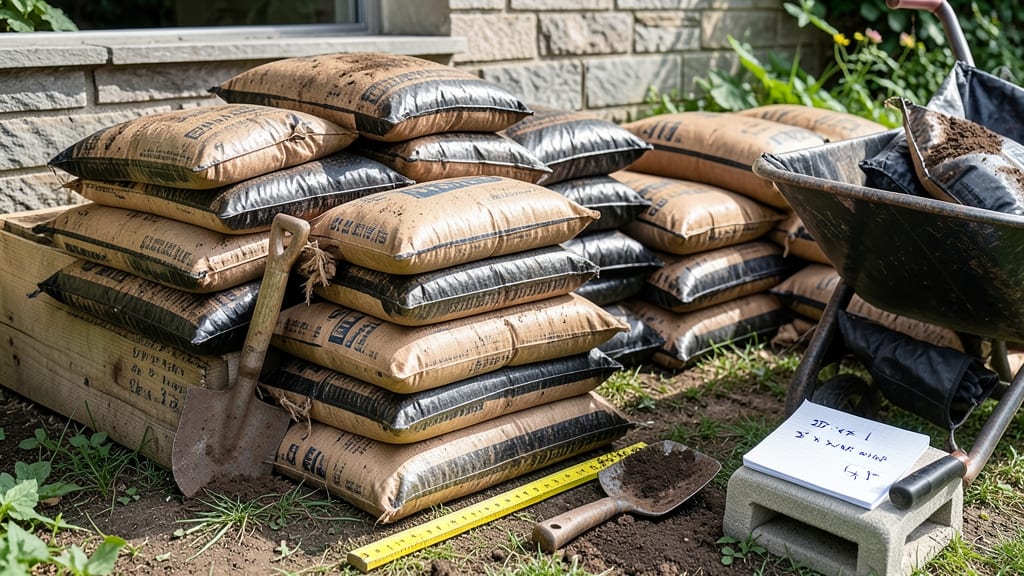
To determine how many bags of soil fill a yard, calculate that a standard yard (3 feet deep) holds 27 cubic feet of soil, which translates to 9 bags of topsoil if each bag contains 3 cubic feet, or 18 bags for 1.5-cubic-foot bags. Adjusting the depth (like 6 inches instead of 3 feet) cuts the total bags in half.
A yard's volume depends entirely on its depth, and most bags list their cubic feet capacity right on the label. 🌱 For example, a 4-foot-deep planting bed doubles the soil volume to 54 cubic feet, meaning you'd need 18 bags of 3-cubic-foot soil.
I always recommend measuring your project area first—especially for slopes or uneven ground—since those add extra cubic feet that standard calculations miss. Pro tip: Buy an extra bag or two for unexpected adjustments!
If you're working with a raised garden bed or flower garden, smaller 1.5-cubic-foot bags give you more control over soil quality and blending. For larger lawn patches, the 3-cubic-foot bags save time and money.
Always check the bag's label for "cubic feet" (not weight) to avoid miscalculations—some bags might list 40 pounds instead, which can vary by soil type.
💡 In This Article
- Calculating Cubic Feet for Soil Bags by Yard Depth
- Best Soil Bag Sizes for Garden Projects by Type
Calculating cubic feet for soil bags by yard depth
The volume of soil in a yard starts with a simple multiplication: length × width × depth.
For a standard yard (3 feet deep), this equals 27 cubic feet—the foundation for your soil bag calculation. 🌱 For example, a 10-foot-by-10-foot area filled to 3 feet depth gives you exactly 10 × 10 × 3 = 300 cubic inches, which converts to 27 cubic feet (since 1 cubic foot = 1,728 cubic inches).
This math explains why a 3-foot-deep yard always starts with 27 cubic feet, regardless of the yard's surface area.
Bag size dramatically alters the total count because it changes how many cubic feet each bag contributes. A 3-cubic-foot bag divides the 27 cubic feet into 9 bags (27 ÷ 3), while a 1.5-cubic-foot bag requires 18 bags (27 ÷ 1.5).
The difference becomes even more pronounced for deeper projects: a 4-foot-deep yard jumps to 54 cubic feet, meaning 18 bags of 3-cubic-foot soil or 36 bags of 1.5-cubic-foot soil. This is why professionals often recommend measuring depth precisely—even a 6-inch error can add 4.5 cubic feet to your total!
Real-world adjustments are critical for projects with slopes or irregular shapes. A sloped yard might require 10-20% more soil to account for uneven surfaces, while a partially filled area (like a raised bed) could need only half the bags.
For instance, a 6-inch-deep yard (half of 3 feet) would only need 13.5 cubic feet, or 5 bags of 3-cubic-foot soil. Always round up to avoid shortages—soil compaction after watering can reduce usable volume by 10-15%, depending on the soil type.
Understanding these calculations prevents costly mistakes. For example, a homeowner might misjudge a 3-foot-deep × 5-foot-wide × 10-foot-long trench as needing 15 bags of 3-cubic-foot soil (45 cubic feet total), but the actual volume is only 15 cubic feet (5 × 10 × 0.3), requiring just 5 bags.
Double-checking dimensions ensures you buy the right amount without overpaying for excess soil.
Pro tip: Use a tape measure to verify depth in multiple spots—especially for sloped or uneven areas. A 1-inch difference in depth across a 100-square-foot area adds nearly 0.8 cubic feet of soil, which could mean the difference between 3 and 4 extra bags.
Precision here saves time, money, and frustration during your project.
For visual learners, imagine stacking 3-cubic-foot bags like blocks: 3 bags along the length, 3 along the width, and 1 layer high equals 9 bags for a 3-foot-deep yard. This mental model helps translate abstract cubic feet into tangible, stackable units. 🧱