
Landscaping
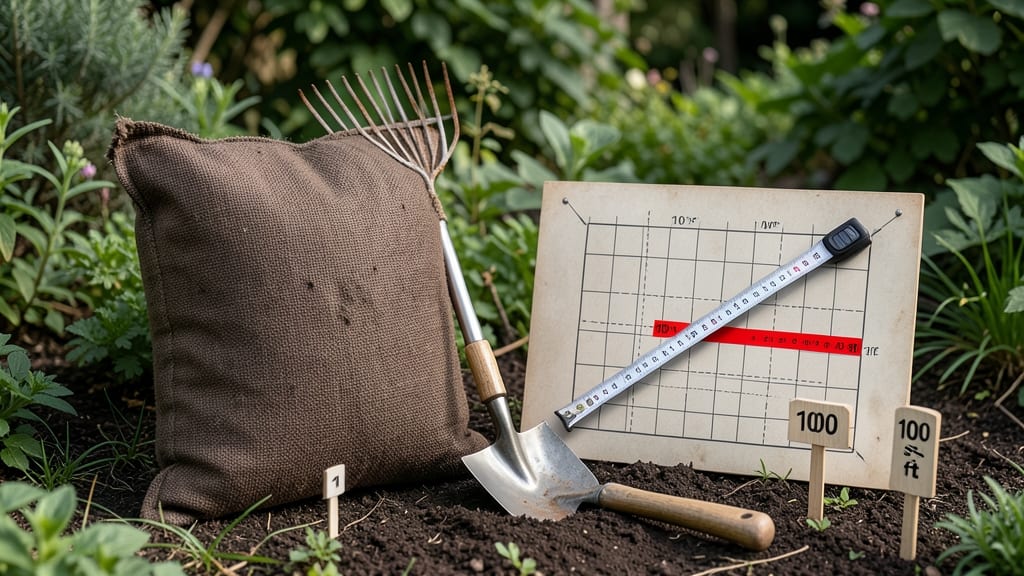
A yard of topsoil covers 100 square feet when spread 3 inches deep—standard for most garden beds. Adjust depth to calculate coverage: deeper layers (e.g., 6 inches) require less area, while shallower applications (e.g., 1 inch) need more topsoil. Always account for compaction and desired plant root zones.
A cubic yard of topsoil equals 27 cubic feet, and dividing that by your spread depth (in feet) gives your coverage area.
For example, a 1-inch layer (0.083 feet) means you’d need 324 sq ft of topsoil, while a 6-inch layer (0.5 feet) covers just 54 sq ft. 🔥 This explains why most gardeners stick to the 3-inch standard—it balances cost, plant needs, and practicality for most projects.
Understanding this math prevents costly overbuying or under-applying. For instance, a 10x10-foot garden bed at 6 inches deep needs only 3.3 cubic yards, but the same bed at 1 inch would require 10 cubic yards.
Always factor in soil type—sandy soils may need 20% more volume to settle properly, while clay soils might compact differently.
💡 In This Article
- Calculating Topsoil Coverage by Depth: The Math Behind Square Footage
- Topsoil Depth Guide for Gardens, Lawns, and Landscaping Projects
Calculating topsoil coverage by depth: the math behind square footage
The core principle here is simple: 1 cubic yard of topsoil equals 27 cubic feet. To find square footage coverage, divide 27 by your spread depth (converted to feet).
For example, a 3-inch layer (which is 0.25 feet) gives you 108 sq ft—rounding to 100 sq ft accounts for natural settling and slight compaction. This is why most gardeners use this standard depth: it's deep enough for roots to establish without wasting material.
Let’s break it down with real-world examples. A 1-inch spread (0.083 feet) means 324 sq ft per yard—ideal for light topdressing or seed beds. Conversely, a 6-inch layer (0.5 feet) covers just 54 sq ft, perfect for raised beds where deeper soil is critical.
The math becomes even clearer when visualizing: imagine a 10x10-foot area. At 3 inches, you’d need 1 yard of topsoil, but at 1 inch, you’d need 3.2 yards—a 220% increase! 🔥
Depth isn’t just about volume—it’s about plant health. Most vegetables need 6–12 inches of loose soil for roots to thrive, while lawns often only require ¼–½ inch for topdressing. The key is balancing cost, coverage, and plant needs.
For instance, a 100 sq ft flower bed at 2 inches (a common depth) would need 1.35 yards of topsoil, not the full yard. Always measure twice and adjust for soil type—sandy soils may settle 20% more, while clay can compact differently.
Here’s a quick reference for common projects:
- Vegetable gardens: 6–12 inches (0.5–1 yard per 20–40 sq ft)
- Lawn topdressing: ¼–½ inch (1 yard per 100–200 sq ft)
- Flower beds: 2–4 inches (1 yard per 68–135 sq ft)
- Erosion control: 1–2 inches (1 yard per 135–270 sq ft)
Pro tip: Use a leveling board to ensure even depth—uneven layers can lead to water pooling or root stress. For large projects, rent a topsoil spreader to save time and reduce waste. Always buy 10–15% extra to account for uneven ground or settling. 💫
Why does this matter? Because overbuying drains your budget, while under-applying leaves plants struggling. The 3-inch rule is a sweet spot for most gardeners—deep enough for roots, shallow enough to stay affordable.
For precision, convert your depth to feet, divide 27, and adjust for your soil’s quirks. That’s the secret to stress-free landscaping!