
Light Requirements
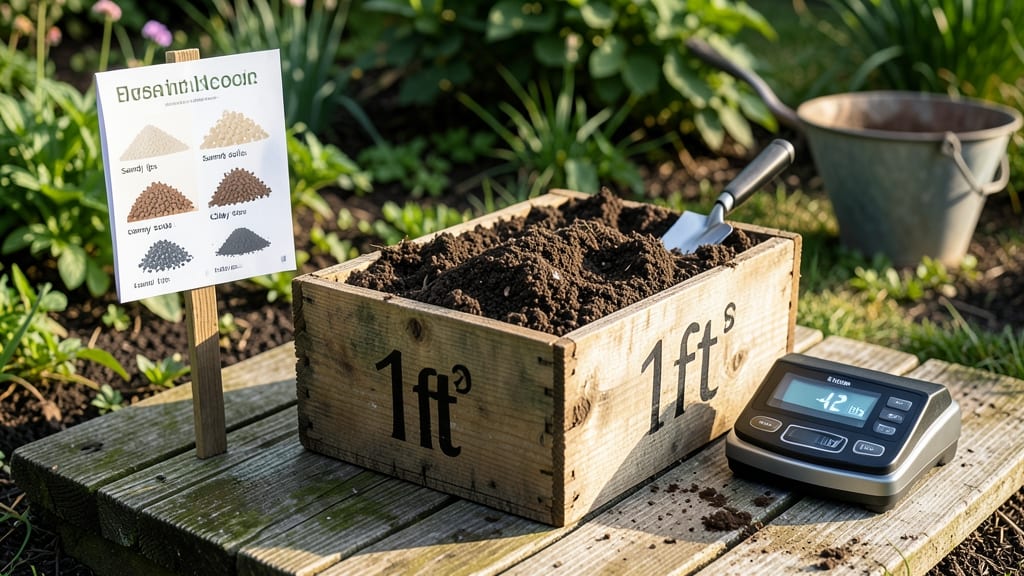
To determine how much 1 cubic foot of soil weighs, expect 40 to 60 pounds when completely dry, but this jumps to 60 to 100+ pounds once fully saturated with water. The exact weight depends on soil composition—sandy mixes are lighter, while clay-heavy or organic-rich soils weigh significantly more. Always factor in moisture levels when planning projects like raised beds or erosion control.
Understanding soil weight is crucial because moisture alone can nearly double the load—imagine carrying 100 pounds of wet soil versus 40 pounds of dry! 💫 This variation explains why gardeners often struggle with heavy containers or why topsoil feels surprisingly dense after rain.
For practical purposes, I recommend weighing a small sample first if you're working with large volumes—it saves guesswork during projects like building raised beds or calculating irrigation needs.
What's fascinating is how different soil types behave: clay holds water like a sponge, adding extra weight, while sandy soil drains quickly but still packs more mass when wet. Organic matter (like compost) can also skew weights higher due to its moisture-retaining properties.
Always test your specific soil type—what works for one garden might fail spectacularly in another!
💡 In This Article
- Soil Weight Variations by Type and Moisture Content
- Practical Applications for Soil Weight in Gardening
Soil weight variations by type and moisture content
Soil weight isn't just about volume—it's a dance between particle size, mineral composition, and how much water clings to those particles. Sandy soil, made up of large, coarse grains, typically weighs 40-50 pounds per cubic foot when dry because the particles pack loosely with minimal surface area for water adhesion.
Clay soil, on the other hand, contains tiny plate-like particles that create microscopic spaces trapping water like a sponge, pushing its dry weight to 60-70 pounds and saturated weight to 100+ pounds—nearly triple the dry weight!
The magic happens at the microscopic level: clay particles have 10-100 times more surface area than sand grains, allowing them to hold 30-50% of their weight in water during saturation.
Silt, the middle ground, usually falls between 45-65 pounds dry and 70-90 pounds wet. Organic matter like compost adds another layer—it can weigh 30-50 pounds per cubic foot dry but absorbs water like a sponge, potentially doubling its weight when moist.
This explains why garden soil often feels heavier than the same volume of pure mineral soil.
Here's where it gets technical: soil density (pounds per cubic foot) is calculated by dividing weight by volume, but moisture content adds a wild card. A 10% moisture increase in clay soil can add 5-10 pounds to that cubic foot!
For example, dry topsoil might weigh 50 pounds, but after a heavy rain, it could swell to 80 pounds—enough to make moving it a backbreaking task. 💫 The key is understanding your soil's texture: grab a handful when wet—does it form a tight ball (clay), a loose clump (silt), or crumble instantly (sand)?
That's your first clue to its weight behavior.
Real-world examples highlight these differences dramatically. A 10-gallon bag of potting mix (about 0.13 cubic feet) typically weighs 12-15 pounds when dry but can reach 20 pounds when saturated—showing how small volumes still follow the same weight rules.
For large projects like raised beds, these variations become critical: a 4'x8' bed filled with clay soil could weigh 1,200-1,600 pounds when wet, requiring proper structural support that sandy soil wouldn't demand.
What most gardeners overlook is how compaction affects weight. Tilled soil loses air pockets, increasing density by 10-20%, while loose, aerated soil might weigh 10-15% less for the same volume. This is why freshly dug soil often feels lighter—it's less compacted.
The lesson? Always test your specific soil type: take a known volume (like a 5-gallon bucket), weigh it dry, then after saturation, to get precise numbers for your garden's unique conditions.
For those working with precise calculations, remember this rule of thumb: 1 cubic foot of water weighs 62.4 pounds. When soil reaches saturation, it's essentially carrying this water weight in addition to its dry mass.
This explains why clay soils—capable of holding 3-5 times their weight in water**—can become so unexpectedly heavy after rain. 🌧️ Understanding these variations isn't just academic; it directly impacts everything from container garden stability to irrigation planning.