
Light Requirements
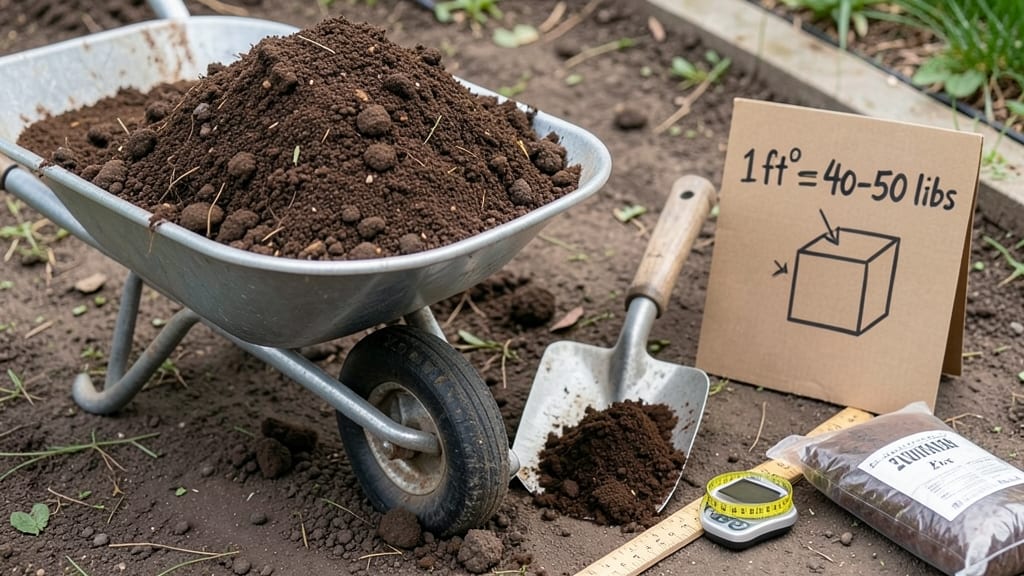
Knowing how much topsoil weighs helps with garden projects and delivery estimates. A cubic foot of topsoil typically weighs between 100 to 120 pounds, with variations based on moisture and compaction.
Understanding topsoil weight matters because it directly impacts how much you need to buy or haul. 🌱 The weight shifts based on how wet the soil is—dry topsoil can drop to 80-90 lbs/ft³, while saturated soil may exceed 130 lbs/ft³.
For example, a 10 cubic yard delivery (about 2700 lbs) could feel much heavier if it's recently rained on. Gardeners often miscalculate because they focus only on volume, not the actual poundage their trucks or wheelbarrows can handle.
Here's a pro tip: if you're ordering topsoil for a raised bed, ask the supplier for a moisture-adjusted weight estimate. Many provide charts showing weight ranges for different soil types—sandy soil is lighter, while clay-heavy mixes pack more pounds per cubic foot.
This small step prevents over-ordering or struggling with delivery logistics.
💡 In This Article
- Factors Affecting Topsoil Weight Per Cubic Foot
- Calculating Topsoil Weight for Garden Projects
Factors affecting topsoil weight per cubic foot
Topsoil weight isn't static—it fluctuates based on four key factors: moisture content, organic matter percentage, soil particle composition, and compaction level. Let's break down how each factor plays a role. Moisture is the biggest variable because water adds significant weight.
Dry topsoil might weigh just 80-90 lbs/ft³, while saturated soil can jump to 130-150 lbs/ft³—that's nearly a 50% increase! The reason is simple physics: water has its own density (about 62.4 lbs/ft³), and soil particles absorb and hold this water between their pores.
Organic matter content (like decomposed leaves, compost, and plant residues) also affects weight. Soils with 5-10% organic matter typically weigh slightly less than mineral-heavy soils because organic particles are less dense. However, when these materials decompose, they release gases and lose mass over time.
The particle size matters too: sandy soils with large particles create more air pockets, reducing overall weight to 90-100 lbs/ft³, while clay-heavy soils pack tightly at 120-140 lbs/ft³ due to their smaller, densely packed particles. This is why clay soils feel heavier when wet.
Compaction is another critical factor—think of it like squeezing a sponge. Loose topsoil has air pockets that reduce weight, but when you compress it (like with heavy machinery or foot traffic), those pockets disappear. A 10% compaction increase can add 10-15 lbs/ft³ to the weight.
For example, a garden bed that's been walked on repeatedly might weigh 125 lbs/ft³ instead of the 110 lbs/ft³ you'd expect for loose soil. This compaction effect is why construction sites often specify "bulk density" measurements—it accounts for how much the soil will settle after placement.
Here's a practical example: imagine you're filling a 2 ft × 2 ft × 1 ft raised bed (4 cubic feet total). If the soil is loose and slightly moist, you'd handle about 440 lbs (4 × 110 lbs).
But if it's been rained on and compacted, that same volume could weigh 520 lbs—a 18% difference that makes a huge impact on your back or truck capacity! Understanding these factors helps you adjust your estimates for real-world conditions. 🌱
For gardeners, this means checking soil moisture before ordering. A simple test: grab a handful of soil—if it forms a ball but crumbles when squeezed, it's at an ideal 20-30% moisture level (about 110-120 lbs/ft³).
If it sticks together like wet sandpaper, you're dealing with 30%+ moisture and weights closer to 130 lbs/ft³. This small check can save you from over-ordering or struggling with delivery logistics.
Scientifically, soil density is calculated using the formula: Density = Dry Soil Weight / Volume. When moisture is added, the formula adjusts to: Bulk Density = (Dry Soil Weight + Water Weight) / Volume.
This explains why suppliers often provide weight ranges rather than exact numbers—they're accounting for these natural variations. For instance, a bag labeled "1 cubic foot" might actually weigh 105-125 lbs depending on these factors. 💫
One final insight: temperature plays a subtle role too. Cooler soils hold more moisture (since cold air can't evaporate water as quickly), which increases weight. In winter months, topsoil might consistently weigh 5-10 lbs/ft³ more than in summer due to this effect.
This is why seasonal ordering can affect your project timeline—spring deliveries often feel lighter than fall shipments. 🌡️