
How To
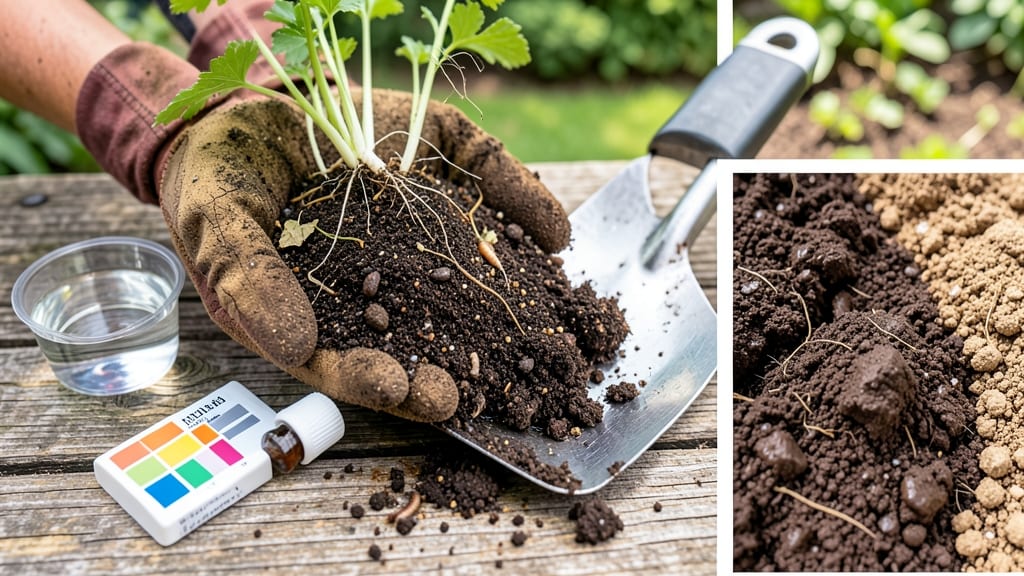
A loam soil description reveals its near-perfect blend of sand, silt, and clay—typically in a 40-40-20% ratio—that creates a crumbly, nutrient-rich foundation perfect for root development, water retention, and aeration, earning it the title of gardening's ideal growing medium.
A loam soil description isn't just about the numbers—it's about the magic that happens when these three components work together. 🌱 The sand particles provide that essential drainage, while the silt and clay hold moisture and nutrients where plant roots can access them.
This balance prevents both waterlogging and drought stress, which is why most gardeners consider it the perfect growing medium for vegetables, flowers, and even lawns. Unlike pure sand or heavy clay, loam soil stays loose enough for roots to spread while retaining enough water to support consistent growth.
What makes loam truly special is how it supports microbial life in the soil. The organic matter mixed into this ideal texture creates a thriving ecosystem where beneficial bacteria and fungi break down nutrients into forms plants can easily absorb.
This natural fertility means you'll often see better yields and healthier plants with less effort compared to amending other soil types. For gardeners who want low-maintenance perfection, loam soil is where it's at.
💡 In This Article
- The Science Behind Loam Soil’s Perfect Balance
- How to Test and Improve Your Garden’s Loam Soil
The science behind loam soil’s perfect balance
Loam soil achieves its legendary status through a precise particle ratio that creates a physical and chemical environment ideal for plant growth. The classic 40% sand, 40% silt, 20% clay composition isn't arbitrary—each component plays a specialized role.
Sand particles (0.05-2mm) act as the soil's drainage system, creating air pockets that prevent waterlogging while allowing oxygen to reach roots.
Meanwhile, silt (0.002-0.05mm) serves as the moisture reservoir, holding water and nutrients just long enough for plants to absorb them, while clay (less than 0.002mm) acts like a sponge that retains nutrients and minerals.
What makes this balance truly remarkable is how these particles interact at the microscopic level. The clay particles, though tiny, have enormous surface area—up to 1,000 square meters per gram—which gives them the capacity to hold nutrients through electrostatic attraction.
Meanwhile, the sand particles prevent the clay from becoming compacted, maintaining the soil's crumbly structure.
This interplay creates what soil scientists call "aggregate stability," where individual particles clump together to form larger, porous structures that improve aeration while maintaining water-holding capacity. 🌱 The result is a soil that neither dries out too quickly nor becomes waterlogged, creating optimal conditions for root development.
Organic matter plays an equally crucial role in maintaining this balance. In ideal loam soil, organic content typically ranges from 5-10% by volume, providing additional structure through the formation of stable aggregates.
These organic components also serve as food for soil microorganisms, which in turn break down nutrients into forms plants can absorb. The dark, crumbly appearance of healthy loam soil comes from this organic matter mixed with the mineral components, creating a visual indicator of its fertility.
This organic-mineral interaction explains why loam soil often requires less fertilization than other soil types—its natural structure supports a thriving microbial ecosystem that continuously recycles nutrients.
To understand why loam outperforms other soil types, let's compare it to its extremes. Sandy soil, with its high proportion of large particles, drains water too quickly and lacks nutrient retention, while clay-heavy soil becomes waterlogged and compacted, restricting root growth.
Loam sits perfectly between these extremes, offering the best of both worlds: 60% porosity (the space between particles) that allows for both air and water movement, while still retaining enough moisture and nutrients to support vigorous plant growth.
This is why agricultural experts often recommend amending other soil types toward a loam-like composition—it's the closest thing to a "one-size-fits-most" growing medium in nature.
The nutrient exchange process in loam soil also demonstrates its superiority. When you add fertilizer or compost, the clay particles act as a slow-release mechanism, gradually making nutrients available to plant roots over time. This controlled release prevents nutrient burnout while ensuring a steady supply.
Additionally, the soil's structure encourages beneficial microbial activity, which further enhances nutrient availability through processes like nitrogen fixation and phosphorus solubilization. The combination of physical structure and biological activity creates a self-regulating system that maintains optimal growing conditions with minimal intervention from gardeners. 💫
One often overlooked aspect of loam soil's effectiveness is its temperature regulation. The balanced particle sizes help maintain more stable soil temperatures throughout the year. During hot days, the moisture-retaining clay and silt components prevent rapid heating, while the sand particles help dissipate heat.
In cooler months, the organic matter and mineral composition work together to insulate plant roots, protecting them from temperature extremes. This thermal stability creates a more consistent growing environment, which is particularly beneficial for sensitive crops that require precise temperature conditions for optimal growth.