
Trees
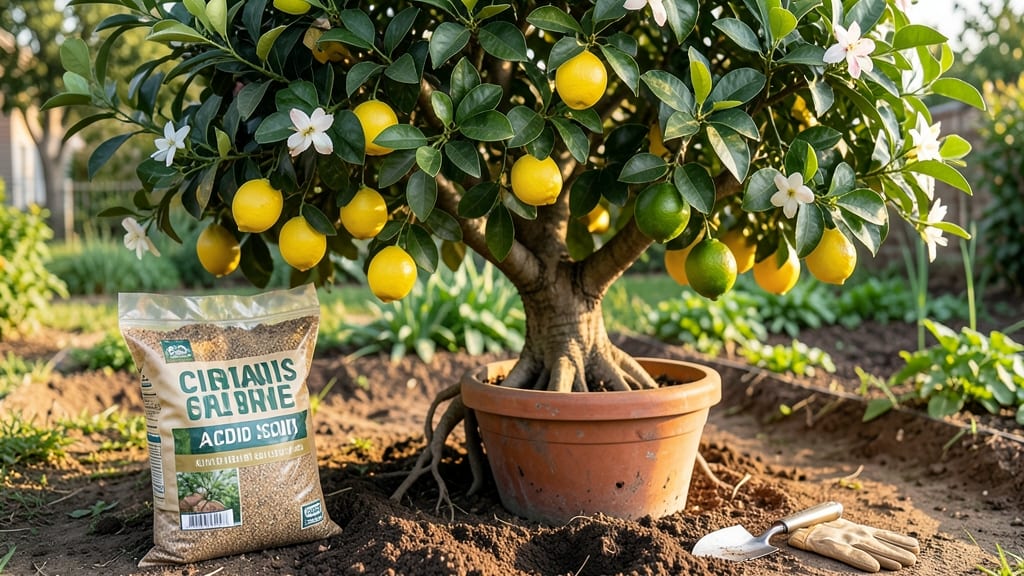
Your citrus tree's roots need fast-draining acidic soil to thrive—or you'll end up with root rot and yellow leaves. 🌿 I've learned the hard way that store-bought potting mixes just don't cut it for citrus, which demand a precise balance of air, water, and nutrients.
The right mix keeps roots oxygenated while mimicking their natural Mediterranean soil, where they grow in rocky, well-drained conditions.
Start with equal parts peat moss, perlite, and coarse sand—this trio creates the perfect airy texture citrus crave. Add a handful of slow-release citrus fertilizer to the mix, and adjust the pH to 5.5-6.5 using sulfur if needed.
Most garden centers sell pre-mixed citrus soil, but DIY blends give you control over quality and drainage, which is key for preventing those dreaded soggy roots.
Once you've got your mix ready, repot your citrus in a container with drainage holes that's only 2-3 inches larger than its current root ball. The first watering should be thorough but gentle—citrus hate soggy soil, so let the top inch dry out between waterings.
You'll know you're on the right track when you see bright green leaves and steady new growth within a few weeks.
Here's the secret to long-term success: refresh your mix every 2-3 years with a top dressing of compost and a sprinkle of fresh perlite. Avoid common mistakes like overwatering (the #1 killer of citrus) or using regular garden soil (which compacts and suffocates roots).
With the right soil, your tree will reward you with vibrant blooms and sweet fruit for years to come.
📚 In This Guide
- What you need
- Instructions
- Tips and common mistakes
- Wrapping up and next steps
What you need
- ● Potting soil (base): 50% high-quality, peat-based or coconut coir potting mix (e.g., Miracle-Gro Potting Mix or FoxFarm Ocean Forest). Aim for 10-15 gallons depending on pot size.
- ● Perlite or pumice: 20-30% coarse perlite or pumice for aeration and drainage (e.g., blank">Espoma Perlite). 1-2 cups per 5 gallons of mix.
- ○ Sand (optional but helpful): 10-20% coarse horticultural sand (not playground sand!) to improve drainage. ½-1 cup per 5 gallons.
- ● Sphagnum peat moss (or pine bark fines): 10-20% for acidity and moisture retention. 1 cup per 5 gallons.
- ● Citrus-specific fertilizer: A slow-release citrus fertilizer (e.g., blank">Espoma Citrus-Tone) or osmocote (10-14-10 NPK ratio). Follow package rates for your pot size.
- ○ Lime (optional but critical): Dolomitic lime to adjust pH if your soil is too acidic (test first!). Start with ½ tsp per gallon of mix.
- ● A large mixing container (wheelbarrow or 5-gallon bucket).
- ● Gloves and safety goggles for handling perlite/sand.
- ● A pH testing kit (e.g., LaMotte Soil pH Test Kit) to ensure acidity (ideal: 6.0–7.0).
- ○ A moisture meter (optional) to check drainage.
- ● Pot with drainage holes (clay or fabric pots preferred; size depends on tree age—15+ gallons for mature citrus).
How to mix the perfect potting soil for citrus trees
Citrus trees need fast-draining, acidic soil to thrive—here's how to blend it right.
🪴 Step 1: Gather the Right Base Materials
Start with 50% peat moss or coconut coir—this holds moisture while allowing airflow. I always use coconut coir because it breaks down slower and stays acidic longer. Add 30% perlite or pumice for that critical drainage citrus roots demand. Too much perlite, though, and your tree will dry out too fast.
For the remaining 20%, mix in composted pine bark fines. This adds organic matter while keeping the pH acidic, which citrus trees love. Sift everything together to avoid large clumps—citrus roots hate surprises in their planting medium.
🌱 Step 2: Adjust pH and Moisture Retention
Citrus trees thrive in soil with a pH between 5.5 and 6.5. Test your mix with a pH meter—if it's too alkaline, add a handful of elemental sulfur per gallon of mix. If it's too acidic, sprinkle in some crushed limestone (just a teaspoon at a time).
Water the mix thoroughly until it's damp but not soggy. Then let it dry slightly—you want it to hold moisture without feeling wet. The ideal texture should resemble a well-wrung sponge. If it feels too dense, add another 10% perlite to improve aeration.
💧 Step 3: Add Slow-Release Fertilizer for Long-Term Growth
Citrus trees are heavy feeders, so I mix in 1 tablespoon of citrus-specific slow-release fertilizer per gallon of soil. Look for one with a 6-6-6 or 8-3-9 ratio—high nitrogen for leaf growth, balanced phosphorus for root development, and potassium to prevent stress. Avoid high-phosphorus fertilizers; they can cause root burn.
Work the fertilizer into the top 2-3 inches of soil. This ensures the roots can access nutrients without overloading the mix. If you're repotting an established tree, reduce the fertilizer by half to avoid shocking the roots with too much change at once.
✂️ Step 4: Test and Refine Before Planting
Fill a container with your mix and water it again. Let it drain completely—if water pools at the bottom after 15-20 minutes, you need more perlite. If it drains too quickly (under 5 minutes), add another 10% peat moss or coconut coir to retain moisture.
Stick your finger into the mix—it should feel slightly damp but not clingy. If it sticks to your fingers, you've got too much peat; if it feels dry and crumbly, add more coconut coir. This balance is everything for citrus—too wet and roots rot, too dry and leaves crisp.
🌿 Step 5: Plant and Monitor for the First Month
Fill your pot with the mix, leaving 1 inch from the rim for watering. Plant your citrus tree at the same depth it was growing before—burying the graft union too deep can kill the tree. Water deeply right after planting to settle the soil and remove any air pockets.
For the first month, keep the soil consistently moist but never soggy. Citrus trees are finicky about water—let the top 1-2 inches dry out between waterings. If you see yellowing leaves, it’s usually either overwatering or a pH issue. Adjust accordingly and watch your tree thrive.
Tips & tricks for perfect citrus tree potting mix
Mastering the perfect potting mix for citrus trees is all about balance—get these small details right, and your trees will flourish. Here's what I've learned after years of trial and error.
The Sifting Secret: Don't skip sifting your materials in Step 1! I use a fine-mesh screen to remove any large chunks from the coconut coir and pine bark fines. Citrus roots are delicate—they can't handle surprises like twigs or hard particles that might irritate them. A quick 5-minute sift through all components ensures a smooth, professional texture that mimics commercial mixes.
pH Adjustment Precision: When testing your mix's pH in Step 2, aim for that sweet spot of 5.5-6.5. I keep a small bottle of elemental sulfur and crushed limestone on hand for quick adjustments. For every gallon of mix, I start with just a teaspoon of limestone—it's easy to overdo it and make your soil too alkaline. Test again after each adjustment until you hit the perfect range.
Drainage Test Hack: The 15-20 minute drainage test in Step 4 is your best friend. I always do this test in a clean, empty container before planting. If water pools after 20 minutes, add another 5% perlite. If it drains too fast (under 5 minutes), mix in 5% more coconut coir. This simple test prevents both root rot and dehydration—two common killers of citrus trees.
Optional: Fertilizer Boost: For established trees, you can optionally add 1/2 teaspoon of citrus-specific micronutrients to your mix. This provides extra zinc and manganese, which citrus trees need but often lack in standard fertilizers. Just sprinkle it in with the slow-release fertilizer in Step 3—it won't alter the pH but will give your tree an extra nutritional boost.
Pro Tips for Potting Soil For Citrus Trees
- Mastering the perfect potting mix for citrus trees is all about balance—get these small details right, and your trees will flourish.
- The Sifting Secret: Don't skip sifting your materials in Step 1!
- pH Adjustment Precision: When testing your mix's pH in Step 2, aim for that sweet spot of 5.5-6.5.
Frequently asked questions
Got questions about the perfect potting mix for your citrus trees? You’re not alone! Here are answers to the most common concerns—so you can keep your lemons, oranges, and limes happy and healthy.
What pH level should potting soil for citrus trees have?
Citrus trees thrive in acidic soil with a pH between 6.0 and 7.0. If your soil is too alkaline (above 7.0), nutrients like iron and zinc become unavailable, causing yellowing leaves. Test your soil with a kit and amend with sulfur or peat moss if needed.
When is the best time to repot a citrus tree?
Repot your citrus tree in early spring, just as new growth begins. Avoid repotting in summer or winter—hot weather stresses roots, and dormancy slows recovery. Choose a pot 1-2 inches larger than the current one, with drainage holes, and refresh the soil mix.
Can I use regular garden soil for citrus trees in pots?
No—regular garden soil is too dense and retains too much moisture, leading to root rot. Citrus trees need a fast-draining, well-aerated mix (like 60% potting soil + 30% perlite + 10% compost). If you’re short on time, pre-mixed citrus-specific blends work great!
Why are my citrus tree’s leaves turning yellow?
Yellow leaves often signal overwatering, nutrient deficiency, or poor drainage. Check for:
- Mushy roots (root rot—reduce watering and improve drainage).
- Yellowing between veins (iron deficiency—add chelated iron or lower soil pH).
- Crispy edges (underwatering—adjust to every 1-2 weeks when topsoil is dry).
How often should I fertilize citrus trees in pots?
Feed your citrus tree every 4-6 weeks during spring and summer with a balanced, acidic fertilizer (e.g., 6-6-6 or 8-3-9). Reduce feeding in fall/winter (every 8-12 weeks) as growth slows. Flush the soil every 3 months to prevent salt buildup—water thoroughly until it drains from the pot’s bottom.
Wrapping up and next steps
Choosing the right potting soil for citrus trees is the secret ingredient to their vibrant health and bountiful harvests! 🌱 By prioritizing a fast-draining, acidic mix with the perfect balance of organic matter, perlite, and sand, you’re setting your citrus trees up for success.
Don’t forget to monitor moisture and adjust as needed—your green thumb is all it takes to nurture thriving, fruit-bearing trees.
Ready to get growing? Start by prepping your pots and soil mix—then watch your citrus trees flourish! 🍊✨ (And don’t forget to share your progress with fellow plant lovers!)