
How To
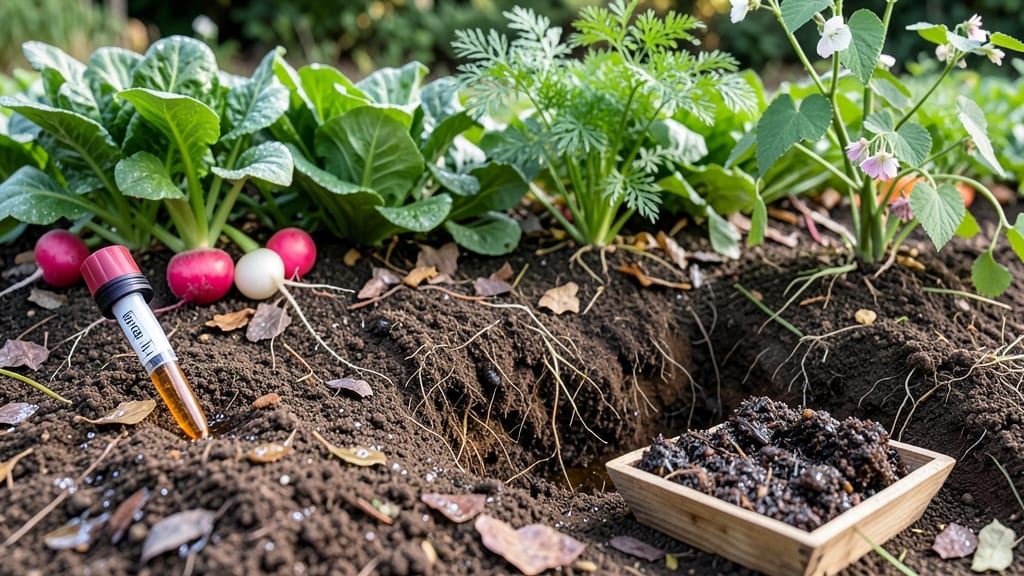
For soil suitable for crop growth, you need a balanced pH of 5.5–7.0, a well-draining texture like loamy or sandy-loam, and plenty of organic matter to hold nutrients. These factors create the ideal foundation for strong root systems, proper water absorption, and active soil microbes that keep plants thriving.
Healthy soil isn't just dirt—it's a living ecosystem where chemistry, physics, and biology collide to create the perfect growing medium. 🌱 The pH range of 5.5–7.0 ensures plants can access essential nutrients like nitrogen and phosphorus, while loamy textures strike the balance between water retention and aeration.
Organic matter, whether from compost or decomposed plant material, acts like a nutrient sponge, feeding beneficial microbes that break down organic material into plant-available forms. I've seen firsthand how amending poor soil with compost can transform a struggling garden into a productive one within just one growing season.
What often gets overlooked is how soil texture affects root development. Sandy soil drains too quickly, while clay holds water but suffocates roots. Loam—equal parts sand, silt, and clay—gives you the best of both worlds.
For my vegetable garden, I always test soil before planting, adjusting with compost or sand as needed. The goal is creating a foundation where plants don't just survive, but thrive with minimal effort from me.
💡 In This Article
- How Soil pH, Texture, and Nutrients Impact Crop Yields
- Testing and Improving Soil for Optimal Crop Performance
How soil pH, texture, and nutrients impact crop yields
The pH scale measures how acidic or alkaline your soil is, and this directly controls which nutrients plants can absorb. At a pH of 5.5–7.0—ideal for most crops—essential minerals like nitrogen, phosphorus, and potassium become available.
For example, phosphorus locks up in alkaline soil (pH above 7.0), while nitrogen becomes scarce in overly acidic soil (below 5.5). 🌱 This is why blueberries thrive in acidic soil (pH 4.5–5.5) but struggle in neutral conditions.
The root zone's chemistry creates a battleground where plants either feast on nutrients or starve, even when the soil looks fertile.
Texture determines how well soil holds water and air, with loam (40% sand, 40% silt, 20% clay) offering the perfect balance. Sandy soil drains too quickly, forcing plants to work harder to access moisture, while clay becomes waterlogged, cutting off oxygen to roots.
The tiny air pockets in loamy soil—visible under magnification—create a sponge-like structure that retains moisture while allowing roots to breathe. This is why vegetables like tomatoes and peppers grow best in loam, while sandy soils excel for drought-tolerant crops like rosemary or lavender.
Organic matter acts as the soil's powerhouse, feeding microbes that break down nutrients into plant-available forms. A single gram of healthy soil contains billions of bacteria and fungi that decompose organic material, releasing nitrogen and other minerals. Without this microbial activity, even fertile soil becomes barren.
For instance, adding 3-4 inches of compost annually can double microbial populations, improving nutrient cycling and reducing the need for synthetic fertilizers. The dark, crumbly texture of well-composted soil isn't just visually appealing—it's a sign of a thriving ecosystem.
Nutrient availability also depends on soil structure. Sandy soils lose nutrients quickly, requiring frequent fertilization, while clay holds them but may make them inaccessible. The solution? Amending with organic matter improves both water retention and nutrient release.
For example, a 1:1 ratio of sand to compost transforms heavy clay into a friable, nutrient-rich medium. This is why gardeners often mix soil amendments before planting—it's not just about adding nutrients, but creating the right environment for roots to explore and microbes to thrive.
Temperature plays a hidden role too. Warmer soils (above 60°F) speed up microbial activity, accelerating nutrient breakdown, while cooler soils slow the process. This is why spring planting often requires extra compost to jumpstart microbial growth.
The interplay between pH, texture, and organic matter creates a dynamic system where small adjustments can dramatically improve crop yields. For instance, adjusting clay soil's pH from 6.5 to 7.0 can unlock phosphorus for root development, while adding sand to heavy soil improves drainage for better oxygen flow.
What most gardeners overlook is how these factors interact. For example, acidic soil (pH below 6.0) increases aluminum toxicity, stunting root growth even if nutrients are present. The solution? Lime for acidic soils or sulfur for alkaline ones, but only after testing.
This precision ensures crops like strawberries (pH 5.5–6.5) or broccoli (pH 6.0–7.0) get exactly what they need. The key is treating soil as a living system, not just a growing medium—because the health of your plants starts below the surface.