
Light Requirements
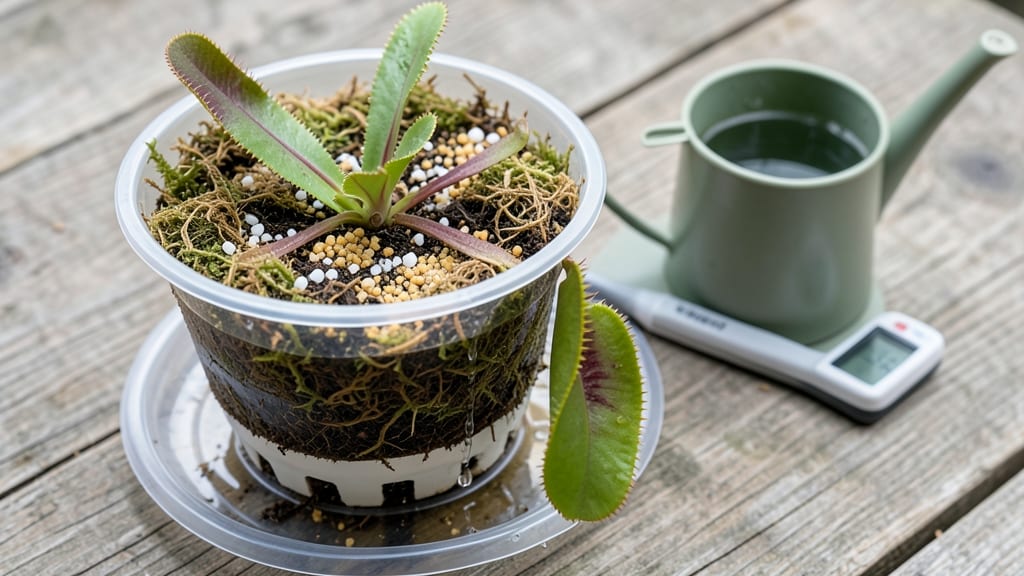
What kind of soil does a Venus flytrap need? The answer lies in replicating its boggy, acidic home—think peat moss, perlite, and a dash of sand, with no fertilizer in sight.
Here’s the catch: most potting soil will smother your 🪰 plant faster than a misplaced finger. That’s because Venus flytraps crave a mix so nutrient-poor it’s practically sterile—just like their swampy native habitat.
Below, I’ll break down the exact ratios, pH levels, and moisture tricks to keep your carnivorous plant thriving. No guesswork, just science-backed soil secrets that work.
You’ll learn how to DIY the perfect blend, spot common mistakes (like overwatering or wrong pH), and adjust for seasons—because even bogs have dry spells.
The ideal soil mix for Venus flytraps: bog vs. commercial blends
Venus flytraps (Dionaea muscipula) demand a very specific soil environment to thrive. Their native bogs provide a mix of acidic, peat-rich, and well-aerated soil that mimics their natural habitat.
Using standard potting soil will suffocate their roots and trigger rot—so let’s break down the exact ratios and why commercial blends often fail.
Most gardeners make the mistake of assuming any well-draining soil will work, but Venus flytraps need minimal nutrients and high acidity (pH 3.5–5.5). Regular soil contains fertilizers and organic matter that can burn their sensitive roots.
The solution? A peat moss-heavy mix with perlite or sand for aeration, replicating their boggy home.
Here’s how the two soil types compare—bog soil (ideal) vs. commercial blends (often problematic):
| Soil Type | Peat Moss % | Perlite/Sand % | pH Level | Nutrient Level | Best For |
|---|---|---|---|---|---|
| Bog Soil (DIY) | 70% | 20-30% | 3.5–5.5 | None (nutrient-free) | Native habitat replication |
| Commercial Carnivorous Mix | 50-60% | 10-20% | 4.0–6.0 | Low (no fertilizer) | Convenience (less ideal) |
| Standard Potting Soil | 0% | 0% | 6.0–7.5 | High (fertilizer) | Kills flytraps (avoid) |
For beginners, a pre-mixed carnivorous plant soil is a safe starting point, but it often lacks the exact acidity or aeration Venus flytraps crave. To replicate a bog environment, I recommend a 70% peat moss, 20% perlite, and 10% coarse sand mix.
The perlite prevents compaction, while the sand mimics the gritty texture of their natural habitat.
If you’re unsure about ratios, start with a 50/50 peat moss and perlite blend—it’s forgiving for newbies. Avoid sphagnum moss alone; it retains too much moisture and can cause root rot. Instead, combine it with coarse horticultural sand to improve drainage while keeping the acidic environment intact.
One critical tip: Never use tap water to moisten your mix. Venus flytraps are sensitive to mineral buildup from tap water, which can alter the pH balance and suffocate roots.
Stick to distilled water or rainwater to keep the soil chemistry perfect. I’ve seen flytraps wilt within weeks when exposed to tap water—don’t make that mistake!
For experienced growers, you can tweak the mix by adding 5% charcoal to absorb excess minerals and prevent bacterial growth. This is especially useful if you’re using well water or live in an area with hard water. Just ensure the charcoal is food-grade and finely ground to avoid clumping.
Repotting is another key factor. Venus flytraps should be repotted every 1–2 years to refresh the soil. Over time, the peat moss breaks down and loses its acidity.
Use a shallow container with drainage holes—flytraps hate soggy roots. A plastic nursery tray works well for humidity retention, but ensure it’s not airtight.
Finally, monitor your soil’s moisture levels like a hawk. Venus flytraps need consistently moist (not wet) soil. Stick your finger in the mix—if the top ¼ inch feels dry, it’s time to water.
Overwatering is the #1 killer of these plants, so err on the side of underwatering if you’re unsure.
With the right soil mix and care, your Venus flytrap will reward you with vigorous growth
Common soil mistakes that kill Venus flytraps (and how to fix them)
Even with the right peat-based soil, your Venus flytrap can still die from subtle soil mistakes. The most common killers? Compaction, wrong pH, and organic matter contamination. These errors suffocate roots, block nutrients, and invite rot—all while making your plant look healthy on the surface.
I’ve seen wilting traps and yellowing leaves from these exact issues, even in pots that look fine.
Venus flytraps evolved in acidic bogs where water flows freely and nutrients are scarce. Replicating this environment at home means avoiding garden soil, compost, or anything with fertilizer.
These "helpful" additives actually drown your plant in minerals, clogging its delicate root system. The fix? Start with a sterile, peat-heavy mix and adjust slowly—if at all.
⚠️ What Kind of Soil Does a Venus Flytrap Need?
Venus flytraps require:
- 60-70% peat moss (or sphagnum moss for extra acidity)
- 20-30% perlite (for aeration—never sand)
- pH 3.5–5.5 (test with a carnivorous plant kit)
- No fertilizer or compost (they eat bugs, not soil nutrients!)
❌ Avoid: Garden soil, coconut coir (too alkaline), or pre-mixed "cactus soil."
First on the death list is soil compaction. Packed-down soil cuts off oxygen, causing roots to suffocate. I’ve seen flytraps with blackened roots after just 3 months in a reused pot with old, compressed soil.
The fix? Use a shallow container (3–4 inches deep) and mix in perlite or coarse sand (not fine sand—it clumps). Gently fluff the soil every 2 months with a chopstick to prevent crusting.
Next, wrong pH silently starves your plant. A pH above 5.5 locks out essential nutrients, while below 3.5 burns roots. Test your mix with a carnivorous plant pH kit—cheap garden kits won’t cut it.
To lower pH, add sphagnum moss or a splash of white vinegar (1 tsp per gallon of water). For high pH, rinse the soil with distilled water to flush out minerals.
Third, organic matter contamination triggers rot faster than you’d think. Even a spoonful of compost or worm castings introduces microbes that compete with your flytrap’s roots. I once added "organic fertilizer" to a pot and watched the traps turn mushy and brown in a week.
The solution? Sterilize your soil by baking it at 200°F for 30 minutes to kill pathogens, or buy pre-sterilized carnivorous plant mix.
Watch for these warning signs: Traps staying closed (dormancy-like but out of season), yellowing leaves (nutrient burn), or white crust on soil (mineral buildup). If you spot these, flush the soil with distilled water and repot immediately.
Your flytrap’s survival depends on acting fast—these mistakes don’t just slow growth, they kill within weeks.