
How To
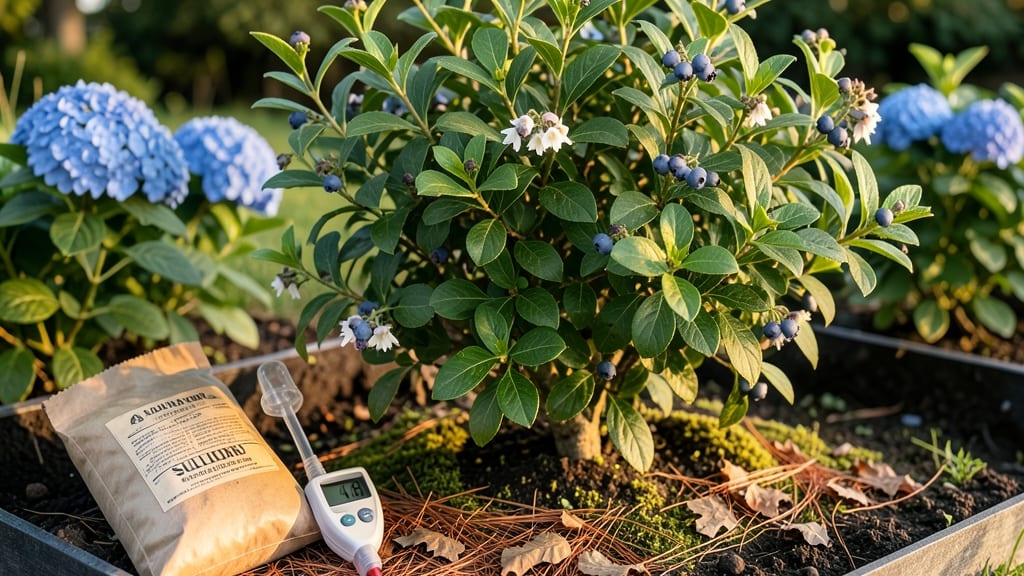
Acidic soil is any soil with a pH below 7.0, typically measuring between 4.5 and 6.5, and often found in areas with heavy rainfall, pine forests, or compost-heavy environments. Plants like blueberries, azaleas, and rhododendrons flourish in these conditions, while most vegetables grow best in neutral soil.
Acidic soil forms when hydrogen ions build up, usually from organic decomposition or mineral breakdown. 🌱 The lower the pH, the more acidic the soil becomes, which affects nutrient availability—some plants like hydrangeas actually change color based on soil pH!
While acidic soil can be ideal for certain plants, it requires careful management to avoid locking out essential nutrients like phosphorus or calcium. Testing your soil's pH with a simple kit can help you determine whether your garden needs amendments like sulfur or lime to create the perfect growing conditions.
Many gardeners overlook the visual clues that acidic soil provides, such as yellowing leaves or stunted growth in acid-loving plants. Pine needles and oak leaves naturally lower soil pH over time, making them excellent organic amendments for acid-loving gardens.
However, adding too much can create an environment that's too harsh for other plants you might want to grow.
💡 In This Article
- How Soil pH Levels Determine Acidity and Plant Compatibility
- Identifying Acidic Soil in Your Garden: Testing and Adjustment Methods
How soil pH levels determine acidity and plant compatibility
Soil acidity is fundamentally about hydrogen ion concentration—measured on the pH scale from 0 (most acidic) to 14 (most alkaline). When soil pH drops below 7.0, it becomes acidic, creating an environment where hydrogen ions outnumber hydroxide ions.
This imbalance occurs naturally through organic matter decomposition (like pine needles breaking down) or mineral weathering (such as granite rocks releasing aluminum). The lower the pH, the more acidic the soil becomes, which directly impacts which nutrients plants can access.
For example, iron and manganese become more available in acidic conditions, while phosphorus and calcium bind tightly to soil particles and become less accessible. 🌱
This nutrient availability explains why certain plants thrive in acidic soil. Blueberries, for instance, require a pH between 4.5 and 5.5 to absorb enough iron and manganese for their deep blue fruit production.
In contrast, vegetables like tomatoes and peppers prefer neutral soil (pH 6.0–7.0) because their roots can't efficiently uptake nutrients in highly acidic conditions. The key mechanism here is the soil's cation exchange capacity (CEC), which weakens in acidic soil, making it harder for plants to retain essential minerals.
This is why acid-loving plants have evolved specialized root structures to cope with these challenges.
What most gardeners don't realize is that soil acidity also affects microbial activity.
Fungi, which thrive in acidic conditions, help break down organic matter more efficiently than bacteria, which prefer neutral pH. This fungal dominance creates a unique soil ecosystem that benefits acid-loving plants but can suppress beneficial bacteria needed by other crops.
The texture of acidic soil often becomes finer and more compact due to increased aluminum solubility, which can lead to poor drainage if not managed properly. This is why amending acidic soil requires a balanced approach—adding sulfur to lower pH further isn't always the solution.
Visual clues can help identify acidic soil conditions. Look for yellowing leaves with green veins on plants like azaleas or rhododendrons, which often indicate iron deficiency caused by overly acidic soil. The soil itself may appear darker and more organic-rich, with a slightly sour smell when damp.
In contrast, alkaline soils often have a chalky texture and may show signs of nutrient deficiencies like yellowing between leaf veins. Understanding these visual cues can save time and money by avoiding unnecessary soil amendments. 🔍
One fascinating adaptation is how some plants, like hydrangeas, actually change flower color based on soil pH. In acidic conditions, they produce blue flowers, while alkaline soil yields pink blooms. This happens because aluminum becomes more available in acidic soil, which affects pigment production.
The same principle applies to blueberries—only when soil pH is properly acidic will they produce their signature deep blue fruit. This biological response shows how deeply soil chemistry influences plant development at a cellular level.
For gardeners working with acidic soil, the goal is often to find a balance that supports both acid-loving plants and others that prefer neutral conditions. This can be achieved through careful zoning in the garden—placing blueberries and azaleas in one area while maintaining separate plots for vegetables.
Organic amendments like composted pine bark or elemental sulfur can help fine-tune pH levels without drastic chemical changes. The key is monitoring and adjusting incrementally, as sudden pH shifts can stress plants and disrupt soil ecosystems. 🌿