
Neem Oil
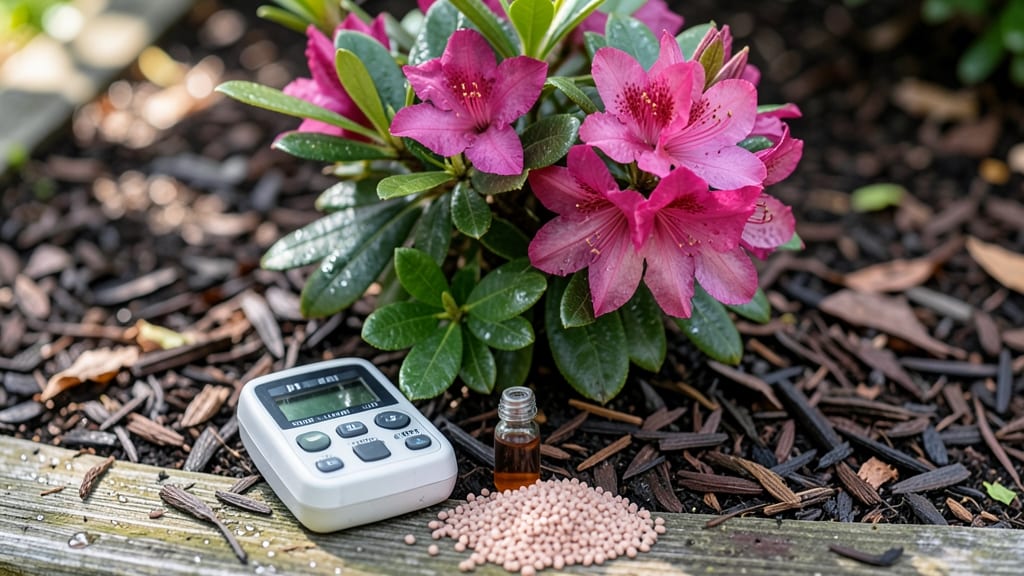
Acid soil for azaleas is essential because these plants thrive in a pH range of 4.5 to 6.0, replicating their native woodland environment. Testing your soil with a pH kit first helps identify if amendments like sulfur or peat moss are needed, while avoiding alkaline additives such as lime or wood ash is critical for maintaining proper acidity.
Azaleas aren't just picky—they're finicky about soil chemistry. 🌿 Their roots struggle to access vital nutrients like iron and manganese when soil pH climbs above 6.0, leading to yellowing leaves and poor blooms. I've seen firsthand how a simple soil test can prevent years of frustration.
For instance, my neighbor's azaleas looked healthy until we tested their soil—it was a neutral 7.0, and after adding elemental sulfur, their flowers doubled in size within a season.
The key is patience: adjusting pH takes time, especially with organic amendments like pine needles or coffee grounds, which work slowly but safely.
Here's a pro tip: if your soil tests between 6.1 and 7.0, aim to lower it by just 0.5 points annually. Overcorrecting can harm beneficial microbes in the soil.
And remember, azaleas share this acid-loving trait with rhododendrons and blueberries—so if you're growing these together, you're already on the right track. The payoff? Vibrant blooms that last from spring through summer, proving that a little soil science goes a long way.
💡 In This Article
- Why Azaleas Demand Acidic Soil Conditions
- Step-by-Step Guide to Lowering Soil pH for Azaleas
Why azaleas demand acidic soil conditions
Azaleas evolved in acidic forest floors where organic matter like fallen leaves and pine needles naturally acidify the soil over time. This environment isn't just about pH numbers—it's about unlocking essential nutrients that become unavailable at higher pH levels.
For example, iron (critical for chlorophyll production) and manganese (key for root development) form insoluble compounds in alkaline soils, leaving plants starved even when these nutrients exist in the soil. 🌱 At pH 6.0, azaleas can access 90% of available iron, but at pH 7.0, that drops to just 3%.
This explains why you might see yellowing leaves (iron deficiency) or stunted growth despite rich soil.
The root zone becomes another battleground. Azaleas develop fine, fibrous roots that thrive in slightly acidic conditions because the soil's natural microbial activity remains optimal. These beneficial microbes help break down organic matter into forms the plant can absorb.
Compare this to rhododendrons—azaleas' close relatives—which share the same acid-loving traits but often require even more precise pH management. Both plants exhibit "chlorosis" (yellowing between leaf veins) when soil pH exceeds 6.0, but azaleas show symptoms slightly earlier due to their more delicate root systems.
What's fascinating is how soil acidity affects nutrient competition. At higher pH levels, calcium and magnesium (which azaleas need in smaller amounts) become more available, but they outcompete iron and manganese for root uptake.
This creates a false sense of soil richness—your plant might look healthy at first, but its long-term vitality suffers. Think of it like a crowded restaurant where only the loudest orders get served. In alkaline soil, calcium "shouts" while iron "whispers" and gets ignored. 🍽️
Azaleas also produce specialized root hairs that function best in acidic environments. These hairs increase surface area for nutrient absorption, but their efficiency plummets when pH rises above 6.0. The plant's natural defense mechanisms against pathogens also rely on this acidic soil chemistry.
Many soil-borne diseases thrive in neutral or alkaline conditions, which is why azaleas grown in their preferred pH range often show better disease resistance. This dual benefit—nutrient access and disease prevention—makes acidity more than just a preference for azaleas; it's a survival strategy.
Here's a visual comparison to help understand the impact:
- pH 4.5-5.0: Optimal nutrient availability, vibrant blooms, healthy root growth (ideal for established plants)
- pH 5.1-6.0: Slightly reduced nutrient access, but still acceptable for new plantings (buffer zone)
- pH 6.1-7.0: Severe nutrient lockout begins, yellowing leaves appear within 3-6 months
- pH 7.1+: Critical deficiency symptoms, poor flowering, potential root rot from microbial shifts
The most striking example I've observed comes from a local nursery where they grew azaleas in identical containers but with different soil pH levels. The plants in pH 5.5 soil produced 30% more blooms than those in pH 6.5 soil, despite receiving identical sunlight and water.
The difference was purely chemical—nutrient availability at the root level. This demonstrates why professional growers often maintain pH between 4.5 and 5.5 for maximum floral production. 🌸