
Light Requirements
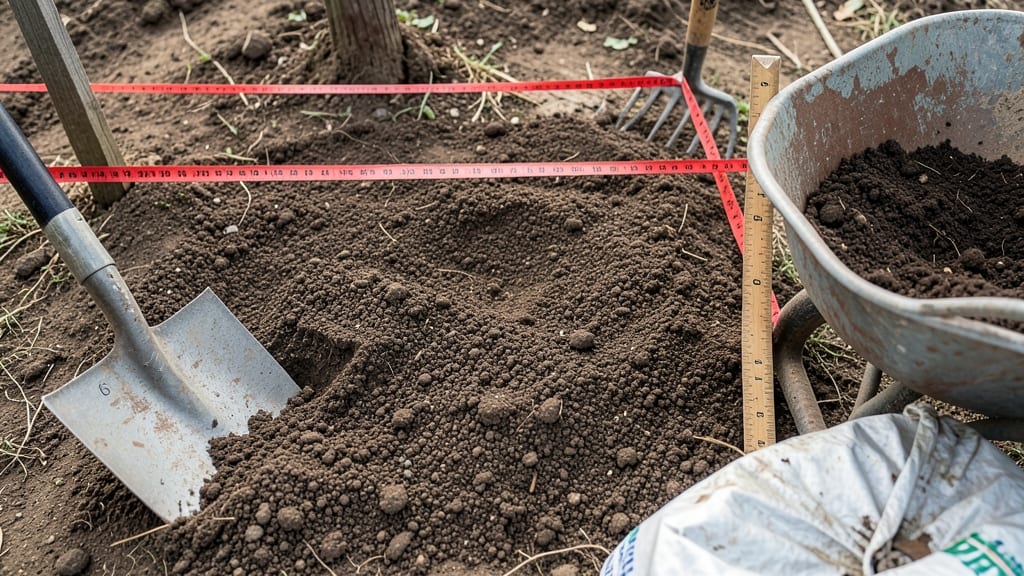
When measuring topsoil, a yard refers to 27 cubic feet—equivalent to a 3-foot cube. This standard volume helps gardeners estimate how much topsoil they need for projects like raised beds or lawn leveling.
A cubic yard of topsoil is the go-to measurement for most gardening tasks because it simplifies planning. 🌱 For example, spreading 1 inch of topsoil over a 100-square-foot area requires about 2.7 cubic feet—roughly 1/10th of a yard.
This conversion helps avoid overbuying or running short, especially when working with larger projects like vegetable gardens or flower beds. Many suppliers sell topsoil by the yard, making it easy to order exactly what you need for your specific dimensions.
Understanding this measurement also helps when mixing topsoil with compost or other amendments. If your project calls for a 3-inch layer over 200 square feet, you'll need about 1.5 cubic yards—a calculation that becomes straightforward once you know the cubic feet per yard.
Always double-check your project's depth requirements, as deeper layers may need more topsoil than initially estimated.
💡 In This Article
- Understanding Topsoil Volume Measurements for Gardening
- Calculating Topsoil Needs for Your Garden Project
Understanding topsoil volume measurements for gardening
A cubic yard of topsoil equals 27 cubic feet because it represents a perfect cube measuring 3 feet in length, width, and depth.
This standardized measurement simplifies calculations for gardeners, as it directly correlates with how much soil fits in a 3-foot by 3-foot by 3-foot space. 🌱 For example, if you're filling a raised bed that's 4 feet long and 2 feet wide, a 1-inch layer of topsoil would require about 0.67 cubic feet—roughly 1/40th of a yard.
This conversion is critical because most suppliers sell topsoil in bulk by the cubic yard.
The relationship between cubic feet and cubic yards becomes especially useful when planning larger projects. A 3-inch layer over a 100-square-foot area (like a small vegetable garden) needs about 6.5 cubic feet—or 0.24 cubic yards.
This is because depth plays a huge role: doubling the layer thickness from 1 inch to 2 inches doubles the volume needed. Many gardeners mistakenly assume a 1-inch layer is enough, only to realize they need more after spreading it out. Understanding this helps prevent shortages or waste.
Topsoil volume also affects soil quality and plant growth. A thicker layer (3+ inches) improves moisture retention and root development, while a thin layer (1 inch) may require more frequent watering. For instance, a 200-square-foot lawn needing a 2-inch layer would require 1.33 cubic yards—about 36 cubic feet.
This is why professionals often recommend measuring your project’s dimensions first and then calculating the volume using the formula: length × width × depth (in feet) ÷ 27.
Another key factor is compaction. Loose topsoil settles over time, so buying 10-15% more than your calculation ensures adequate coverage. For example, if your math says 1 cubic yard, consider ordering 1.15 cubic yards to account for settling.
This extra buffer is especially important for projects like flower beds or garden paths, where uneven settling can create gaps or uneven surfaces. 💫
Topsoil suppliers often sell in bulk quantities (half-yards, full yards, or larger), making it easier to order exactly what you need. For instance, a half-yard (13.5 cubic feet) is ideal for small patches, while a full yard (27 cubic feet) covers larger areas.
Always verify the moisture content of the topsoil, as wet soil weighs more and may not fit the expected volume—some suppliers adjust for this by selling by weight instead.
Finally, consider the type of topsoil you’re using. Screened topsoil (finely sifted) may settle differently than unscreened topsoil with larger particles. For example, sandy loam settles faster than clay-heavy soil, so adjust your calculations accordingly. Always ask your supplier about settling rates to avoid surprises during your project. 🔥