
Tools
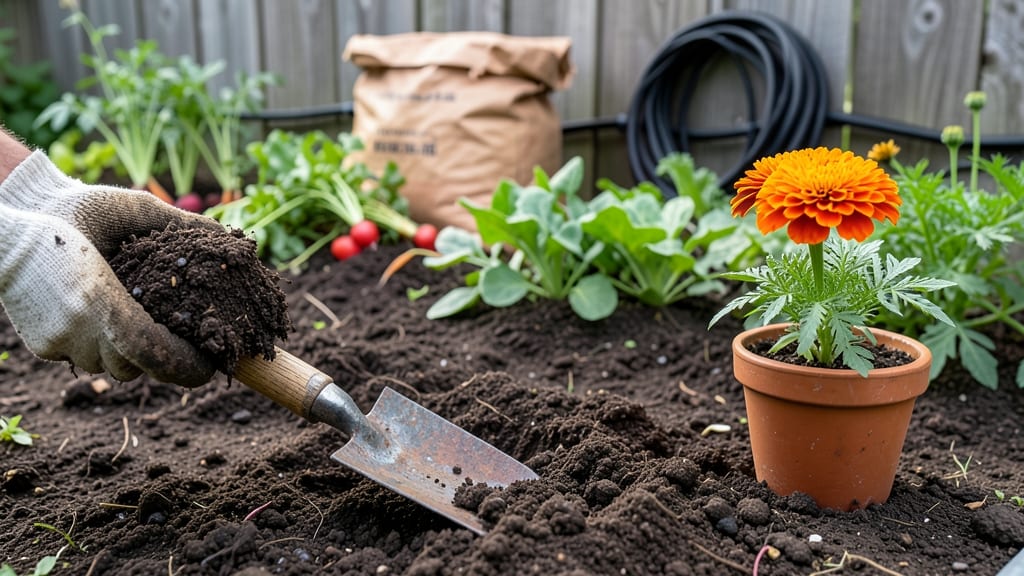
Garden soil is used for serving as the foundation for plant growth by delivering essential nutrients, retaining moisture efficiently, and ensuring proper drainage while fostering strong root systems and beneficial microbial ecosystems.
Garden soil isn't just dirt—it's a dynamic ecosystem that fuels plant health. 🌱 The right mix of organic matter, minerals, and microbial life creates the perfect balance for nutrient absorption, while proper structure prevents waterlogging or drought stress.
I've seen firsthand how amending soil with compost can transform struggling plants into thriving ones, proving that healthy soil equals healthy growth.
Different plants thrive in different soil types—vegetables often prefer well-draining loamy soil, while moisture-loving perennials benefit from clay-rich mixes. The key is understanding your plants' needs and adjusting the soil composition accordingly. For example, adding perlite to heavy clay improves aeration, while peat moss helps sandy soils retain moisture longer.
💡 In This Article
- Key Components of Garden Soil for Plant Nutrition
- Best Soil Types for Different Garden Plants
Key components of garden soil for plant nutrition
Garden soil acts like a living sponge for plants, combining organic matter, minerals, and microscopic organisms to create an ideal growing environment.
The organic fraction—composed of decomposed plant and animal materials—provides essential nutrients like nitrogen (0.5-3% by weight), phosphorus (0.05-0.2%), and potassium (0.1-2%), which plants absorb through their roots.
These nutrients fuel everything from leaf growth to flower production, with nitrogen promoting lush green foliage while phosphorus supports root development and energy transfer.
The mineral component, typically 45-50% of soil volume, includes particles like sand, silt, and clay that determine soil structure and drainage. Sand particles (0.05-2mm) create air pockets for root respiration, while clay (<0.002mm) holds water and nutrients through electrostatic charges.
The perfect balance—found in loamy soils—gives plants both stability and mobility for nutrient access. Microbial life, including bacteria and fungi, further breaks down organic matter into plant-available forms, like ammonia from decomposed proteins or soluble phosphates.
pH balance is often overlooked but critical—most plants thrive in slightly acidic to neutral soil (pH 6.0-7.0). At this range, nutrients like iron, manganese, and zinc remain soluble and accessible. For example, blueberries require pH 4.5-5.5 to absorb aluminum, which they need for flavor development.
Testing your soil's pH with a simple kit ($10-$20) can reveal if lime or sulfur amendments are needed to adjust acidity.
Texture matters just as much as chemistry. Sandy soils drain quickly but lose nutrients fast, while clay soils hold water but suffocate roots with poor aeration. The ideal garden soil—loam—contains 40% sand, 40% silt, and 20% clay, offering a compromise between drainage and nutrient retention.
Adding 2-3 inches of compost annually can help maintain this balance by improving both structure and fertility over time.
One fascinating mechanism is the "soil food web"—a network of microbes, fungi, and tiny animals that decompose organic matter and recycle nutrients. Earthworms alone can process up to 500 lbs of soil per year, aerating it while their castings provide a slow-release fertilizer.
This ecosystem also suppresses harmful pathogens by outcompeting disease-causing microbes, reducing the need for chemical interventions.
For container gardens, where soil volume is limited, pre-mixed potting mixes often include perlite or vermiculite (10-20% by volume) to prevent compaction and improve drainage. These additives create air pockets that roots need for oxygen uptake, especially important for fast-growing plants like tomatoes or peppers.
The key takeaway? Healthy soil isn't just about what's in it—it's about how all these components work together to create a thriving underground ecosystem.